






Addressing Nitrate Pollution in Farming Communities with Ion Exchange
Nitrate pollution is a persistent water-quality concern in farming communities. Fertilizer application, livestock manure, silage storage, and septic systems can release nitrogen compounds into soil and groundwater. Because nitrate dissolves easily and travels with water, wells serving homes, schools, farms, and small municipalities may become contaminated before the problem is visible.
High nitrate levels are especially concerning for infants, whose ability to process oxygen can be affected by nitrate exposure. Communities also need reliable drinking water during droughts, when lower groundwater levels can concentrate contaminants or increase dependence on vulnerable wells. Effective treatment must therefore protect public health while fitting local operating budgets and agricultural realities.
Ion exchange is a practical technology for reducing nitrate in drinking water supplies. When properly selected and managed, it can provide consistent contaminant removal without the high pressure requirements of reverse osmosis. Its performance depends on water chemistry, resin selection, regeneration procedures, and a broader plan for preventing additional nitrate from entering the aquifer.
Why Nitrate Reaches Farming Water Supplies
Nitrate forms as nitrogen fertilizers and organic waste break down in the soil. Crops absorb part of that nitrogen, but excess application can move below the root zone when rainfall or irrigation carries dissolved nitrate toward groundwater. Sandy soils, shallow aquifers, fractured rock, and intensive cultivation can accelerate this migration.
Agricultural drainage can also affect rivers and reservoirs used for drinking water. Runoff from fields may carry nitrogen during storms, while poorly managed manure storage can create concentrated sources near wells. The same watershed may contain several contributing sources, making nitrate control a community issue rather than a problem limited to one property.
Treatment decisions should begin with representative laboratory testing. Sampling should cover raw water, treated water, seasonal conditions, and locations across the distribution system. Results should identify nitrate concentration, alkalinity, sulfate, chloride, hardness, pH, total dissolved solids, and any other contaminants that could affect resin capacity or drinking-water safety.
How Ion Exchange Removes Nitrate
An ion-exchange system uses a bed of synthetic resin containing exchange sites. As contaminated water passes through the vessel, nitrate ions are attracted to the resin and exchanged for another negatively charged ion, commonly chloride. The treated water then flows to storage or distribution, while the resin retains nitrate until its capacity is reached.
The system must be regenerated before nitrate breaks through into the treated stream. A concentrated salt solution is passed through the resin to displace the accumulated nitrate and restore the exchange sites. The resulting brine contains chloride and nitrate and requires responsible handling, discharge approval, or collection for appropriate disposal.
This distinction matters when evaluating sustainability. Ion exchange can use less electricity than pressure-driven processes, but it is not waste-free in every configuration because regeneration produces a nitrate-bearing waste stream. A sound design minimizes salt consumption, uses accurate flow and water-quality controls, and includes a lawful plan for brine management.
Selective nitrate resins can improve performance where competing anions are present. Sulfate, bicarbonate, and organic matter may occupy exchange capacity or alter selectivity. Pretreatment may be required for iron, manganese, turbidity, or biological growth, ensuring that the nitrate unit operates steadily rather than becoming fouled or hydraulically restricted.
Comparing Nitrate Treatment Options
No single process suits every farming community. Ion exchange is often attractive for moderate flow rates and centralized or decentralized drinking-water systems because it can operate at relatively low pressure and deliver a predictable treated-water quality. Reverse osmosis may remove a broader range of dissolved contaminants, while biological denitrification can reduce nitrate without creating brine but requires closer process control.
Blending may help when a community has access to a compliant low-nitrate source, though it must be carefully monitored and permitted. Source protection, wellhead management, improved fertilizer timing, and manure controls reduce the burden on any treatment plant. These measures should accompany treatment rather than replace an immediate response where drinking water already exceeds regulatory limits.
| Treatment approach | Main strength | Key limitation | Suitable application |
|---|---|---|---|
| Ion exchange | Reliable nitrate reduction with modest pressure demand | Produces nitrate-containing regeneration brine | Wells, small municipalities, farms, and decentralized systems |
| Reverse osmosis | Removes nitrate and many other dissolved contaminants | Higher energy use and a concentrate stream | Complex water chemistry or multi-contaminant treatment |
| Biological denitrification | Converts nitrate into nitrogen gas with limited salt use | Requires careful biological and operational control | Larger, stable systems with trained operators |
| Blending | Can reduce nitrate using an existing compliant source | Depends on source availability and consistent monitoring | Communities with adequate alternative water |
| Source management | Prevents contamination and reduces long-term load | Results may take time and cannot solve immediate exceedances | Watershed, farm, and wellhead protection programs |
A treatment comparison should include the full life cycle: capital cost, power, salt or chemical use, operator time, waste disposal, maintenance, monitoring, and resilience during seasonal demand. The lowest purchase price may not represent the lowest long-term cost if regeneration is inefficient or waste handling is difficult.
Designing Systems For Farming Communities
A nitrate treatment plant should be sized around actual demand patterns rather than average daily flow alone. Morning peaks, livestock watering, irrigation-related changes, school schedules, and seasonal occupancy can affect contact time and vessel capacity. Duplex or parallel vessels allow one unit to remain in service while the other is regenerated or maintained.
Pretreatment can protect the ion-exchange resin and improve reliability. Screens or sediment filters may control suspended solids, while oxidation and filtration can address iron or manganese when those contaminants are present. Disinfection may be needed after treatment or before distribution, since nitrate removal does not eliminate bacteria, viruses, pesticides, arsenic, uranium, or other hazards.
A complete design also includes flow meters, pressure gauges, sampling points, automatic valves, conductivity or nitrate monitoring where appropriate, and an alarm for breakthrough or abnormal regeneration. Operators need clear instructions for salt delivery, brine tank inspection, resin replacement, backwashing, and emergency isolation.
For remote farms, mobile units, and emergency applications, compact skid-mounted systems can offer practical flexibility. Larger municipal installations may benefit from centralized controls and remote reporting. Swiss Cleanwater Group supports water projects through its regional offices, helping stakeholders identify a configuration suited to local infrastructure and operating conditions.
Managing Salt, Brine, And Operating Costs
Salt consumption is one of the most important operating variables in an ion-exchange plant. Regenerating too frequently wastes salt and water, while regenerating too late risks nitrate breakthrough. Metered operation, treated-volume tracking, and scheduled laboratory verification help establish the correct regeneration trigger.
Brine disposal must be addressed during the planning stage. Discharging nitrate-rich waste into a septic system, watercourse, or soil without authorization can shift pollution from the drinking-water source to another part of the environment. Depending on local requirements, options may include sanitary sewer discharge, permitted collection, controlled treatment, or another approved waste-management route.
Communities should record raw-water nitrate, treated-water nitrate, regeneration frequency, salt usage, brine volume, and downtime. Reviewing these indicators can reveal changing aquifer conditions, resin exhaustion, valve faults, or an upstream pollution event. Operators can then adjust the process before service quality declines.
Training is equally important. A simple system with competent operation will usually outperform a complex installation that lacks maintenance support. Local water staff, farm managers, and contractors should understand sample collection, alarm response, chemical handling, and the limits of nitrate treatment.
Building A Broader Water-Quality Program
Ion exchange addresses nitrate in the treated water, but a resilient farming-community strategy also reduces the contaminant at its source. Nutrient management plans can match fertilizer application to crop demand, soil testing, weather forecasts, and irrigation schedules. Cover crops, buffer zones, improved manure storage, and wellhead protection can reduce nitrogen losses over time.
Community engagement helps residents understand why monitoring, conservation, and treatment costs are necessary. Farmers need practical information about nutrient efficiency, while households need clear guidance about certified treatment, private-well testing, and safe water use. Public reporting of treatment results can strengthen trust and encourage early action when nitrate levels change.
Specialist support is useful when a project involves several technologies, permits, or operating locations. Technical partnerships can connect municipalities with equipment suppliers, engineering teams, laboratories, and local service providers; Swiss Cleanwater Group’s project partners provide a broader network for developing and supporting water-treatment solutions.
Practical Steps For A Reliable Nitrate Program
- Test each source during wet and dry seasons, including nitrate as both nitrate-nitrogen and nitrate ion where reporting standards require the distinction.
- Characterize sulfate, chloride, alkalinity, hardness, iron, manganese, turbidity, and microbiological quality before selecting resin and pretreatment.
- Compare ion exchange with reverse osmosis, biological treatment, blending, and source-management measures using full operating and waste-disposal costs.
- Design regeneration controls and brine handling into the original project, with permits and contingency procedures established before commissioning.
- Create a monitoring and maintenance schedule that defines sampling points, breakthrough limits, operator responsibilities, and public notification steps.
A well-managed ion-exchange system can give farming communities dependable nitrate reduction while preserving energy efficiency and operational flexibility. Its success depends on matching the resin to the water, monitoring performance continuously, and treating waste responsibly. Source protection then reduces future loading and helps extend the useful life of the treatment investment.
Begin with a water analysis, demand assessment, and site review. Contact Swiss Cleanwater Group to evaluate nitrate-treatment options for a farm, municipality, livestock operation, building, or mobile water application and develop a practical path toward safer drinking water.
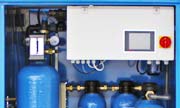
SCM 24
|
|
Cleans 24.000 liters per day
|
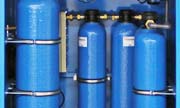
SCM 60
|
|
Cleans 60.000 liters per day
|
Video: How it works
The SCG Advantage
Our market-leading, water cleaning solutions have many advantages. To read more click the items below:
No Chemicals
Our machines and technology does not use any chemicals, at all.
Read more...
No Waste Water
Our machines do not waste any water. Yield = 100%.
Read more...
Low energy use
Uses 50 times less energy than a Reverse Osmosis Machine.
Read more...
Low ownership cost
Lower maintenance and operation costs due to our technology.
Read more...
Easy to install
Simple "plug and play" installation makes for easy deployment.
Read more...
Extremely compact
A compact system, contained in an easy to transport cabinet.
Read more...
Outperforms R.O.
SCG technologies outperform Reverse Osmosis systems.
Read more...
Faster ROI
Get a faster Return on Investment with our systems.
Read more...
Latest News
Latest Blog Posts
| Chemicals in water treatment? |
| Water storage - Whats best for keeping water clean and drinkable? |
| Case: Disaster Management Water Treatment |
Contact SCG
891 Showroom Place
Suite 101
Chula Vista, CA, 91914
Phone: +1 619-878-2730
Contact us by email