


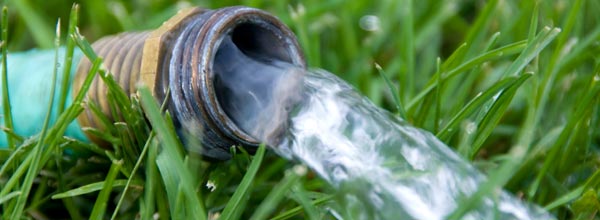
History of WaterWater has shaped human civilization from its earliest beginnings, with ancient societies settling along rivers and developing ingenious methods to transport and store this essential resource. Early water treatment was largely observational, with people learning that clear water from springs or fast-moving streams was generally safer to drink than stagnant sources. Boiling, filtering through sand or cloth, and allowing sediment to settle were among the first purification techniques practiced across cultures. These foundational approaches laid the groundwork for the sophisticated water treatment technologies we rely on today, reflecting humanity's enduring understanding that clean drinking water is fundamental to health, agriculture, and community prosperity. The scientific revolution brought systematic study to water quality, with researchers beginning to understand the invisible threats lurking within seemingly clear water. The discovery that microorganisms could cause disease fundamentally changed how societies approached water management, spurring the development of chlorination and mechanical filtration on a municipal scale. Cities grew and industrial demands increased, making centralized water treatment essential for public health. This period marked a shift from treating water as a simple natural resource to recognizing it as a managed utility requiring careful monitoring, chemical treatment, and infrastructure investment to ensure safe delivery to every household. The twentieth century witnessed remarkable advances in water treatment technology, from the introduction of reverse osmosis membranes to the development of sophisticated chemical processes capable of removing heavy metals, organic contaminants, and emerging pollutants. Municipal systems expanded dramatically, and new standards for drinking water quality were established and refined over decades. Researchers developed methods to address specific challenges such as manganese, arsenic, and uranium contamination, while engineers designed increasingly efficient treatment plants that could serve growing populations. These innovations dramatically reduced waterborne illness and extended life expectancy in communities that adopted modern treatment practices. Today's water treatment landscape faces complex and evolving challenges, including aging infrastructure, emerging contaminants, climate variability, and the need for more sustainable resource management. Modern treatment systems must balance effectiveness with energy efficiency, compact design, and cost-conscious operation. Technologies have advanced to address specific regional concerns such as groundwater contamination, agricultural runoff, and industrial pollution, while also supporting specialized applications for farming, livestock, and municipal supply. The focus has shifted toward holistic solutions that treat water responsibly while minimizing waste and maximizing resource recovery, reflecting a growing awareness that water is finite and must be managed with long-term vision. As we look to the future, the history of water treatment reminds us that innovation is constant and necessary. New generations of treatment machines are becoming more compact, energy-efficient, and easier to operate, making clean water accessible to communities of all sizes. The lessons learned over millennia — that clean water protects health, supports industry, and sustains communities — continue to guide modern engineering and planning. From ancient wells to advanced membrane filtration, the journey of water treatment demonstrates human ingenuity and our collective commitment to ensuring that safe, healthy drinking water remains available for generations to come. |
The Water Evaluation
 When we talk about the
history of water
treatments, we at Swiss Cleanwater Group conducted an investigation of current and previous water
filtration
processes to understand where the past technologies devices spawned from. In the past as well as today, water means survival, and for civilizations around the world, water sources means the difference between surviving and thriving. Water is not only necessary for drinking, but for agriculture, sanitation, and in some cases power. As you will continue reading, history will show that the search for water
purification
was a tedious and slow process; the pursuit to control the volume or quantity of water, was and still is the biggest issue we are all facing in our current societies.
When we talk about the
history of water
treatments, we at Swiss Cleanwater Group conducted an investigation of current and previous water
filtration
processes to understand where the past technologies devices spawned from. In the past as well as today, water means survival, and for civilizations around the world, water sources means the difference between surviving and thriving. Water is not only necessary for drinking, but for agriculture, sanitation, and in some cases power. As you will continue reading, history will show that the search for water
purification
was a tedious and slow process; the pursuit to control the volume or quantity of water, was and still is the biggest issue we are all facing in our current societies.
 As far as purity was concerned in the past, it culminated in the form of aesthetics, i.e., water’s appearance, odor, and in some cases taste, well today aesthetics is not the only purpose of on how we qualify water purity. Since early man thought that the taste of the water determined its purity and did not consider that even the best tasting water could contain disease-causing organisms, we at Swiss Cleanwater Group
developed the technology that can assure pure clean and healthy water.
As far as purity was concerned in the past, it culminated in the form of aesthetics, i.e., water’s appearance, odor, and in some cases taste, well today aesthetics is not the only purpose of on how we qualify water purity. Since early man thought that the taste of the water determined its purity and did not consider that even the best tasting water could contain disease-causing organisms, we at Swiss Cleanwater Group
developed the technology that can assure pure clean and healthy water.
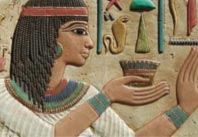
Ancient Scriptures  Both the ancient Sanskrit and Egyptian writings showed the practices and processes that were followed for keeping the water pure and germ free. These processes included: Boiling, heating under sun, or dipping heated iron into the water.
 There is also evidence of the used of the
filtration
process according to which water can be purified
filtering
it through sand and coarse gravel and then allowed to cool as well as
purification
methods such as the
filtering
through charcoal.
There is also evidence of the used of the
filtration
process according to which water can be purified
filtering
it through sand and coarse gravel and then allowed to cool as well as
purification
methods such as the
filtering
through charcoal.
Greece  A century later, Hippocrates, the father of medicine conducted his own experiments in water
purification
. He created the theory of the “four humors,” or essential fluids, of the body that related directly to the four temperatures of the seasons. Hippocrates believes that in order to maintain good health, these four humors should be kept in balance. Through his experiments, Hippocrates recognized the healing power of water. Hippocrates also believed good taste in water meant
cleanliness
and purity of that water. Hippocrates developed his own water filter to “
purify
” the water he used for his patients known as the Hippocratic Sleeve. This filter was made of a cloth bag through which water could be poured after being boiled. The cloth function was to trap any sediments in the water that were causing bad taste or smell.
A century later, Hippocrates, the father of medicine conducted his own experiments in water
purification
. He created the theory of the “four humors,” or essential fluids, of the body that related directly to the four temperatures of the seasons. Hippocrates believes that in order to maintain good health, these four humors should be kept in balance. Through his experiments, Hippocrates recognized the healing power of water. Hippocrates also believed good taste in water meant
cleanliness
and purity of that water. Hippocrates developed his own water filter to “
purify
” the water he used for his patients known as the Hippocratic Sleeve. This filter was made of a cloth bag through which water could be poured after being boiled. The cloth function was to trap any sediments in the water that were causing bad taste or smell.
Read more > |
Video: How it works

The SCG Advantage
Our market-leading, water cleaning solutions have many advantages. To read more click the items below:
No Chemicals
Our machines and technology does not use any chemicals, at all.
Read more...
No Waste Water
Our machines do not waste any water. Yield = 100%.
Read more...
Low energy use
Uses 50 times less energy than a Reverse Osmosis Machine.
Read more...
Low ownership cost
Lower maintenance and operation costs due to our technology.
Read more...
Easy to install
Simple "plug and play" installation makes for easy deployment.
Read more...
Extremely compact
A compact system, contained in an easy to transport cabinet.
Read more...
Outperforms R.O.
SCG technologies outperform Reverse Osmosis systems.
Read more...
Faster ROI
Get a faster Return on Investment with our systems.
Read more...
|
||
Latest News
Latest Blog Posts
| Chemicals in water treatment? |
| Water storage - Whats best for keeping water clean and drinkable? |
| Case: Disaster Management Water Treatment |
Contact SCG
891 Showroom Place
Suite 101
Chula Vista, CA, 91914
Phone: +1 619-878-2730
Contact us by email