









Arsenic Removal Without Chemicals In A Rural Community
Arsenic in groundwater is a serious public health concern, especially in rural areas that depend on private wells, small boreholes, or community water points. The contaminant is naturally present in some geological formations and can enter drinking water without changing its colour, taste, or smell. Regular testing is therefore essential when a community relies on underground sources.
A rural water project must address more than the laboratory result. It needs a treatment system that can operate with limited technical support, modest electricity use, predictable maintenance, and minimal production of contaminated waste. Chemical dosing may be difficult where supply chains are unreliable, while complex systems can become unusable when trained operators are unavailable.
This case study describes how a rural community could reduce arsenic exposure with a chemical-free treatment approach. The example focuses on practical decision-making: understanding the source, selecting appropriate technology, monitoring performance, and ensuring that safe water remains available throughout the year.
When Arsenic Becomes A Community-Wide Risk
Arsenic is commonly found in groundwater as dissolved arsenite or arsenate. Its concentration can vary between nearby wells, and seasonal changes in groundwater levels may affect test results. Long-term consumption of contaminated water has been associated with serious health effects, making consistent removal and verification vital.
The risk is often greatest in communities where residents collect water from several sources without central testing. A well may be used for drinking, cooking, livestock, and irrigation at the same time. Even when people are aware of a contamination problem, they may continue using the source because alternatives are distant, expensive, or unreliable.
A successful response begins with sampling. Raw water should be tested for arsenic alongside pH, iron, manganese, turbidity, hardness, and microbiological indicators. These parameters influence treatment performance and help determine whether one system can serve the entire community or whether each source requires a separate solution.
The Rural Water Challenge
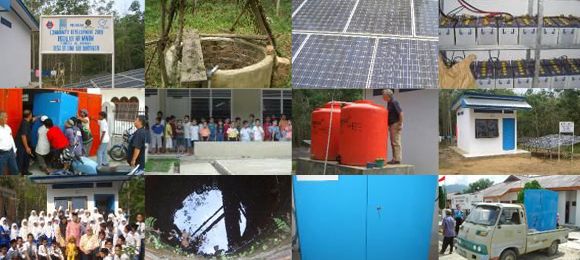
The community in this representative case study is located in a remote agricultural region. Approximately 300 residents rely on a borehole that provides adequate water volume but contains arsenic above the applicable drinking-water limit. The borehole also shows moderate levels of iron and manganese, which can affect filtration media and create visible deposits in pipes and storage tanks.
The original proposal involved regular chemical dosing followed by filtration. Local leaders rejected it after reviewing the practical requirements. The approach required dependable deliveries of reagents, accurate dosing equipment, operator training, and a plan for managing arsenic-bearing sludge. These obligations presented a substantial burden for a small community with limited funds.
The project team instead assessed a compact treatment line based on oxidation, adsorption, and filtration without continuous chemical addition. The final configuration depended on the source-water analysis, since arsenic removal is highly sensitive to chemical form and water chemistry. A pilot test was used to confirm capacity before construction.
Selecting A Chemical-Free Treatment Route
Chemical-free does not mean that the water receives no treatment. It means the process does not rely on routine addition of coagulants, disinfectants, or other consumable reagents. Aeration can help convert dissolved arsenite into the more readily captured arsenate form, while specialist filter media can retain arsenic and other dissolved contaminants.
A suitable design may include raw-water pumping, aeration, a reaction or contact stage, media filtration, and treated-water storage. The filter media must be selected for the expected arsenic concentration, pH, competing ions, and flow rate. Pre-filtration is also important when iron, manganese, sediment, or organic matter could reduce the media’s working life.
Reliable monitoring remains part of a chemical-free process. Operators need pressure gauges, flow controls, sample points, and a clear schedule for laboratory testing. The water treatment information available from Swiss Cleanwater Group helps explain why contaminant behaviour and source-water conditions must be evaluated together rather than treating arsenic as an isolated parameter.
A Practical Community Case Study
During the pilot stage, the community’s borehole water was passed through a small demonstration unit. Testing confirmed that the selected treatment sequence reduced arsenic to a level suitable for the project target. Iron and manganese were also lowered, improving the appearance and taste of the treated water. The pilot identified the need for a controlled flow rate and periodic backwashing to maintain stable performance.
The full installation was placed near the borehole and connected to a raised storage tank. Water first entered an aeration chamber, where contact with air supported the conversion of arsenite. It then passed through media filters designed to capture oxidised arsenic and metal precipitates. A separate polishing stage provided additional protection before the water entered the distribution tank.
The community chose a simple operating model. Two local operators received training in valve operation, pressure checks, backwashing, sample collection, and record keeping. A maintenance agreement covered scheduled inspections and media assessment. Because the process avoided daily reagent handling, the operators had fewer consumables to store and fewer dosing decisions to make.
Treatment Options At A Glance
Different arsenic-removal technologies can be effective, but their suitability depends on the water source, community resources, waste-management capacity, and required flow rate. The comparison below shows why a chemical-free filtration process may be attractive in a remote setting, while also recognising that every project needs site-specific validation.
| Approach | Routine chemical use | Main residual or waste | Energy and operating demands | Rural suitability |
|---|---|---|---|---|
| Chemical coagulation and filtration | Coagulants and pH-control chemicals | Arsenic-bearing sludge | Dosing control and regular chemical supply | Effective where operators and waste handling are available |
| Reverse osmosis | Usually no coagulant, but cleaning chemicals may be needed | Concentrated reject water and spent cleaning solution | High pressure and significant electricity | Useful for difficult water, but demanding in remote areas |
| Adsorption with disposable media | Usually none during operation | Spent arsenic-loaded media | Low to moderate, depending on pumping | Practical when media replacement and disposal are organised |
| Aeration and specialist filtration | No routine chemical dosing | Backwash water and captured solids | Low to moderate | Strong option when water chemistry suits the media |
| Ion exchange | Regeneration chemicals | Brine or regeneration waste | Controlled operation and regular regeneration | Less convenient where water and chemical logistics are limited |
The table also highlights an important distinction: avoiding chemicals does not eliminate residuals. Backwash water and exhausted media still require responsible management. The volume and composition of these residuals should be assessed during design, with arrangements made to prevent untreated arsenic from returning to wells, streams, or agricultural land.
Results Beyond The Treatment Plant
After commissioning, the community monitored treated water at the outlet and at several distribution points. Arsenic results remained below the project limit during routine checks, while iron and manganese stayed low enough to prevent the staining that had previously affected containers and plumbing. Independent laboratory testing was retained for periodic verification rather than relying solely on field observations.
The benefits extended beyond safer drinking water. Families no longer needed to travel long distances to purchase bottled water, and the local clinic had a dependable source for drinking and basic hygiene. The improved water quality also supported a school kitchen and reduced concerns about using the borehole for food preparation.
Operating costs were easier to forecast because the installation did not depend on daily chemical deliveries. Electricity consumption remained linked mainly to pumping and filtration, and the system could be paired with a storage tank to manage periods of limited power. These features are valuable for villages, farms, public buildings, and emergency facilities where continuity matters as much as treatment efficiency.
Recommendations For A Durable Project
A rural arsenic-removal installation should be planned as a complete water-service system rather than purchased as a standalone filter. The following measures help protect performance and public confidence:
- Test raw and treated water through an accredited laboratory before commissioning and at scheduled intervals afterward.
- Confirm arsenic speciation, pH, iron, manganese, turbidity, hardness, and competing contaminants during the pilot phase.
- Design for realistic peak demand, seasonal groundwater changes, backwashing, and future population growth.
- Train local operators with simple procedures for flow control, pressure checks, cleaning, sampling, and fault reporting.
- Create a documented plan for backwash water, spent media, and any other arsenic-bearing residuals.
The community should also maintain a source-protection programme. Damaged wellheads, flooding, poor drainage, and nearby waste disposal can introduce additional contaminants and undermine an otherwise effective treatment system. Water safety depends on the entire chain from borehole to household tap.
Building Confidence In Chemical-Free Water
Public communication was essential in the case study. Residents were shown the test results, the treatment stages, and the maintenance schedule in plain language. This helped clarify that arsenic cannot be detected by taste or appearance and that routine testing remains necessary even when water looks clean.
The project also assigned responsibility for record keeping. Each test result, backwash cycle, maintenance visit, and media inspection was logged. This created an operating history that made it easier to identify changes in raw-water quality and plan service visits before performance declined.
Technology selection should remain flexible. Some sources may need a hybrid process, additional disinfection, or a different arsenic adsorbent. A specialist provider can evaluate the source, conduct pilot testing, and match the system to the community’s available energy, skills, and budget. Swiss Cleanwater Group presents sustainable water solutions for applications ranging from municipalities and agriculture to mobile and industrial settings.
A well-designed rural project can remove arsenic without routine chemical dosing while keeping energy use, maintenance, and waste under control. To assess a contaminated groundwater source, arrange a site evaluation and treatment review with Swiss Cleanwater Group so that laboratory data can be translated into a dependable clean-water system.
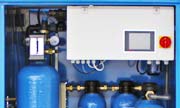
SCM 24
|
|
Cleans 24.000 liters per day
|
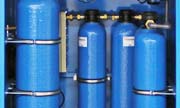
SCM 60
|
|
Cleans 60.000 liters per day
|
Video: How it works

The SCG Advantage
Our market-leading, water cleaning solutions have many advantages. To read more click the items below:
No Chemicals
Our machines and technology does not use any chemicals, at all.
Read more...
No Waste Water
Our machines do not waste any water. Yield = 100%.
Read more...
Low energy use
Uses 50 times less energy than a Reverse Osmosis Machine.
Read more...
Low ownership cost
Lower maintenance and operation costs due to our technology.
Read more...
Easy to install
Simple "plug and play" installation makes for easy deployment.
Read more...
Extremely compact
A compact system, contained in an easy to transport cabinet.
Read more...
Outperforms R.O.
SCG technologies outperform Reverse Osmosis systems.
Read more...
Faster ROI
Get a faster Return on Investment with our systems.
Read more...
Latest News
Latest Blog Posts
| Chemicals in water treatment? |
| Water storage - Whats best for keeping water clean and drinkable? |
| Case: Disaster Management Water Treatment |
Contact SCG
891 Showroom Place
Suite 101
Chula Vista, CA, 91914
Phone: +1 619-878-2730
Contact us by email