








A Farm Switches To Chemical-Free Water For Livestock
A livestock farm can have an apparently reliable water supply and still expose animals to unwanted minerals, bacteria, or agricultural residues. Well water may contain manganese, arsenic, uranium, pesticides, or other contaminants that are difficult to detect through taste and appearance alone. Water quality can also change with rainfall, seasonal groundwater movement, or nearby farming activity.
This case study follows a mixed livestock farm that moved from routine chemical dosing to a chemical-free water treatment approach. The objective was practical: deliver cleaner drinking water to animals, reduce maintenance complications, and create a system that could operate consistently without producing a secondary waste stream.
The farm worked with Swiss Cleanwater Group to assess the raw water, identify the treatment priorities, and choose equipment suited to daily agricultural use. The project demonstrates how sustainable water purification can support animal welfare, operational efficiency, and responsible resource management.
The Farm’s Water Quality Problem
The farm relied on a private borehole that supplied cattle, calves, and a small group of pigs. Water testing showed elevated manganese and traces of other naturally occurring minerals. Bacterial contamination was also a concern because the supply passed through storage tanks and long distribution lines before reaching the drinking points.
The water was not visibly polluted, yet several warning signs had appeared. Dark deposits accumulated around troughs and pipe fittings, filters needed frequent replacement, and the farm manager noticed that water quality varied after periods of heavy rain. These issues created uncertainty, especially during warm weather when livestock consumption increased.
Previously, the farm had considered chemical conditioning to control some of the problems. That option would have required chemical storage, dosing equipment, staff training, and careful monitoring. It could also have introduced additional handling risks around animals and feed areas. The owners wanted a cleaner process with fewer consumables and less dependence on daily chemical management.
Choosing A Chemical-Free Treatment Route
The first step was a broader analysis of the source water rather than selecting equipment based on a single contaminant. The assessment considered manganese, microbial risk, suspended particles, mineral content, flow demand, peak consumption, and the condition of the existing pipework. This helped separate the water-quality problem from the distribution problems that had developed over time.
The treatment strategy focused on physical purification and controlled filtration rather than chemical dosing. Depending on the source-water profile, a system may combine filtration, membrane treatment, ultraviolet disinfection, or other non-chemical processes. The correct configuration must be matched to laboratory results, because no single treatment method is suitable for every farm or every contaminant.
For this installation, the farm selected a compact SCM 24 water treatment system as the central unit. Its size suited the farm’s flow requirements while leaving room for future adjustment. The equipment was installed close to the borehole and connected to the existing water network after the storage and pipework had been cleaned.
Installation Without Disrupting Livestock
The installation was planned around the farm’s working schedule. Livestock could not be left without water for long periods, so the treatment unit was commissioned in stages. A temporary supply supported essential drinking points while the old filters, tanks, and sections of pipe were inspected and cleaned.
This preparation was important. Installing purification equipment without addressing contaminated tanks or deposits in the distribution network can reduce the benefit of an otherwise effective treatment system. The farm therefore treated the project as a complete water-quality upgrade rather than simply adding a new machine.
After commissioning, water samples were taken from the source, the treatment outlet, the storage tank, and representative drinking troughs. Sampling at several points confirmed whether the system was working under real farm conditions. It also helped identify any remaining contamination caused by the downstream infrastructure rather than the borehole itself.
Results For Animals And Farm Operations
Within the first operating period, the farm saw cleaner troughs and fewer dark deposits around valves and pipe connections. The improvement was particularly noticeable in areas where water had previously stood for several hours. Fewer deposits also meant less manual cleaning and a lower risk of blocked drinker components.
The farm manager reported that routine water management became easier because there was no chemical stock to monitor and no dosing pump to recalibrate. Staff still followed a maintenance schedule, but the work shifted toward inspecting filters, checking flow, and taking periodic samples. Chemical-free treatment did not remove the need for responsible operation; it made the process more straightforward and reduced handling requirements.
The table below summarizes the change in the farm’s operating approach. The figures are presented as project indicators rather than universal performance claims, since results depend on source-water chemistry, system design, and livestock demand.
| Area | Previous Approach | New Treatment Approach |
|---|---|---|
| Main concern | Manganese deposits and microbial risk | Targeted removal and disinfection |
| Treatment method | Considered chemical conditioning | Chemical-free purification system |
| Consumables | Potential chemical products and replacement filters | Routine filter and equipment maintenance |
| Staff duties | Possible chemical handling and dosing checks | Flow checks, cleaning, and water sampling |
| Waste profile | Risk of chemical residuals or process waste | Reduced waste from treatment operation |
| Livestock supply | Variable quality at drinking points | More consistent treated water distribution |
The farm also gained better visibility into its water system. Regular testing made it easier to identify changes before they became operational problems. That matters in livestock production because water intake affects feed consumption, animal comfort, and overall herd management.
Protecting Water Quality Beyond The Treatment Unit
A treatment system is only one part of a safe farm-water plan. Storage tanks should be sealed, accessible for inspection, and cleaned at suitable intervals. Pipe runs should avoid stagnant sections where possible, while drinking troughs and nipples need regular cleaning to prevent biological growth after treatment.
The farm introduced a simple monitoring routine. Staff checked pressure and flow each week, inspected visible filters, recorded unusual colour or odour, and arranged laboratory sampling at planned intervals. These checks were added to existing livestock-management records so that water quality remained part of normal farm operations rather than an occasional emergency task.
The owners also reviewed how rainwater, fertilizers, manure, and pesticides could affect the borehole area. Keeping contaminants away from the abstraction point is essential, even when purification equipment is in place. Source protection reduces the load on the treatment system and supports stable performance over time.
Benefits Of A Lower-Impact Water System
The switch reduced the farm’s reliance on chemical products and helped create a safer working environment around animal housing. Staff no longer needed to store treatment chemicals near operational areas, and the farm reduced the risk associated with accidental spills, incorrect dosing, or empty containers.
There was also a resource-efficiency benefit. A well-designed system can treat water with controlled energy use and limited waste, which is valuable for farms that operate on narrow margins. Lower maintenance complexity can be as important as the initial equipment choice, particularly where one person may be responsible for water systems, animal care, and general repairs.
The project also aligned water treatment with the farm’s broader sustainability goals. Producing clean drinking water without routine chemical dosing supported a more responsible approach to livestock infrastructure. For farms assessing similar upgrades, the Swiss Cleanwater Group provides information about purification technologies, applications, and water-treatment solutions for agricultural settings.
Practical Steps For A Farm Upgrade
Every farm should begin with its own water analysis rather than copying another installation. The right system depends on the source, the contaminants, the number of animals, peak flow, storage capacity, and the condition of the existing network.
Useful planning priorities include:
- Test raw water and treated water through an accredited laboratory.
- Identify seasonal changes in mineral, bacterial, and pesticide levels.
- Calculate peak demand for livestock, cleaning, and other farm uses.
- Inspect tanks, troughs, pumps, and pipework before selecting equipment.
- Create a maintenance and sampling schedule that staff can follow.
A chemical-free system should be evaluated by its complete operating profile, not only by its purchase price. Energy consumption, replacement components, cleaning requirements, installation space, and expected service life all affect the long-term cost. A solution that is easy to monitor is more likely to remain effective after the initial installation team has left.
The farm’s experience showed that the best result came from combining technology with disciplined water management. Treatment removed the key contaminants, while source protection and distribution-line cleaning helped preserve the quality delivered to the animals.
For livestock producers considering a similar change, the next step is a site-specific water assessment. Share the source-water results, livestock numbers, flow requirements, and existing infrastructure with a qualified treatment provider to develop a practical route toward cleaner, chemical-free drinking water.
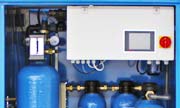
SCM 24
|
|
Cleans 24.000 liters per day
|
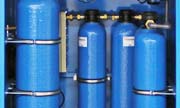
SCM 60
|
|
Cleans 60.000 liters per day
|
Video: How it works

The SCG Advantage
Our market-leading, water cleaning solutions have many advantages. To read more click the items below:
No Chemicals
Our machines and technology does not use any chemicals, at all.
Read more...
No Waste Water
Our machines do not waste any water. Yield = 100%.
Read more...
Low energy use
Uses 50 times less energy than a Reverse Osmosis Machine.
Read more...
Low ownership cost
Lower maintenance and operation costs due to our technology.
Read more...
Easy to install
Simple "plug and play" installation makes for easy deployment.
Read more...
Extremely compact
A compact system, contained in an easy to transport cabinet.
Read more...
Outperforms R.O.
SCG technologies outperform Reverse Osmosis systems.
Read more...
Faster ROI
Get a faster Return on Investment with our systems.
Read more...
Latest News
Latest Blog Posts
| Chemicals in water treatment? |
| Water storage - Whats best for keeping water clean and drinkable? |
| Case: Disaster Management Water Treatment |
Contact SCG
891 Showroom Place
Suite 101
Chula Vista, CA, 91914
Phone: +1 619-878-2730
Contact us by email