







How A Military Base Reached Water Independence With Mobile Treatment Units
A remote military base cannot rely on a fragile water supply chain. Convoys carrying bottled water or tanker deliveries require fuel, personnel, secure routes, and favorable weather. When access is interrupted, the problem quickly affects accommodation, medical services, kitchens, vehicle maintenance, and mission readiness.
This case study examines how a military installation used mobile water purification units to produce safe drinking water from local sources. The solution reduced dependence on external deliveries while giving the base a flexible treatment system that could be relocated as operational needs changed.
The project focused on reliable purification with low chemical consumption, limited waste, and moderate energy demand. It also demonstrated why a modular water treatment plant can be valuable in temporary camps, disaster zones, border facilities, and other locations where permanent infrastructure is unavailable.
The Base Faced A Supply And Security Problem
The installation was positioned far from established municipal networks. Its available sources included a shallow groundwater borehole and a surface-water reserve that varied in quality after heavy rain. Initial testing identified manganese, suspended matter, bacteria, and occasional traces of agricultural pollutants in the surrounding water environment.
Before the project, drinking water was delivered in containers and tankers. This approach provided a familiar safety margin, but it created recurring logistical costs. Storage capacity had to be maintained, empty containers had to be removed, and delivery schedules had to be coordinated with security and transport teams.
The base needed a system that could operate independently without constructing a large permanent treatment facility. The equipment also had to withstand movement, function in changing field conditions, and be simple enough for trained personnel to operate without a large specialist team.
A Mobile Treatment Concept Matched The Mission
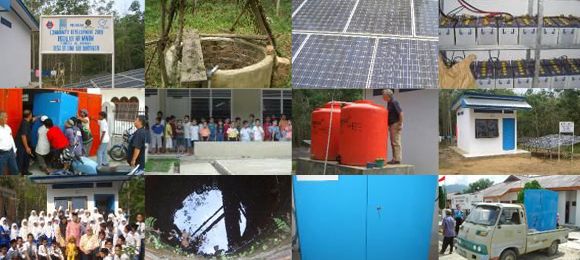
The selected solution was a skid-mounted purification system installed inside a reinforced mobile unit. It could be transported by truck, positioned close to the raw-water source, and connected to storage tanks and distribution lines. This avoided the lengthy civil works normally associated with a conventional water plant.
The treatment sequence was adapted to the source-water analysis. Pre-filtration removed larger particles, while specialized media targeted manganese and other dissolved contaminants. A final disinfection stage controlled microbiological risks, and treated water was held in a protected tank before use.
The system was designed around the principle that treatment should respond to the actual contaminants present. Instead of applying a broad chemical program, the operators used a controlled process that limited consumables and reduced the production of contaminated residuals. Guidance on source testing, treatment selection, and operating conditions can be reviewed through the company’s frequently asked questions.
Installation Took Place Without Interrupting Operations
The project team began with a survey of the borehole, surface-water reserve, storage area, and existing distribution network. Water samples were collected under different weather conditions to account for seasonal variation. This step helped determine the appropriate filter media, flow rate, backwash requirements, and monitoring points.
The mobile unit arrived preassembled and was placed on a prepared hardstanding area. Technicians connected the raw-water intake, treated-water outlet, electrical supply, and storage tanks. Because most of the treatment equipment had already been integrated and tested, commissioning required considerably less construction than a fixed plant.
During the first operating period, base personnel worked alongside the installation team. They learned how to inspect pressure readings, confirm flow, perform basic cleaning, collect samples, and respond to alarms. The operating process was documented in straightforward procedures so that water production could continue during staff rotation or changes in deployment status.
Water Quality Improved While Logistics Became Simpler
After commissioning, the unit supplied treated water for drinking, food preparation, hygiene facilities, and selected support functions. Routine testing showed that manganese and suspended solids were reduced to acceptable levels, while microbiological control was maintained through the final treatment stage.
The result was a change in the base’s supply model. Tanker deliveries were retained as an emergency backup rather than serving as the primary source. This reduced the number of scheduled transport movements and freed storage capacity that had previously been reserved for bottled water.
The installation did not eliminate the need for responsible water management. Operators still monitored the raw-water source, maintained the equipment, and verified treated-water quality. Water independence meant producing a dependable supply locally, supported by contingency planning, rather than assuming that a single machine could replace every aspect of water security.
| Project factor | Previous arrangement | Mobile treatment approach |
|---|---|---|
| Main water source | Delivered bottled water and tankers | Local borehole and reserve source |
| Primary challenge | Transport dependency and storage demand | Variable raw-water quality |
| Infrastructure | External deliveries and holding areas | Mobile treatment unit and storage tanks |
| Contaminant control | Supplier-managed packaged water | On-site removal of manganese, particles, and bacteria |
| Energy demand | Fuel-intensive transport chain | Moderate electricity use at the treatment point |
| Waste profile | Packaging and transport-related waste | Controlled backwashing and limited consumables |
| Emergency value | Dependent on accessible routes | Local production with delivery as backup |
The System Added Value Beyond Drinking Water
The most visible benefit was a secure supply of potable water, but the mobile plant also supported broader base resilience. Reliable water was available for kitchens, sanitation, medical areas, and personnel accommodation without waiting for the next convoy.
The unit could also be adapted to changing priorities. If the base moved, the equipment could be disconnected and transported to another location. If demand increased, additional storage or a second treatment module could be integrated without replacing the original system.
This flexibility was particularly important for military planners. A fixed installation may offer high capacity, but it can be impractical where a deployment is temporary or where the security situation changes. A mobile purification system provides a balance between field mobility and the control associated with an engineered treatment plant.
The project also supported environmental objectives. By reducing dependence on single-use containers and tanker transport, the base lowered associated fuel consumption, packaging waste, and traffic. The Swiss Cleanwater approach emphasizes treatment systems intended to reduce chemicals, waste, and unnecessary energy use, which suited the installation’s operational requirements.
Performance Monitoring Kept The System Reliable
Water independence depends on consistent monitoring rather than installation alone. The base established a schedule for checking source-water quality, filter condition, flow, pressure, storage levels, and treated-water parameters. Results were recorded so that changes could be identified before they affected users.
The operating team paid particular attention to rainfall and source fluctuations. Heavy weather could increase turbidity or introduce additional organic matter into surface water. By comparing raw-water and treated-water results, personnel could adjust operating settings and plan maintenance according to actual conditions.
Preventive maintenance was also built into the deployment plan. Filters and treatment media were inspected at defined intervals, pumps were checked for abnormal performance, and storage tanks were cleaned according to a documented schedule. Spare parts were kept on site for components most likely to affect availability.
This approach reduced the risk of an avoidable outage. It also made the system easier to manage during a handover between teams. Clear procedures, simple instrumentation, and regular sampling were as important to the project’s success as the purification technology itself.
Lessons For Remote And Emergency Deployments
The military base’s experience offers a practical model for organizations that must produce safe water away from municipal infrastructure. The strongest results came from matching equipment to the source, planning for movement, and treating operations as part of the engineering solution.
Key planning priorities include:
- Test every potential water source before selecting treatment equipment.
- Include storage, intake, power, drainage, and access requirements in the site plan.
- Train several operators so the system remains functional during staff changes.
- Keep critical spare parts and define a maintenance schedule before deployment.
- Retain an emergency supply option for maintenance periods or unexpected source changes.
The same principles apply to humanitarian missions, remote farms, livestock facilities, construction camps, and temporary government sites. In each setting, the right system must deliver safe water while fitting the available power, footprint, staffing, and transport conditions.
A mobile unit can also serve as a bridge toward a permanent installation. It may provide immediate treatment while planners assess demand, develop a long-term water strategy, or wait for construction work to be completed. This makes the technology useful in both short-term response and long-term infrastructure planning.
For military and civil-defense planners, the central lesson is clear: local water treatment can strengthen operational continuity without requiring a complex permanent plant. A properly specified mobile system turns a vulnerable supply route into a managed local resource.
Swiss Cleanwater Group develops treatment technologies for demanding applications where water quality, mobility, and resource efficiency matter. Organizations planning a remote or field-based water supply can review the available solutions and contact the company to discuss source conditions, required capacity, contaminants, and deployment constraints. Start with the water assessment, then build a treatment system around the mission.
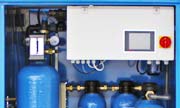
SCM 24
|
|
Cleans 24.000 liters per day
|
SCM 60
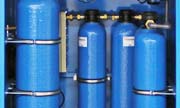
|
|
Cleans 60.000 liters per day
|
Video: How it works
The SCG Advantage
Our market-leading, water cleaning solutions have many advantages. To read more click the items below:
No Chemicals
Our machines and technology does not use any chemicals, at all.
Read more...
No Waste Water
Our machines do not waste any water. Yield = 100%.
Read more...
Low energy use
Uses 50 times less energy than a Reverse Osmosis Machine.
Read more...
Low ownership cost
Lower maintenance and operation costs due to our technology.
Read more...
Easy to install
Simple "plug and play" installation makes for easy deployment.
Read more...
Extremely compact
A compact system, contained in an easy to transport cabinet.
Read more...
Outperforms R.O.
SCG technologies outperform Reverse Osmosis systems.
Read more...
Faster ROI
Get a faster Return on Investment with our systems.
Read more...
Latest News
Latest Blog Posts
| Chemicals in water treatment? |
| Water storage - Whats best for keeping water clean and drinkable? |
| Case: Disaster Management Water Treatment |
Contact SCG
891 Showroom Place
Suite 101
Chula Vista, CA, 91914
Phone: +1 619-878-2730
Contact us by email