






Clean Water for a Remote Swiss Mountain Village
High in the Swiss Alps, a small mountain village faced a water-supply problem familiar to many isolated communities. Its spring-fed sources were naturally attractive, yet seasonal changes, heavy rainfall, and ageing infrastructure made water quality difficult to predict. During dry periods, available flow could fall sharply, while storms could carry sediment and microorganisms into the collection system.
Transporting treated water from a distant valley was technically possible but expensive and vulnerable to road closures. A local purification system offered a more resilient solution: use the existing water source, remove the relevant contaminants at the point of supply, and operate the equipment with limited energy and maintenance.
This case study follows the planning principles behind that type of alpine installation. It shows how source analysis, suitable filtration technology, remote monitoring, and practical operating procedures can work together to protect drinking water in a hard-to-reach location.
Understanding The Village’s Water Risk
The village depended on several mountain springs gathered into a small reservoir above the inhabited area. The arrangement had served residents for years, but it provided limited protection against sudden changes in raw-water quality. Runoff after intense rain occasionally increased turbidity, while grazing areas and nearby soil created potential pathways for bacteria and agricultural residues.
The water was not consistently unsafe, but its quality varied enough to make reliance on basic mechanical screening unsuitable. A reliable treatment design had to account for both everyday conditions and short-term contamination events. This distinction was important because a system designed only around average water quality could fail precisely when the community needed it most.
The project team began with sampling at different times of the year. Tests considered suspended solids, microbiological indicators, manganese, arsenic, pesticides, and other substances relevant to the geology and land use of the catchment. This helped separate confirmed treatment requirements from risks that needed monitoring rather than permanent removal equipment.
Designing Around Local Conditions
A remote village cannot be treated like a large urban utility. Space may be limited, access roads may be blocked by snow, and there may be no specialist operator available on site every day. The treatment room therefore had to be compact, robust, and easy to inspect. Components were selected for dependable operation rather than maximum complexity.
The design also had to preserve the natural advantages of the spring source. Instead of adding a chemical dosing process, the installation used a purification sequence based on filtration and physical treatment. Depending on test results, such a sequence can target particles, iron and manganese, microorganisms, and dissolved contaminants through different stages.
For facilities with more demanding water-quality requirements, industrial water treatment principles can be adapted to a smaller municipal setting. The key is to match the technology to the source profile, flow rate, pressure conditions, and expected changes throughout the year.
Building A Reliable Treatment Train
The village installation was planned as a series of complementary barriers. A preliminary filter protected downstream equipment from larger particles. A media-based stage then reduced turbidity and addressed naturally occurring metals such as manganese. Where microbiological protection was required, a final disinfection barrier provided additional security before water entered the distribution network.
The system’s value came from the combination of stages rather than from one universal filter. Each part had a specific role, and the overall arrangement was sized to the village’s peak demand without wasting energy during low-consumption periods. This approach reduced pressure losses and helped keep pumping requirements under control.
A central consideration was the reduction of unwanted by-products. Conventional treatment can create chemical residues, sludge, or reject water that must be stored and disposed of. A low-waste configuration was better suited to the mountain environment, where transporting consumables and removing residual materials would increase operating costs and environmental impact. The technology selection was therefore guided by the broader principles of water purification, with attention to both contaminant removal and the complete operating cycle.
| Project consideration | Practical response | Benefit for the village |
|---|---|---|
| Variable spring quality | Seasonal sampling and adaptable treatment stages | Better protection during rain and thaw |
| Limited technical staff | Simple controls, clear alarms, and accessible components | Easier routine operation |
| Winter access restrictions | Compact indoor installation and planned spare parts | Fewer emergency journeys |
| Microbiological risk | Multiple treatment barriers and verification testing | Safer drinking-water distribution |
| Low-flow periods | Demand-based operation and efficient pumping | Reduced energy consumption |
| Environmental sensitivity | Minimal chemicals and limited waste production | Lower impact on the alpine setting |
Managing Installation In A Remote Setting
Transport and construction required careful coordination. Equipment had to reach the village before severe winter weather, and the treatment room needed enough space for delivery, assembly, inspection, and future servicing. The project schedule included contingency time because mountain roads can close unexpectedly due to snow, rockfall, or heavy rainfall.
The installation was arranged so that operators could see the main pressure gauges, valves, and control indicators without entering a confined or difficult-to-reach area. Labels and operating instructions were kept clear and practical. In a remote setting, good design includes the human workflow: who checks the system, what they look for, and how they respond when an alarm appears.
Training was provided for local personnel responsible for basic inspections and reporting. Specialist support remained available for calibration, performance reviews, and unusual water-quality events. This balance allowed the village to retain local control while avoiding the expectation that a resident should become a full-time water-treatment engineer.
Monitoring Performance Through The Seasons
Once the system was operating, verification focused on more than whether the equipment started and stopped correctly. Samples were compared before and after treatment, with attention to turbidity, microbiological indicators, manganese, and any source-specific contaminants identified during the assessment. Tracking results over time helped confirm that the purification process remained effective as weather and water demand changed.
Remote monitoring also improved oversight. Flow, pressure, operating status, and alarm conditions could be reviewed without requiring an immediate journey to the facility. This did not replace physical inspections, but it helped distinguish a genuine treatment issue from a temporary electrical or communications fault.
Preventive maintenance was kept straightforward. Filter media, seals, sensors, and other wear components were listed in a service schedule, while critical spare parts were stored locally or made available through an agreed supply process. Such preparation matters in alpine communities because a minor component failure can otherwise become a prolonged interruption.
Wider Value For Alpine Communities
The project improved more than the quality of water at household taps. A dependable local supply supported tourism, small farms, hospitality businesses, public buildings, and emergency services. It also reduced dependence on tanker deliveries or bottled water during periods when the source required additional protection.
The environmental advantages were equally significant. Treating water near its source reduced vehicle movements and avoided the energy associated with long-distance transport. A process that uses few or no treatment chemicals also simplified storage and reduced the risk of accidental release in a sensitive mountain landscape.
This approach reflects a wider commitment to practical sustainability. Swiss Cleanwater Group describes its work through the principles of its mission and approach, combining contaminant removal with responsible resource use. For a remote community, sustainability is measured in daily reliability as well as in reduced waste and energy demand.
Planning A Similar Water Project
A successful mountain water project begins with local evidence rather than a predetermined product. Municipalities and facility owners can use the following priorities when assessing a spring, borehole, or surface-water source:
- Test raw water during different seasons, including after heavy rainfall and snowmelt.
- Identify confirmed contaminants and distinguish them from risks that only require monitoring.
- Select treatment stages according to flow, pressure, peak demand, and available building space.
- Plan for local operation with clear alarms, accessible components, and practical staff training.
- Include maintenance, spare parts, laboratory verification, and winter access in the original budget.
The village case demonstrates that a remote location does not automatically require an oversized or complicated treatment plant. A carefully assessed source and a well-integrated purification system can provide dependable drinking water while keeping energy use, waste, and logistical demands under control.
Municipal authorities, engineering teams, and owners of isolated facilities can begin by reviewing their source data and treatment objectives with Swiss Cleanwater Group. A site-specific assessment can turn an uncertain mountain supply into a resilient clean-water system designed for the people and landscape it serves.
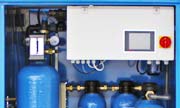
SCM 24
|
|
Cleans 24.000 liters per day
|
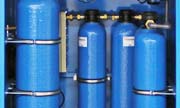
SCM 60
|
|
Cleans 60.000 liters per day
|
Video: How it works
The SCG Advantage
Our market-leading, water cleaning solutions have many advantages. To read more click the items below:
No Chemicals
Our machines and technology does not use any chemicals, at all.
Read more...
No Waste Water
Our machines do not waste any water. Yield = 100%.
Read more...
Low energy use
Uses 50 times less energy than a Reverse Osmosis Machine.
Read more...
Low ownership cost
Lower maintenance and operation costs due to our technology.
Read more...
Easy to install
Simple "plug and play" installation makes for easy deployment.
Read more...
Extremely compact
A compact system, contained in an easy to transport cabinet.
Read more...
Outperforms R.O.
SCG technologies outperform Reverse Osmosis systems.
Read more...
Faster ROI
Get a faster Return on Investment with our systems.
Read more...
Latest News
Latest Blog Posts
| Chemicals in water treatment? |
| Water storage - Whats best for keeping water clean and drinkable? |
| Case: Disaster Management Water Treatment |
Contact SCG
891 Showroom Place
Suite 101
Chula Vista, CA, 91914
Phone: +1 619-878-2730
Contact us by email