








Designing a sustainable water system for a large livestock operation
A large livestock operation needs a water system that can deliver safe, reliable water every day of the year. Cattle, pigs, poultry, and other animals depend on consistent access to water for hydration, feed intake, growth, milk production, egg production, and general health. A short interruption can quickly become an animal welfare issue and a major operational cost.
Sustainability adds another layer of responsibility. The system must limit energy consumption, chemical use, wastewater, maintenance demands, and unnecessary water losses while still meeting strict hygiene requirements. The best design begins with the characteristics of the site rather than with a specific piece of equipment.
Water quality can change between seasons and between sources. Groundwater may contain iron, manganese, arsenic, uranium, or agricultural residues, while surface water can carry bacteria, pesticides, sediment, and organic matter. A properly planned treatment process protects animals, equipment, workers, and the surrounding environment.
Establish the operation’s water demand
The first design task is to calculate daily and peak demand. Livestock drinking requirements vary by species, body weight, age, production stage, feed composition, and temperature. Dairy cattle, for example, may consume substantially more water during hot weather and peak lactation. Poultry houses have different flow patterns, with demand concentrated around feeding and active periods.
The calculation should include drinking water, cleaning, cooling, veterinary procedures, milk-house operations, vehicle washing, and any processing activities. Peak hourly flow matters as much as average daily volume because undersized pumps, pipes, storage tanks, or treatment units can reduce pressure at the worst possible time.
A practical design includes reserve storage for power failures, pump maintenance, contamination events, and extreme weather. Automated level monitoring can identify abnormal consumption, such as a damaged drinker line or a leaking valve, before the loss becomes significant.
Assess the source before selecting equipment
A laboratory analysis should guide every treatment decision. At minimum, testing should cover microbiological indicators, turbidity, pH, conductivity, hardness, nitrate, iron, manganese, arsenic, uranium, pesticides, and other locally relevant contaminants. The analysis should be repeated during different seasons if the source is vulnerable to agricultural runoff or changing groundwater conditions.
Source protection is equally important. A well should be properly sealed and located away from manure storage, septic systems, fuel areas, and drainage channels. Surface-water intakes require protection from livestock access, flooding, algal growth, and upstream contamination. Good source management reduces the treatment burden and improves system resilience.
The treatment objective should distinguish between water intended for animal consumption and water used for cleaning or irrigation. While all uses require careful management, drinking water generally demands the highest microbiological control and the most consistent quality. The design should also consider how mineral deposits, corrosion, or organic buildup could affect drinker nipples, dosing lines, milking equipment, and storage tanks.
Build a treatment train around actual risks
A sustainable system usually combines several treatment stages rather than relying on one universal device. Pre-filtration can remove sand, silt, and larger particles. Depending on the test results, oxidation and filtration may address iron and manganese, while specialized media or membrane processes may be needed for arsenic, uranium, or persistent chemical contaminants.
Disinfection is essential when bacteria, viruses, or other pathogens are present or when the distribution network creates a risk of recontamination. Ultraviolet treatment can provide chemical-free microbial control when the water has low turbidity and the equipment is correctly sized. Other approaches may be appropriate where residual protection is needed throughout extensive pipework.
The water treatment solutions available from Swiss Cleanwater Group include technologies designed to address contaminants such as manganese, arsenic, bacteria, pesticides, and uranium while reducing chemical inputs and waste. The right configuration still depends on the source analysis, flow requirements, maintenance capacity, and the quality target established for the farm.
Treatment equipment should be installed with bypasses, isolation valves, sample points, pressure gauges, and easy access for inspection. Redundancy may be justified for critical operations, especially dairy farms, hatcheries, or sites where a treatment failure could affect thousands of animals within hours.
| System element | Primary purpose | Sustainability considerations |
|---|---|---|
| Source protection | Prevent contamination before extraction | Reduces treatment demand and replacement costs |
| Sediment pre-filter | Remove sand, silt, and suspended solids | Protects downstream equipment and limits clogging |
| Iron and manganese treatment | Control staining, taste, deposits, and toxicity risks | Select low-waste media and efficient backwashing |
| Specialized contaminant removal | Address arsenic, uranium, pesticides, or other dissolved pollutants | Match capacity to verified concentrations to avoid oversizing |
| Disinfection | Reduce pathogens in treated water | Use energy-efficient equipment and monitor performance |
| Storage and pressure system | Balance peak demand and maintain delivery | Insulate tanks, prevent stagnation, and use efficient pumps |
| Monitoring and controls | Detect quality changes, leaks, and equipment faults | Enables preventive maintenance and reduces water loss |
Design distribution for animal health
Water quality can deteriorate after treatment if the distribution network is poorly designed. Long dead-end lines, warm storage tanks, low-flow areas, and rough internal surfaces can encourage biofilm formation. The layout should keep runs as short and direct as possible, use suitable food-contact materials, and provide flushing points at the ends of lines.
Drinkers must deliver adequate flow at the pressure required by each species and housing system. Too little flow discourages consumption, while excessive pressure can cause splashing, wet bedding, and wasted water. Regulators, correctly positioned valves, and pressure testing help maintain consistent performance across barns.
Storage tanks should be protected from sunlight, insects, dust, and unauthorized access. They need inspection ports, overflow protection, drainage, and cleaning procedures. In cold climates, exposed pipes may require insulation or heat protection; in hot climates, tank placement and ventilation can help control temperature without intensive cooling.
Reduce energy, waste, and maintenance loads
Pumps are often among the largest energy users in a farm water system. Variable-speed drives can adjust output to changing demand, while correctly sized pumps avoid the inefficiency of constant oversupply. Pressure sensors and automated controls can coordinate pumping with storage levels and animal-use patterns.
Treatment backwash and reject water should be managed as part of the original design. Depending on its composition, it may be suitable for approved non-potable uses, controlled irrigation, or disposal through a permitted system. Water containing concentrated contaminants must never be discharged where it could reach wells, streams, soil used for feed production, or animal housing.
Chemical-free or low-chemical processes can simplify handling and reduce the risk of dosing errors, but they still require disciplined operation. Filters need scheduled servicing, ultraviolet systems need lamp and sleeve maintenance, and membranes require monitoring for fouling and pressure changes. A system that is easy to inspect is more sustainable than one with marginally lower energy use but poor access to critical components.
Monitor performance throughout the year
A sustainable water installation needs measurable operating targets. Useful indicators include treated-water flow, pressure, turbidity, conductivity, disinfection status, pump runtime, tank levels, filter differential pressure, and water use per animal or per unit of production. Trends can reveal a developing fault before animals are affected.
Routine sampling should reflect the risk profile of the site. Microbiological testing may need to be more frequent after repairs, flooding, treatment interruptions, or changes in source conditions. Chemical testing should be repeated when groundwater levels shift, nearby land use changes, or unusual taste, odor, staining, or animal health concerns appear.
Staff training is a core part of the design. Operators should know how to isolate equipment, collect samples, respond to alarms, clean drinker lines, document maintenance, and activate an emergency water supply. Clear procedures reduce downtime and ensure that sustainability goals are maintained during busy production periods.
Prioritize practical decisions during planning
A project team should combine the water analysis, livestock requirements, site conditions, and long-term operating budget before approving equipment. Capital cost alone can be misleading: a low-priced system may create excessive filter waste, high energy bills, frequent service calls, or premature replacement of pumps and drinkers.
The following priorities help keep the installation efficient and dependable:
- Protect the source and prevent manure, fuel, and surface runoff from entering the water supply.
- Size treatment, storage, pumping, and distribution components for both average and peak demand.
- Choose contaminant-specific processes instead of applying unnecessary treatment to every water stream.
- Install monitoring points and alarms for pressure, flow, tank level, turbidity, and treatment performance.
- Create written schedules for sampling, filter service, disinfection checks, flushing, and emergency response.
The design should also allow future expansion. Additional barns, higher stocking levels, robotic milking, or new processing activities may change demand and water-quality requirements. Modular treatment units, spare connection capacity, and accessible service areas make future upgrades less disruptive.
A well-designed livestock water system protects animal health while conserving resources. It uses testing to determine what treatment is necessary, delivers water at the right quality and pressure, and controls waste from extraction through discharge. Efficient pumps, carefully managed storage, low-loss distribution, and preventive maintenance turn sustainability from a general objective into a daily operating practice.
Start with a complete source and demand assessment, then develop a treatment and distribution design around the farm’s measured conditions. Contact Swiss Cleanwater Group to discuss a site-specific approach for reliable, efficient water production across large-scale livestock operations.
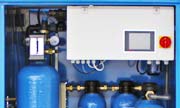
SCM 24
|
|
Cleans 24.000 liters per day
|
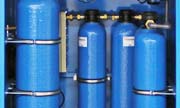
SCM 60
|
|
Cleans 60.000 liters per day
|
Video: How it works

The SCG Advantage
Our market-leading, water cleaning solutions have many advantages. To read more click the items below:
No Chemicals
Our machines and technology does not use any chemicals, at all.
Read more...
No Waste Water
Our machines do not waste any water. Yield = 100%.
Read more...
Low energy use
Uses 50 times less energy than a Reverse Osmosis Machine.
Read more...
Low ownership cost
Lower maintenance and operation costs due to our technology.
Read more...
Easy to install
Simple "plug and play" installation makes for easy deployment.
Read more...
Extremely compact
A compact system, contained in an easy to transport cabinet.
Read more...
Outperforms R.O.
SCG technologies outperform Reverse Osmosis systems.
Read more...
Faster ROI
Get a faster Return on Investment with our systems.
Read more...
Latest News
Latest Blog Posts
| Chemicals in water treatment? |
| Water storage - Whats best for keeping water clean and drinkable? |
| Case: Disaster Management Water Treatment |
Contact SCG
891 Showroom Place
Suite 101
Chula Vista, CA, 91914
Phone: +1 619-878-2730
Contact us by email