


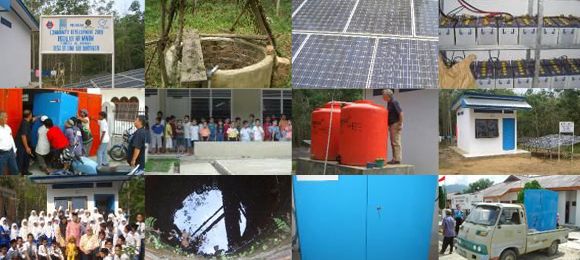







How chemical-free filtration removes manganese from groundwater
Groundwater can look clear and still contain dissolved manganese. In its natural state, manganese is often present as soluble manganese(II), written as Mn²⁺. This form passes through ordinary sediment filters because the particles are too small to be trapped. When the water reaches air, however, manganese can oxidise into solid manganese oxides that can be separated from the water.
A chemical-free filtration system uses this natural reaction in a controlled treatment process. Instead of dosing chlorine, potassium permanganate, or another oxidising agent, it introduces oxygen and provides a filtration medium that encourages oxidation and captures the resulting particles. The exact design depends on manganese concentration, pH, temperature, flow rate, and other groundwater characteristics.
The objective is reliable production of safe, attractive water with limited waste and low operating complexity. Systems must still be designed around laboratory analysis and local drinking-water requirements. Manganese is only one part of groundwater quality, and iron, arsenic, ammonium, hydrogen sulphide, bacteria, and organic matter can affect the treatment strategy.
Why manganese is difficult to remove
Manganese in groundwater is commonly dissolved and colourless. Because Mn²⁺ does not form visible sediment under oxygen-poor underground conditions, a standard cartridge, sand filter, or mesh screen usually cannot remove it effectively. The water may appear clean at the tap while leaving grey, brown, or black deposits in pipes, tanks, laundry, and fixtures.
Once manganese is oxidised, it forms less soluble compounds such as manganese dioxide and related manganese oxides. These particles can attach to filter grains or accumulate in the upper layer of a specialised media bed. The treatment challenge is therefore to convert dissolved manganese into a solid form and retain it before the water enters the distribution system.
Manganese can also interact with iron and other substances. Iron may consume available oxygen and occupy filtration capacity, while low pH slows manganese oxidation. A proper groundwater assessment measures both manganese and related parameters rather than selecting equipment from manganese concentration alone.
The treatment sequence inside the filter
The first stage is usually pretreatment. A pump brings groundwater into the system, where coarse particles may be removed and the flow is regulated. If necessary, the water is exposed to air through aeration, a venturi, a spray arrangement, or another oxygen-transfer method. This adds dissolved oxygen without adding a chemical oxidant.
Oxygen changes the chemical environment around manganese. With suitable pH and contact conditions, dissolved Mn²⁺ begins to oxidise and form insoluble manganese oxide particles. These particles are retained by the filter bed. In many systems, the media surface also acts as a catalyst, helping further manganese oxidation take place as water passes through the bed.
A mature filter can become increasingly effective because manganese oxide deposits on the media and creates additional reactive surfaces. This is sometimes described as catalytic filtration or an autocatalytic process. The result is a treatment cycle in which the bed supports oxidation, captures solids, and gradually develops the properties needed for stable manganese removal.
The process does not mean that every groundwater source can be treated with the same filter. If the pH is too low, oxygen transfer is insufficient, or competing contaminants are high, the system may need additional stages. A pilot test or validated design helps establish contact time, media depth, filtration velocity, and expected performance before installation.
What the filtration media does
Filter media provides both physical retention and a reactive surface. Conventional granular media can capture oxidised particles, while specialised manganese-removal media may accelerate the conversion of dissolved manganese. The media selection should reflect the source-water chemistry, required flow, backwash water availability, and the desired service life.
During normal operation, groundwater moves through the media bed. Dissolved manganese encounters oxygen and active surfaces, changes into a solid oxide, and remains in the bed. Clean water exits through the underdrain system. Since the process does not rely on a chemical feed pump, it can reduce chemical storage, handling, dosing control, and the risk of excess oxidant reaching the water.
Backwashing is essential. Captured manganese oxide and other suspended material eventually increase resistance through the bed. A controlled upward flow expands and rinses the media, carrying accumulated solids to drain. Backwash frequency depends on loading and operating conditions, so the system should include appropriate controls and a suitable method for managing the resulting wastewater.
For a broader view of equipment used in source-water applications, the groundwater treatment system information explains how treatment equipment can be configured around the quality and intended use of a groundwater source.
| Treatment factor | Why it matters for manganese removal | Typical design response |
|---|---|---|
| Dissolved manganese level | Determines the oxidation and filtration load | Select media depth, flow rate, and backwash capacity |
| pH | Influences the speed and completeness of oxidation | Adjust treatment conditions or add a suitable process stage |
| Dissolved oxygen | Supports conversion of Mn²⁺ into solid manganese oxides | Use aeration or controlled oxygen transfer |
| Iron and suspended solids | Consume capacity and can clog the filter | Add pretreatment or increase cleaning frequency |
| Flow rate | Controls contact time and filtration performance | Size the vessel and pump for the actual demand |
| Backwash water | Removes captured manganese from the media | Provide automatic controls and responsible discharge management |
Why a chemical-free process can be sustainable
Chemical-free manganese removal can simplify operation at locations where chemical deliveries, storage rooms, or specialist handling are difficult. Rural water supplies, agricultural sites, remote facilities, and emergency installations may benefit from a process based on air, pressure, filtration, and automatic controls. Removing a chemical dosing stage can also reduce the number of consumable materials required.
Energy use is still part of the design. Pumps, air injection, control valves, and backwashing require power, so “chemical-free” does not mean completely resource-free. Efficient equipment selection, correctly sized vessels, demand-based operation, and a backwash schedule matched to actual loading help keep energy and water consumption under control.
A chemical-free system also avoids creating oxidant-related by-products and reduces the possibility of incorrect dosing. However, it still requires monitoring. Manganese breakthrough can occur when the media is exhausted, the flow exceeds its design rate, the pH changes, or the water chemistry shifts seasonally.
The system should be judged by treated-water results, operational stability, maintenance requirements, and total resource use. For drinking-water projects, the treatment train must be verified against the applicable national or regional standards rather than assessed by appearance alone. Information about wider clean drinking water solutions can help place manganese removal within a complete water-quality strategy.
How performance is checked and maintained
A reliable installation begins with a representative raw-water analysis. Useful measurements include manganese, iron, pH, alkalinity, turbidity, dissolved oxygen, ammonium, conductivity, temperature, and microbiological indicators. Sampling at different times can reveal seasonal changes that a single laboratory result may not show.
After commissioning, operators should monitor raw and treated manganese, pressure loss across the filter, flow rate, backwash performance, and any change in water colour or taste. Testing the treated water confirms whether the process is achieving its target. Pressure gauges and automatic alarms can identify clogging or abnormal flow before water quality deteriorates.
Maintenance commonly includes inspection of valves and controls, checking aeration components, reviewing backwash cycles, and replenishing or replacing media when required. The media should not be disturbed unnecessarily, because its active surface develops through operation. At the same time, delayed maintenance can allow solids to compact and reduce treatment capacity.
A treatment provider can use the test results to determine whether manganese is being removed by oxidation and filtration as intended. If results are inconsistent, the cause may be a raw-water change, inadequate oxygen transfer, unsuitable pH, excessive flow, or another contaminant competing for the media’s capacity.
Choosing the right configuration
The correct system size is based on peak demand as well as average consumption. A household, livestock facility, hotel, municipal well, and industrial process may have very different flow patterns. The filter must provide enough contact time and media volume while remaining practical to install, operate, and backwash.
It is also important to consider what happens after manganese removal. Drinking water may require disinfection or additional treatment for arsenic, pesticides, uranium, bacteria, or other contaminants. Process water may need different quality targets, while swimming pools and industrial systems may have specialised requirements. A complete design prevents a manganese filter from being treated as a universal solution.
Useful selection criteria include:
- Obtain a complete laboratory analysis before choosing media or equipment.
- Confirm the required treated-water manganese level and applicable regulations.
- Check peak flow, daily volume, pressure, and available space.
- Include aeration, pretreatment, or pH management when the water chemistry requires it.
- Plan backwash drainage, monitoring, and routine service from the beginning.
For a project involving a private well, community supply, farm, building, or mobile installation, the treatment concept should be tested against real operating conditions. The goal is a stable process that delivers clear, low-manganese water without unnecessary chemical consumption or oversized equipment.
Manganese removal becomes far more predictable when the water analysis, filtration media, oxygen supply, hydraulic design, and maintenance plan are considered together. Share the groundwater results and intended flow requirements with Swiss Cleanwater Group through its project contact channel to discuss a suitable chemical-free treatment configuration.
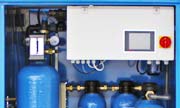
SCM 24
|
|
Cleans 24.000 liters per day
|
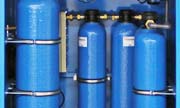
SCM 60
|
|
Cleans 60.000 liters per day
|
Video: How it works

The SCG Advantage
Our market-leading, water cleaning solutions have many advantages. To read more click the items below:
No Chemicals
Our machines and technology does not use any chemicals, at all.
Read more...
No Waste Water
Our machines do not waste any water. Yield = 100%.
Read more...
Low energy use
Uses 50 times less energy than a Reverse Osmosis Machine.
Read more...
Low ownership cost
Lower maintenance and operation costs due to our technology.
Read more...
Easy to install
Simple "plug and play" installation makes for easy deployment.
Read more...
Extremely compact
A compact system, contained in an easy to transport cabinet.
Read more...
Outperforms R.O.
SCG technologies outperform Reverse Osmosis systems.
Read more...
Faster ROI
Get a faster Return on Investment with our systems.
Read more...
Latest News
Latest Blog Posts
| Chemicals in water treatment? |
| Water storage - Whats best for keeping water clean and drinkable? |
| Case: Disaster Management Water Treatment |
Contact SCG
891 Showroom Place
Suite 101
Chula Vista, CA, 91914
Phone: +1 619-878-2730
Contact us by email