








Selecting Filtration Media For Multiple Water Contaminants
Water rarely contains a single contaminant. A groundwater source may carry iron, manganese, arsenic, uranium, bacteria, pesticides, and suspended solids at the same time. Surface water can add organic matter, turbidity, and changing microbial loads. Selecting a filter medium therefore requires more than matching one contaminant to one product.
A reliable treatment design begins with the water analysis, continues through media compatibility and process sequencing, and ends with practical monitoring requirements. The best solution removes the target pollutants while limiting pressure loss, media replacement, wastewater, chemical consumption, and energy use.
For municipalities, farms, industrial sites, buildings, and mobile systems, the treatment objective is safe water with predictable operating costs. A properly selected combination of filtration media can achieve that objective without creating a new waste stream or reducing performance when water quality changes.
Start With A Complete Water Profile
Laboratory testing should identify both regulated contaminants and properties that affect filtration. Useful parameters include pH, alkalinity, hardness, temperature, turbidity, total dissolved solids, dissolved oxygen, iron, manganese, arsenic species, uranium, nitrate, pesticides, bacteria, and organic carbon. Seasonal sampling is important when a source changes after rainfall, snowmelt, irrigation, or variations in groundwater levels.
Concentration alone does not determine media selection. Arsenic removal, for example, depends on whether arsenic is present as arsenite or arsenate. Iron and manganese may be dissolved or attached to particles. Organic compounds can compete for adsorption sites, while high hardness can cause scaling and reduce available pore space.
The analysis should also include flow rate, daily volume, peak demand, and the required treated-water quality. A medium that performs well in a small laboratory column may be unsuitable for a municipal system if the contact time is too short or the pressure loss becomes excessive during peak flow.
Match Media To Contaminant Chemistry
Different filtration materials work through different mechanisms. Mechanical media retain suspended particles by straining and depth filtration. Catalytic media promote the oxidation and capture of iron and manganese. Adsorptive materials bind dissolved contaminants such as arsenic, pesticides, and certain organic compounds. Ion exchange resins replace unwanted ions with more acceptable ones, while biological media support microorganisms that transform selected pollutants.
A single medium may address several contaminants, but its performance depends on water chemistry. Oxidation media can remove iron and manganese efficiently when pH and oxygen conditions are appropriate. Adsorptive media for arsenic may lose capacity when phosphate, silica, or organic matter competes for active sites. Activated carbon can reduce pesticides and taste or odor compounds, yet it is not a universal solution for metals or pathogens.
Media should therefore be selected according to verified removal capacity rather than broad marketing descriptions. Review capacity data, operating pH range, recommended filtration velocity, empty-bed contact time, backwash requirements, and sensitivity to competing substances. The goal is a treatment process that remains effective under actual operating conditions.
Build A Treatment Train
Multiple contaminants are usually best handled through a sequence of stages rather than one overloaded filter. A typical arrangement may begin with coarse screening or sediment removal, followed by iron and manganese treatment, a specialized adsorption stage for arsenic or uranium, and a final barrier for microbial control. Pesticide or organic-compound removal may require activated carbon before or after other stages, depending on the water analysis.
The order matters. Removing turbidity and precipitated metals first protects finer media from clogging. Oxidation can convert dissolved iron and manganese into particles that are easier to capture, but those particles must then be retained and removed through backwashing or another separation step. A carbon stage placed after effective prefiltration can last longer because it is not filled prematurely with sediment.
Some systems can combine functions in a compact vessel, especially where a suitable catalytic or adsorptive medium addresses several pollutants. However, compactness should not replace process verification. The designer must confirm that all contaminants receive enough contact time and that one contaminant will not rapidly exhaust the medium needed for another.
For installations with limited space, compact filtration systems can help reduce the footprint while preserving a staged treatment concept. This is especially relevant for buildings, remote facilities, mobile units, and projects where civil works are restricted.
Compare Media Performance
The following comparison provides a starting point for matching common media types to contaminant groups. Actual selection should be confirmed with source-water testing and supplier performance data.
| Media Type | Common Targets | Main Mechanism | Important Conditions |
|---|---|---|---|
| Multimedia or sand media | Turbidity, suspended solids, precipitated iron and manganese | Depth filtration | Requires suitable particle loading and regular backwashing |
| Catalytic oxidation media | Dissolved iron, manganese, hydrogen sulfide | Oxidation and surface capture | Depends on pH, dissolved oxygen, and regeneration or backwash method |
| Activated carbon | Pesticides, taste, odor, chlorine, some organic compounds | Adsorption | Capacity varies with organic load, contact time, and competing compounds |
| Iron-based adsorbent | Arsenic, phosphate, selected metals | Surface adsorption and reaction | Arsenic form, pH, phosphate, and disposal of spent media are significant |
| Ion exchange resin | Nitrate, hardness, selected dissolved ions | Reversible ion exchange | Requires regeneration, brine management, and control of competing ions |
| Specialized uranium media | Uranium and selected dissolved contaminants | Selective adsorption or ion exchange | pH, alkalinity, competing ions, and media disposal affect capacity |
| Membrane or fine barrier | Bacteria, viruses, dissolved or particulate contaminants depending on type | Size exclusion | Needs pretreatment, pressure, integrity monitoring, and concentrate management |
The table highlights why “one filter for everything” is often an unreliable approach. A medium with excellent arsenic capacity may have little effect on pesticides. A sediment filter can protect downstream equipment but cannot remove dissolved uranium. Biological safety may require a separate validated barrier even when water appears clear.
Media combinations must also be checked for interactions. An upstream oxidant, for example, may damage downstream carbon or change the chemical form of a contaminant. Conversely, a controlled oxidation stage can improve the performance of a later filter. Pilot testing or a carefully designed column trial can reveal these effects before full-scale installation.
Account For Operation And Waste
Filtration media need space, flow, and maintenance. Hydraulic loading that is too high reduces removal efficiency and may carry captured particles into treated water. A vessel that is too small will require frequent backwashing or replacement, while an oversized system can increase capital cost without improving water quality.
Backwash water, spent carbon, exhausted adsorption media, and regeneration brine should be included in the design from the beginning. A sustainable system minimizes these outputs, but it cannot ignore them. Spent media may contain concentrated arsenic, uranium, pesticides, or metals and may require controlled handling according to local regulations.
Chemical-free treatment can be advantageous where operators want fewer deliveries, simpler storage, and lower environmental risk. Still, “chemical-free” does not mean maintenance-free. Operators must inspect valves, verify flow, monitor pressure differential, maintain disinfection barriers where needed, and follow a media replacement or backwash schedule.
Energy use is another selection criterion. Gravity-fed or low-pressure filtration may suit some sources, while membranes and high-rate systems may require pumps. Compare energy per cubic metre, not just the rated power of individual equipment. A slightly larger vessel with lower pressure loss may deliver lower lifetime energy consumption.
Validate Safety And Long-Term Capacity
A media specification should state the expected removal range, breakthrough point, operating conditions, and testing method. Ask whether performance data comes from real water, synthetic water, or a short laboratory test. Real-source trials are particularly valuable when several contaminants compete for the same adsorption sites.
Monitoring should be linked to the treatment objective. Pressure gauges and flow meters reveal hydraulic problems. Turbidity and iron or manganese tests indicate prefiltration performance. Arsenic, uranium, pesticide, and microbiological analyses confirm whether the media is still protecting public health. Sampling before and after each critical stage helps locate performance loss before it affects the whole system.
Capacity calculations should include peak flow, seasonal concentration increases, and a safety margin. Breakthrough can occur earlier than expected when contaminant levels rise or another dissolved substance occupies active sites. A treatment provider with experience across municipal, agricultural, industrial, and remote applications can help translate laboratory data into a robust operating plan. Swiss Cleanwater Group provides water-treatment technology and application information for projects requiring efficient contaminant removal with reduced chemical and waste demands.
Practical Selection Priorities
Use the following priorities when comparing filtration media and complete treatment systems:
- Test the source water for contaminants, chemical conditions, seasonal variation, and peak demand before choosing a medium.
- Separate particle removal, dissolved-contaminant adsorption, ion exchange, and microbial protection into clearly validated treatment functions.
- Check media capacity against competing substances such as phosphate, silica, hardness, organic matter, and elevated iron.
- Calculate pressure loss, backwash volume, spent-media handling, replacement intervals, and energy use over the system’s operating life.
- Specify monitoring points and breakthrough limits so operators can identify declining performance before treated water falls outside requirements.
Turn Analysis Into A Reliable System
The right filtration media is the one that performs consistently within the complete treatment process. It must suit the contaminant chemistry, flow conditions, available space, maintenance capability, and environmental objectives of the site. A well-designed sequence also protects each stage, extends media life, and makes water quality easier to verify.
Begin with representative laboratory samples, define the required treated-water standard, and compare media using real operating data rather than removal claims alone. For a tailored assessment of contaminants, equipment configuration, and sustainable operating options, contact Swiss Cleanwater Group and move from water analysis to a dependable purification system.
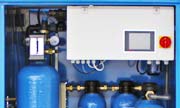
SCM 24
|
|
Cleans 24.000 liters per day
|
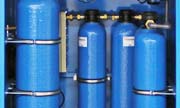
SCM 60
|
|
Cleans 60.000 liters per day
|
Video: How it works
The SCG Advantage
Our market-leading, water cleaning solutions have many advantages. To read more click the items below:
No Chemicals
Our machines and technology does not use any chemicals, at all.
Read more...
No Waste Water
Our machines do not waste any water. Yield = 100%.
Read more...
Low energy use
Uses 50 times less energy than a Reverse Osmosis Machine.
Read more...
Low ownership cost
Lower maintenance and operation costs due to our technology.
Read more...
Easy to install
Simple "plug and play" installation makes for easy deployment.
Read more...
Extremely compact
A compact system, contained in an easy to transport cabinet.
Read more...
Outperforms R.O.
SCG technologies outperform Reverse Osmosis systems.
Read more...
Faster ROI
Get a faster Return on Investment with our systems.
Read more...
Latest News
Latest Blog Posts
| Chemicals in water treatment? |
| Water storage - Whats best for keeping water clean and drinkable? |
| Case: Disaster Management Water Treatment |
Contact SCG
891 Showroom Place
Suite 101
Chula Vista, CA, 91914
Phone: +1 619-878-2730
Contact us by email