


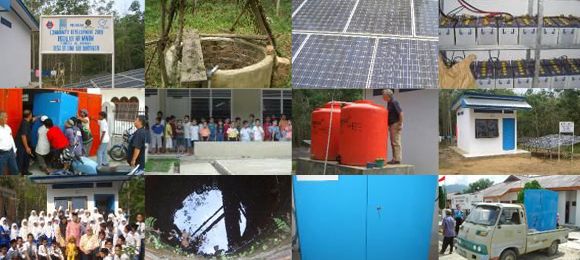







Sizing a Chemical-Free Filtration System for a Community Well
A community well can provide a dependable drinking-water source, but its treatment system must be sized around real operating conditions rather than the pump nameplate alone. The correct design accounts for average consumption, peak demand, raw-water quality, seasonal changes, pressure requirements, maintenance, and future growth.
Chemical-free treatment may use physical filtration, adsorption, catalytic media, membrane processes, or other separation technologies. The appropriate method depends on the contaminants present and the water chemistry. A system designed for manganese and iron, for example, may require a different treatment sequence from one intended to reduce arsenic, uranium, pesticides, or bacteria.
The sizing process should begin with laboratory data and a clear demand profile. It should then translate those findings into a treatment flow rate, vessel arrangement, media volume, backwash capacity, storage requirement, and control strategy. This approach helps a municipality or community avoid both undersizing, which causes poor water quality, and oversizing, which increases capital and operating costs.
Start with a reliable water-quality profile
Collect representative samples from the well before selecting equipment. At minimum, test for the contaminants regulated or monitored in the area, along with pH, alkalinity, hardness, turbidity, temperature, conductivity, dissolved oxygen, and total dissolved solids. Include iron and manganese where staining or metallic taste is present, and test for arsenic, uranium, pesticides, and microbiological contamination when the geology or land use indicates a risk.
One sample rarely captures the full range of conditions. Samples taken during different seasons, pumping conditions, or drought periods can reveal changes in concentration and temperature. A well that appears stable in spring may show higher mineral levels during prolonged pumping or altered bacterial activity after heavy rainfall.
The treatment objective must also be defined. “Safe drinking water” is a regulatory outcome, while the equipment needs a measurable target, such as a maximum manganese concentration after filtration or a required bacterial reduction. Establishing influent and finished-water limits allows the designer to determine whether one process is sufficient or whether several treatment stages are needed.
Calculate actual community demand
Begin with the population served, but do not stop at a daily average. Estimate residential use, public buildings, schools, commercial customers, livestock, irrigation, and any process water supplied by the same well. Account for occupancy changes, projected housing development, and seasonal visitors.
Average daily demand is useful for estimating annual consumption and storage, while peak hourly and peak instantaneous flows determine pipe, pump, and filter capacity. A small community may have a modest daily volume but a sharp morning or evening peak. If the filter cannot pass that short-term demand, pressure will fall or untreated water may bypass the process.
A practical demand profile should include:
- Average daily flow in cubic metres per day or gallons per day
- Maximum day flow during high-use periods
- Peak hourly flow
- Short-duration instantaneous demand
- Required operating hours for the well and treatment plant
- Expected population and consumption growth
Storage can reduce the required treatment flow when the well and filtration unit operate steadily while a clean-water tank meets short peaks. Without storage, the treatment system generally needs to be rated for the highest flow that must pass through it.
Match flow to filtration capacity
Filter sizing is based on hydraulic loading rate, often expressed as flow per unit of media area. The allowable rate depends on the contaminant, media type, particle size, bed depth, temperature, and required removal performance. A rate that works for turbidity reduction may be unsuitable for adsorption or manganese removal.
The basic relationship is:
Filter area = design flow ÷ allowable loading rate
For a pressure vessel, the required diameter follows from the area, while media volume is calculated from bed area multiplied by bed depth. The design flow should normally be based on the selected peak condition, with appropriate allowance for declining performance, fouling, temperature, and future demand.
A supplier’s rated capacity should be treated as a starting point, not an automatic guarantee of finished-water quality. Ask whether the stated flow applies to continuous operation, a particular raw-water chemistry, a specific media depth, or a limited contaminant concentration. The Swiss Cleanwater Group provides treatment information and system details that can support an early comparison of available technologies.
Design around contact time and contaminant removal
Some chemical-free systems require sufficient contact between water and a treatment medium. Empty bed contact time is calculated by dividing the media volume by the flow rate. If the flow rises without a corresponding increase in media volume, contact time falls and removal may deteriorate.
For dissolved contaminants, the removal mechanism is especially important. Adsorptive media may have a finite capacity and can be affected by competing ions, pH, organic matter, or suspended solids. Catalytic media may require a particular dissolved-oxygen condition or pretreatment step. Membranes may achieve high separation but create a concentrate stream and require careful pretreatment.
Bacteria require separate attention. A physical filter may reduce microorganisms, but its performance depends on pore size, integrity, flow, and maintenance. If the public-health objective requires disinfection, the designer must verify that the chosen chemical-free configuration provides the necessary microbial barrier under validated operating conditions. Never assume that removal of minerals also means reliable pathogen control.
Account for backwash, redundancy, and controls
Backwashing expands or scours the media bed to remove accumulated solids and restore permeability. The backwash flow must be high enough for the media and water temperature, and the well or storage tank must supply that volume without interrupting the community’s essential demand. The design should also identify where backwash water will go and whether discharge permits apply.
A single filter may be acceptable for a small, noncritical application, but a community supply generally benefits from duty-and-standby or parallel units. Multiple vessels allow one unit to be serviced while another remains available. They also provide flexibility during high demand, media replacement, and abnormal raw-water conditions.
Controls should monitor pressure loss, flow, valve position, tank level, and water quality where appropriate. Automatic backwash schedules are useful, but differential pressure or turbidity triggers can provide a better response to changing conditions. Alarm signals should reach the operator responsible for the water system, especially when a bypass, low pressure, or treatment fault could affect compliance.
For a compact installation, a packaged unit may simplify deployment and reduce site work. The Water Cleaning Unit 600 can be reviewed as a reference point when comparing modular equipment, footprint, and stated operating capacity against the community’s measured flow requirements.
Compare sizing choices before selecting equipment
A useful comparison should include more than purchase price. Examine the required footprint, electrical demand, backwash volume, operator involvement, consumables, waste stream, expected media life, and ability to expand. Chemical-free operation can reduce chemical handling and residual waste, but it still requires inspection, cleaning, replacement parts, and responsible management of captured contaminants.
The following example shows how design assumptions influence equipment selection. The figures are illustrative; actual capacity must be confirmed through water analysis, pilot testing where necessary, and supplier calculations.
| Design item | Example basis | Sizing implication |
|---|---|---|
| Population served | 750 people | Establishes domestic demand |
| Average use | 180 litres/person/day | About 135 m³/day before other users |
| Maximum day factor | 1.5 | Raises design-day volume to about 203 m³/day |
| Peak treatment flow | 18 m³/h | Sets hydraulic capacity if storage is limited |
| Media loading rate | Supplier-specific | Determines required filter area |
| Redundancy | Two vessels | Allows service on one unit |
| Backwash supply | Separate clean-water tank | Prevents interruption during regeneration |
| Future allowance | 20% | Reserves capacity for population growth |
In this example, the design flow is not simply 135 m³/day divided by 24 hours. The engineer must determine whether the well runs continuously, whether storage covers short peaks, and whether other users create a higher instantaneous demand. A measured demand curve can prevent unnecessary oversizing while protecting pressure during busy periods.
Check energy, footprint, and long-term operation
Pumping energy is affected by well depth, pipe length, elevation, filter pressure loss, backwash requirements, and the need to pressurize distribution lines. Compare clean and dirty pressure losses, because a filter that appears efficient when new may consume substantially more energy as it loads with solids.
A low-energy design should reduce avoidable head loss, use appropriately sized pumps, and prevent excessive backwashing. The low-energy-use approach is relevant when comparing treatment technologies for remote sites, municipal facilities, farms, and other installations where operating costs matter over many years.
Consider the complete site layout: raw-water inlet, pretreatment, filtration vessels, clean-water storage, sampling points, drains, control panels, and operator access. Leave room to remove media and service valves. A system that fits on paper but cannot be maintained safely will create avoidable downtime.
Before final approval, verify the design against local drinking-water rules, pressure standards, discharge requirements, and operator capabilities. Request performance data for the actual contaminant concentrations, not only generic laboratory conditions. Where water quality is complex or variable, a pilot trial can confirm loading rates, media life, and finished-water results before full-scale construction.
A community well deserves a treatment system sized from evidence: verified water quality, measured demand, realistic hydraulic assumptions, and a maintenance plan that the local operator can sustain. To move from preliminary figures to a dependable design, share the well analysis, demand profile, site constraints, and treatment objectives with Swiss Cleanwater Group through its water treatment solutions team and request an application-specific assessment.
SCM 24

|
|
Cleans 24.000 liters per day
|
SCM 60

|
|
Cleans 60.000 liters per day
|
Video: How it works
The SCG Advantage
Our market-leading, water cleaning solutions have many advantages. To read more click the items below:
No Chemicals
Our machines and technology does not use any chemicals, at all.
Read more...
No Waste Water
Our machines do not waste any water. Yield = 100%.
Read more...
Low energy use
Uses 50 times less energy than a Reverse Osmosis Machine.
Read more...
Low ownership cost
Lower maintenance and operation costs due to our technology.
Read more...
Easy to install
Simple "plug and play" installation makes for easy deployment.
Read more...
Extremely compact
A compact system, contained in an easy to transport cabinet.
Read more...
Outperforms R.O.
SCG technologies outperform Reverse Osmosis systems.
Read more...
Faster ROI
Get a faster Return on Investment with our systems.
Read more...
Latest News
Latest Blog Posts
| Chemicals in water treatment? |
| Water storage - Whats best for keeping water clean and drinkable? |
| Case: Disaster Management Water Treatment |
Contact SCG
891 Showroom Place
Suite 101
Chula Vista, CA, 91914
Phone: +1 619-878-2730
Contact us by email