







How to Test for and Treat Uranium in Private Well Water
Private wells provide reliable water for millions of homes, farms, and rural businesses, yet the water quality is the owner’s responsibility. Uranium is one contaminant that may remain invisible because it has no dependable taste, smell, or color. A clear glass of well water can still contain naturally occurring uranium dissolved from surrounding rock.
Uranium exposure is primarily a long-term health concern. The kidneys are the main organ affected by excessive intake, so identifying the concentration and selecting a treatment system suited to the water chemistry are essential steps. Testing should always come before equipment selection.
A practical water safety program combines laboratory analysis, correctly sized treatment, routine maintenance, and follow-up testing. The goal is to reduce uranium to a safe level while preserving water pressure, limiting wastewater, and managing operating costs.
Understand Where Uranium Comes From
Uranium occurs naturally in certain geological formations. Groundwater can dissolve small amounts as it moves through bedrock, mineral deposits, and sediments. Concentrations vary considerably between neighboring wells, which means a result from another property cannot reliably predict the quality of your own supply.
Agricultural activity, industrial land use, and old mining areas may influence general groundwater quality, although naturally occurring uranium is the most common source in private wells. Uranium can appear alongside other concerns such as radium, arsenic, iron, manganese, hardness, nitrate, or bacterial contamination. A broad analysis is therefore more useful than ordering a single test in isolation.
For households planning a new well, purchasing property, or changing the use of an existing supply, water testing should be part of the decision process. Information about the development of water treatment and changing approaches to water safety is available in this history of water resource.
Arrange Reliable Laboratory Testing
The first step is to contact an accredited or certified laboratory that analyzes drinking water for uranium. Ask which sample bottle, preservation method, and shipping procedure the laboratory requires. Using the wrong container or allowing a sample to sit improperly can compromise the result.
Collect the sample from a regularly used cold-water tap, following the laboratory’s instructions. Remove aerators or filters if requested, let the water run for the specified period, and avoid touching the inside of the bottle or cap. A private well sample should represent the water normally consumed, not water collected from a hose or untreated storage tank.
Laboratories may report uranium in micrograms per liter, written as µg/L, or in milligrams per liter, written as mg/L. One milligram per liter equals 1,000 micrograms per liter. The United States Environmental Protection Agency’s public-water standard is 30 µg/L, while other jurisdictions may use different limits or guidance values. Compare the result with the rules that apply where the property is located.
If the result is elevated, confirm the finding with a second sample when advised by the laboratory or a water-treatment professional. Test the untreated well water before treatment and, later, the treated water at the point of use. A single test cannot show whether a treatment device continues to perform over time.
Match Treatment to Water Chemistry
Reverse osmosis is a widely used option for reducing uranium in household drinking water. In a point-of-use system, water passes through a semipermeable membrane that can reject dissolved uranium and many other inorganic contaminants. These units are commonly installed at a kitchen tap because treating only drinking and cooking water reduces equipment size and water use.
Ion exchange can also reduce uranium under suitable conditions. The process uses specialized resin that exchanges ions in the water and retains uranium. Performance depends on pH, competing minerals, hardness, sulfate, and the resin selected. The resin eventually requires regeneration or replacement, and the resulting concentrated waste must be handled responsibly.
Adsorptive media may be effective where the water chemistry is compatible with the selected material. These systems capture uranium on a filter medium, but capacity is limited. Breakthrough can occur if the cartridge is left in service too long, making scheduled replacement and laboratory verification important. Distillation can remove many dissolved minerals, although it may require significant energy and may be less practical for whole-house use.
| Treatment approach | Typical application | Main strengths | Important limitations |
|---|---|---|---|
| Reverse osmosis | Drinking and cooking tap | Broad contaminant reduction; compact point-of-use design | Produces a reject stream; membranes and prefilters need service |
| Ion exchange | Larger flow or dedicated treatment | Effective when resin and chemistry are correctly matched | Regeneration, resin replacement, and competing ions require management |
| Adsorptive media | Point-of-use or point-of-entry systems | Can operate with relatively low energy use | Media capacity varies; breakthrough monitoring is essential |
| Distillation | Small volumes of drinking water | Strong reduction of many dissolved substances | Energy intensive and usually slower than other methods |
A treatment specialist should review the complete laboratory report before recommending equipment. The best system for uranium may need prefiltration or conditioning to protect the main treatment stage. A solution designed around a single contaminant can perform poorly if iron, sediment, hardness, or microbial growth is ignored.
Consider Point Of Use Or Whole House Treatment
Point-of-use treatment is installed at a kitchen faucet, refrigerator line, or another tap used for drinking and food preparation. It is often the most efficient approach when uranium is the principal concern because it treats a limited volume of water. The system may include sediment filtration, activated carbon for taste and odor, reverse osmosis, and a final polishing stage.
Whole-house or point-of-entry treatment treats water before it reaches showers, bathroom taps, laundry equipment, and appliances. This may be appropriate when uranium levels are substantially elevated, when all household water must be controlled, or when other contaminants require treatment throughout the plumbing system. The design must account for peak flow, pressure loss, storage, drainage, and service access.
Waste management deserves careful attention. Reverse osmosis reject water contains a higher concentration of retained substances, while exhausted ion-exchange resin and spent media may also require controlled disposal. A responsible design minimizes waste where practical and identifies a lawful disposal route before installation.
Water treatment can also be integrated into broader resource planning. Properties that separate potable water from other household uses may benefit from learning about grey-water treatment, provided local regulations and health safeguards are followed. Greywater systems should never create a pathway for untreated or contaminated water to re-enter drinking-water lines.
Install And Maintain The System Correctly
A certified installer should size the equipment using the laboratory report, well yield, household demand, pressure, and expected flow rate. The installation should include bypass valves, sample ports, isolation valves, pressure gauges where appropriate, and a clear way to identify treated and untreated lines. These features make inspection and servicing easier.
Pre-treatment may be needed to reduce sediment, iron, manganese, or hardness. Without it, membranes can foul, valves can clog, and media can lose capacity prematurely. Disinfection of tanks and plumbing may also be necessary if bacteria are detected, but uranium treatment and microbial treatment are separate tasks that should not be confused.
Maintenance intervals depend on water quality and usage. Replace sediment filters before they become blocked, change carbon filters according to the manufacturer’s schedule, inspect membranes and storage tanks, and regenerate or replace ion-exchange resin as specified. Keep a written record of installation dates, filter changes, pressure readings, service visits, and laboratory results.
Do not assume that a device certified for one contaminant will remove uranium. Look for performance data from an independent certification body or laboratory, and verify that the claim applies to the specific model and operating conditions. A professional should explain expected uranium reduction, recovery rate, wastewater volume, and the point at which components must be replaced.
Verify Results And Protect Household Health
After installation, test treated water once the system has been flushed and stabilized. Compare the result with the untreated sample and the applicable drinking-water standard. Testing should be repeated periodically, especially after major well repairs, flooding, changes in taste or pressure, equipment failure, or a significant change in the untreated uranium concentration.
People in the home may need interim precautions while results are being confirmed or equipment is being installed. Use a known-safe alternative for drinking, cooking, making ice, and preparing infant formula if advised by local health authorities. Boiling does not remove uranium; because water evaporates while minerals remain, boiling can increase the concentration.
A treatment system should support a wider clean-water strategy rather than operate as an isolated appliance. Swiss Cleanwater Group describes clean drinking water solutions for applications ranging from private and public supplies to agriculture, buildings, industry, and mobile installations. The appropriate configuration still depends on site-specific testing and local requirements.
Practical Steps For A Safer Well
- Order a certified laboratory test for uranium and a broader panel of common well-water contaminants.
- Keep the laboratory report and compare results with the drinking-water limit in your jurisdiction.
- Obtain treatment recommendations based on pH, hardness, sulfate, iron, manganese, and flow rate.
- Choose equipment with documented uranium-reduction performance and accessible service components.
- Retest untreated and treated water on a regular schedule, recording every maintenance action.
A private well can remain a dependable source when its quality is measured and managed systematically. Begin with a properly collected laboratory sample, then use the results to select a treatment process that fits the household’s water demand and chemistry. For help assessing a uranium-removal application, contact Swiss Cleanwater Group with the well analysis, flow requirements, and intended use of the water so a suitable treatment pathway can be evaluated.
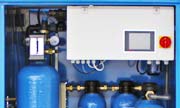
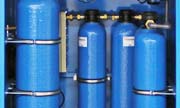
SCM 24
|
|
Cleans 24.000 liters per day
|
SCM 60
|
|
Cleans 60.000 liters per day
|
Video: How it works
The SCG Advantage
Our market-leading, water cleaning solutions have many advantages. To read more click the items below:
No Chemicals
Our machines and technology does not use any chemicals, at all.
Read more...
No Waste Water
Our machines do not waste any water. Yield = 100%.
Read more...
Low energy use
Uses 50 times less energy than a Reverse Osmosis Machine.
Read more...
Low ownership cost
Lower maintenance and operation costs due to our technology.
Read more...
Easy to install
Simple "plug and play" installation makes for easy deployment.
Read more...
Extremely compact
A compact system, contained in an easy to transport cabinet.
Read more...
Outperforms R.O.
SCG technologies outperform Reverse Osmosis systems.
Read more...
Faster ROI
Get a faster Return on Investment with our systems.
Read more...
Latest News
Latest Blog Posts
| Chemicals in water treatment? |
| Water storage - Whats best for keeping water clean and drinkable? |
| Case: Disaster Management Water Treatment |
Contact SCG
891 Showroom Place
Suite 101
Chula Vista, CA, 91914
Phone: +1 619-878-2730
Contact us by email