







How Advanced Media Filtration Removes Uranium From Well Water
Uranium can occur naturally in groundwater when water moves through rocks and mineral deposits that contain uranium-bearing compounds. It is invisible, tasteless, and odorless, so a private well or municipal borehole may produce clear water while still requiring treatment. The only dependable way to identify the problem is through laboratory analysis.
The concentration and chemical form of uranium determine the best purification method. Groundwater pH, alkalinity, sulfate, bicarbonate, iron, manganese, and other dissolved minerals can affect how readily uranium attaches to a treatment medium. A reliable design therefore begins with a complete water analysis rather than a standard filter selected from a single test result.
Advanced media filtration is widely used because it can target dissolved uranium without adding a continuous chemical feed. In a properly designed system, water passes through one or more pressure vessels filled with selective adsorption or ion-exchange media. The medium retains uranium while treated water continues to the storage tank or distribution network.
Why Uranium Occurs In Well Water
Uranium is a naturally occurring element found in certain granites, sandstones, shales, and other geological formations. Groundwater can dissolve small amounts as it travels through these layers, particularly when the water has chemical conditions that promote uranium mobility. Agricultural activity is not usually the primary source, although land use can influence groundwater chemistry and the movement of dissolved minerals.
In oxygen-rich groundwater, uranium commonly appears in its hexavalent form, known as uranium(VI), often associated with uranyl compounds. Bicarbonate and carbonate can keep these compounds dissolved, making ordinary sediment filters ineffective. A cartridge designed to remove turbidity may capture visible particles, but it will not reliably remove a dissolved contaminant.
Testing should include uranium concentration as well as parameters such as pH, hardness, alkalinity, conductivity, sulfate, nitrate, iron, and manganese. These results help determine whether the selected media will have sufficient capacity and whether pre-treatment is needed. Regular follow-up testing confirms that the system continues to protect the point of use.
How Selective Filtration Media Captures Uranium
Media filtration for uranium generally works through adsorption, ion exchange, or a combination of both mechanisms. Adsorptive media has a large reactive surface with sites that attract and retain uranium species. Ion-exchange media uses charged functional groups to exchange uranium-bearing ions with ions already attached to the resin or mineral structure.
The water remains in a vessel long enough for contact between the dissolved contaminant and the media. This contact time, together with flow rate, temperature, pH, and competing ions, influences removal performance. If the flow is too fast, uranium may pass through before the active sites can capture it. Correct vessel sizing is therefore as important as the choice of media.
Some treatment designs use a pre-filter to protect the uranium-removal bed from suspended solids, iron deposits, or biological growth. Where manganese or iron is present, a separate treatment stage may prevent those substances from coating the selective media. The result is a more stable filtration process and a longer useful service life.
Building A Complete Well Water Treatment Train
A uranium-removal installation may include a raw-water pump, sediment protection, one or more media vessels, flow controls, sampling points, and a treated-water tank. Depending on the source, additional stages can address manganese, arsenic, bacteria, pesticides, or hardness. This modular arrangement allows the system to respond to the full water profile instead of treating uranium in isolation.
A well-designed groundwater treatment system should account for peak demand, daily water use, pressure requirements, available installation space, and the consequences of a media changeout. Residential systems may be compact point-of-entry units, while municipalities, farms, and industrial facilities often require parallel vessels that allow continuous service during maintenance.
Backwashing may be used to loosen the bed and remove accumulated particles, although the correct operating method depends on the selected medium. Some installations are designed for minimal water consumption, while others use controlled rinsing at defined intervals. Any backwash or spent-media material should be handled according to local requirements because it can contain concentrated uranium.
Comparing Common Uranium Treatment Approaches
No treatment method is suitable for every well. Reverse osmosis can remove uranium effectively at the point of use, but it produces a concentrate stream and may require substantial pressure and membrane maintenance. Distillation uses heat and can be energy intensive. Conventional softeners are not generally a dependable choice for uranium unless specifically engineered and validated for that purpose.
Selective media filtration is often attractive for whole-building or continuous-flow applications because it can operate at relatively low pressure and avoid routine chemical dosing. The media still has a finite capacity, however, and its performance must be verified with treated-water sampling. A technology comparison should consider the contaminant level, flow demand, residual management, operating cost, and available technical support.
| Treatment approach | Main strength | Main consideration |
|---|---|---|
| Selective adsorption media | Targeted removal with low chemical use | Media capacity and breakthrough must be monitored |
| Ion exchange | Effective for selected dissolved uranium species | Competing ions can reduce capacity; resin management is required |
| Reverse osmosis | Broad removal of many dissolved contaminants | Produces concentrate and requires pressure and membrane care |
| Distillation | Can separate many dissolved minerals | High energy demand and slower production |
| Conventional sediment filtration | Protects later treatment stages | Does not remove dissolved uranium reliably |
The right choice may combine technologies. For example, a media bed can treat uranium at the main inlet while ultraviolet disinfection addresses microorganisms farther downstream. Treatment decisions should be based on pilot testing or validated performance data when water chemistry is complex.
Monitoring Breakthrough And Media Capacity
Uranium-removal media does not remain effective indefinitely. As active sites become occupied, the concentration in the treated water can gradually increase. This process, called breakthrough, may occur sooner than expected if the raw-water concentration rises or competing substances consume available capacity.
Flow totalizers, pressure gauges, and scheduled laboratory samples provide useful operational information. A sudden pressure increase can indicate fouling or bed compaction, while a gradual rise in uranium indicates exhaustion or chemical interference. Sampling before and after the vessel helps distinguish a source-water change from a treatment problem.
Replacement intervals should never be estimated from time alone. They are better calculated from the measured uranium load, daily water volume, media capacity, and safety margin. Spent media should be removed and transported in accordance with applicable regulations, especially where uranium levels or disposal classifications require special handling.
Reducing Energy Use And Operating Burden
A filtration system can be designed to operate with modest pressure and limited automation when the water source and demand are predictable. Proper vessel sizing reduces unnecessary pumping, while efficient controls can prevent excessive backwashing or repeated regeneration cycles. These details influence the long-term cost of clean water as much as the initial equipment price.
Swiss Cleanwater Group emphasizes low-energy treatment for applications where dependable purification must be balanced with operating efficiency. Avoiding routine chemical dosing can simplify storage and handling, but it does not remove the need for inspection, sampling, and responsible residual management.
Practical priorities for a dependable installation include:
- Test the raw water for uranium and the chemical parameters that affect media performance.
- Size the vessels for normal and peak flow while maintaining adequate contact time.
- Add pre-treatment when iron, manganese, sediment, or biological fouling could reduce media life.
- Install sampling points before and after the uranium-removal stage.
- Establish a written schedule for laboratory checks, pressure review, media replacement, and waste handling.
Matching The System To The Site
A private residence may need a compact point-of-entry unit, whereas a school, livestock operation, food processor, or public facility may require duplex vessels and automatic controls. Municipal and government projects also need documentation covering expected performance, maintenance access, alarm conditions, and continuity of supply.
Mobile, military, and emergency applications place additional demands on footprint, transport, power availability, and rapid commissioning. In these settings, the treatment train may be mounted on a skid or integrated into a containerized unit. The equipment must still provide representative sampling and a clear method for managing exhausted media.
A broader review of water quality guidance can help place uranium results alongside other concerns, including arsenic, bacteria, pesticides, manganese, and general mineral content. Treating several contaminants through coordinated stages can be more practical than installing disconnected devices that compete for space, pressure, or maintenance attention.
Move From Water Testing To Reliable Treatment
Uranium removal begins with knowing the water chemistry and ends with proving that treated water remains within the required limit. Selective media filtration can provide an efficient, chemical-light solution for many wells, but its success depends on correct media selection, contact time, pre-treatment, monitoring, and responsible media disposal.
Swiss Cleanwater Group can assess the source-water profile, treatment objective, flow requirements, and installation environment before recommending a suitable configuration. Arrange a technical evaluation and provide recent laboratory results so the treatment design can be matched to the actual well rather than a generic contaminant profile.
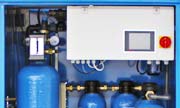
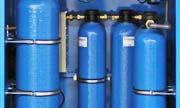
SCM 24
|
|
Cleans 24.000 liters per day
|
SCM 60
|
|
Cleans 60.000 liters per day
|
Video: How it works
The SCG Advantage
Our market-leading, water cleaning solutions have many advantages. To read more click the items below:
No Chemicals
Our machines and technology does not use any chemicals, at all.
Read more...
No Waste Water
Our machines do not waste any water. Yield = 100%.
Read more...
Low energy use
Uses 50 times less energy than a Reverse Osmosis Machine.
Read more...
Low ownership cost
Lower maintenance and operation costs due to our technology.
Read more...
Easy to install
Simple "plug and play" installation makes for easy deployment.
Read more...
Extremely compact
A compact system, contained in an easy to transport cabinet.
Read more...
Outperforms R.O.
SCG technologies outperform Reverse Osmosis systems.
Read more...
Faster ROI
Get a faster Return on Investment with our systems.
Read more...
Latest News
Latest Blog Posts
| Chemicals in water treatment? |
| Water storage - Whats best for keeping water clean and drinkable? |
| Case: Disaster Management Water Treatment |
Contact SCG
891 Showroom Place
Suite 101
Chula Vista, CA, 91914
Phone: +1 619-878-2730
Contact us by email