








Mobile water treatment for military forward operating bases
Reliable drinking water is a mission requirement at every military forward operating base. Personnel need safe supplies for drinking, food preparation, medical care, hygiene, vehicle maintenance, and livestock or working animals. When a base depends on tanker deliveries or uncertain local wells, water quality becomes a logistical and operational vulnerability.
A mobile purification system can turn available surface water, groundwater, or transported raw water into a dependable supply close to the point of use. The most effective design combines contaminant removal, compact equipment, low energy demand, and rapid deployment without creating a large stream of chemical waste.
Swiss Cleanwater Group develops water-treatment technologies for demanding environments, including mobile, government, military, industrial, and emergency applications. A properly specified system can help a forward base reduce supply-chain pressure while maintaining a high standard of potable water safety.
Operational water needs at a forward base
Water demand changes with troop numbers, mission duration, climate, and infrastructure. A small patrol support site may need a compact unit for drinking water, while a larger base may require continuous treatment for kitchens, showers, clinics, workshops, and accommodation blocks. Peak demand is often more important than the daily average because filling tanks, operating field kitchens, and supporting medical facilities can create sudden surges.
The source may also change during an operation. A borehole can contain arsenic, manganese, or uranium, while a river or reservoir may carry bacteria, pesticides, sediment, and organic matter. Flooding, agricultural runoff, damaged infrastructure, or deliberate contamination can further affect raw water. Portable treatment equipment should therefore be selected around laboratory analysis and field screening rather than based on appearance or a single contaminant assumption.
A modular arrangement gives commanders greater flexibility. Treatment skids, pumps, storage tanks, generators, hoses, and distribution points can be moved independently or assembled into a complete containerized water plant. Redundancy is valuable as well: bypasses, spare membranes, replacement lamps, duplicate pumps, and manual operating modes can keep essential production running when maintenance resources are limited.
Why chemical-free purification matters
Traditional field treatment may depend heavily on chlorine, coagulants, antiscalants, or other consumables. These materials can be effective when carefully dosed, but they require secure storage, trained handling, regular replenishment, and controlled disposal. Transporting them into remote areas adds weight and creates another dependency for the logistics chain.
A treatment approach based on physical separation and energy-efficient purification can reduce these burdens. Swiss Cleanwater Group describes its chemical-free treatment solutions as systems designed to remove targeted contaminants without adding treatment chemicals or producing avoidable waste streams. The exact process depends on the source and required output, so the equipment should be engineered after testing the water.
Chemical-free does not mean maintenance-free. Filters, membranes, ultraviolet components, pumps, sensors, and storage tanks still require inspection and cleaning. However, reducing chemical handling can simplify operator training and lower the risk of incorrect dosing. It can also help a base avoid transporting hazardous substances and minimize residual chemicals in treated water.
Treatment architecture for mobile deployment
A robust mobile drinking-water plant normally begins with intake protection and pretreatment. Screens and sediment removal protect downstream components from leaves, sand, grit, and suspended solids. Depending on the source, additional stages may be needed for iron and manganese, petroleum residues, pesticides, dissolved metals, or high organic loading.
The core purification stage must match the contaminants identified in the raw water. Membrane processes can provide a physical barrier against many microorganisms and suspended particles, while adsorption or specialized media may be used for particular dissolved substances. Disinfection and hygienic storage remain essential, especially when treated water will be distributed through hoses or tanks.
| Requirement | Practical design response | Operational benefit |
|---|---|---|
| Variable raw-water quality | Modular pretreatment and configurable purification stages | Equipment can adapt to wells, rivers, or stored water |
| Limited transport capacity | Compact skid, trailer, or containerized package | Faster movement and lower logistics demand |
| Remote operation | Automated controls with clear alarms and manual override | Fewer specialist operators are needed |
| High biological risk | Validated disinfection and protected storage | Safer water distribution at the point of use |
| Intermittent power | Efficient pumps, low-energy components, and backup supply | Greater resilience during generator or grid interruptions |
| Harsh field conditions | Weather-resistant enclosure and rugged connections | Better reliability in dust, heat, cold, and vibration |
Water quality verification should continue after installation. Portable meters can track turbidity, conductivity, pH, temperature, and other operating indicators, while periodic laboratory testing confirms performance against health standards. Digital records also help engineers identify fouling, changes in source quality, or declining treatment efficiency before a failure occurs.
Designing for austere conditions
Mobility involves more than putting equipment on wheels. A deployable water system must fit available transport, survive vibration, and operate on the power sources found at the base. It should have lifting points, secure hose connections, weather protection, drainage, and safe access for maintenance. Components should be arranged so that an operator can identify a fault without dismantling the entire unit.
Energy use is a central consideration. Fuel deliveries may be delayed, and generators may already support communications, refrigeration, lighting, and medical equipment. Efficient pumps and treatment stages can reduce generator loading. Solar-assisted power, battery storage, or connection to a microgrid may be practical for some sites, although the final choice depends on throughput, climate, and mission duration.
Cold weather introduces freezing risks for pipes, membranes, and tanks. Hot climates increase biological growth, evaporation, and component stress. Dust can block air intakes and damage moving parts. The installation should therefore include insulation or heat tracing where required, shaded storage, washable prefilters, spare seals, and a maintenance kit suited to the deployment environment.
Protecting the complete water chain
Producing safe water at the treatment unit is only part of the mission. Contamination can return through dirty tanks, unclean hoses, open containers, poorly maintained taps, or vehicles that previously carried non-potable liquids. Clean and raw-water equipment should be clearly separated, labelled, and managed under written procedures.
Storage capacity should balance resilience with turnover. Large tanks provide a buffer during power interruptions or equipment servicing, but water that remains stagnant for long periods can create a hygiene risk. Covered, cleanable tanks with protected vents and controlled draw-off points are preferable. Distribution lines should be short where possible, drained when appropriate, and inspected regularly.
Training should cover source sampling, startup and shutdown, alarm interpretation, cleaning, filter changes, personal protective equipment, and emergency bypass procedures. Operators also need to know when treated water must be held back for testing. A simple operating manual with diagrams and checklists is often more useful in the field than a complex technical document.
The long history of water treatment shows why source protection, filtration, storage, and monitoring must be considered together; this water treatment history provides useful context for understanding how modern systems evolved from basic settling and filtration to advanced purification.
Applications beyond drinking water
A mobile unit can support several base functions when the treatment train is properly configured. Potable water is the highest priority, but treated water may also serve food preparation, medical facilities, showers, laundry, construction, and equipment cleaning. Different uses may require different quality levels, so separating potable and utility-water networks can prevent unnecessary treatment and conserve capacity.
Agricultural or livestock operations at a forward installation may need dependable water for animals and irrigation. Industrial workshops may need water with controlled mineral content to protect equipment. Swimming pools, temporary accommodation, and disaster-relief facilities present additional applications. A modular platform can be configured for these requirements without assuming that one treatment process is suitable for every end use.
In a contingency, mobile treatment equipment may provide a fallback when municipal infrastructure is damaged or local wells become unsafe. It can also support exercises, border operations, humanitarian missions, and remote construction camps. Standardized equipment across several deployments makes operator training, spare-parts management, and technical support more consistent.
Recommendations for a resilient field system
- Test each prospective water source for microbiological, chemical, and physical contaminants before selecting treatment equipment.
- Specify capacity for peak demand, planned expansion, and temporary loss of one treatment module.
- Choose a trailerized, skid-mounted, or containerized configuration that matches available transport and lifting equipment.
- Include protected storage, clean distribution lines, monitoring instruments, spare parts, and documented sanitation procedures.
- Train operators in routine maintenance, emergency response, source switching, and verification of treated-water quality.
Swiss Cleanwater Group can help military planners, government agencies, and contractors assess a water source and define a suitable mobile purification configuration. Contact the company to discuss required flow rate, contaminants, power availability, transport limits, and deployment conditions, then build a field-ready system around verified operational needs.
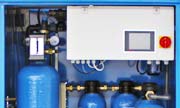
SCM 24
|
|
Cleans 24.000 liters per day
|
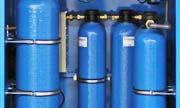
SCM 60
|
|
Cleans 60.000 liters per day
|
Video: How it works
The SCG Advantage
Our market-leading, water cleaning solutions have many advantages. To read more click the items below:
No Chemicals
Our machines and technology does not use any chemicals, at all.
Read more...
No Waste Water
Our machines do not waste any water. Yield = 100%.
Read more...
Low energy use
Uses 50 times less energy than a Reverse Osmosis Machine.
Read more...
Low ownership cost
Lower maintenance and operation costs due to our technology.
Read more...
Easy to install
Simple "plug and play" installation makes for easy deployment.
Read more...
Extremely compact
A compact system, contained in an easy to transport cabinet.
Read more...
Outperforms R.O.
SCG technologies outperform Reverse Osmosis systems.
Read more...
Faster ROI
Get a faster Return on Investment with our systems.
Read more...
Latest News
Latest Blog Posts
| Chemicals in water treatment? |
| Water storage - Whats best for keeping water clean and drinkable? |
| Case: Disaster Management Water Treatment |
Contact SCG
891 Showroom Place
Suite 101
Chula Vista, CA, 91914
Phone: +1 619-878-2730
Contact us by email