








Mobile Water Treatment For Wildfire Emergency Response
Wildfires disrupt water systems long after flames have moved on. Ash, soil, damaged infrastructure, fire retardants, and runoff can enter rivers, reservoirs, wells, and storage tanks. Electricity may be unreliable, roads may be blocked, and normal treatment facilities may be inaccessible just when firefighters, medical teams, shelters, and local communities need safe water most.
A mobile purification system gives emergency managers a flexible way to produce drinking water close to the point of use. Instead of relying entirely on tanker deliveries or bottled water, a compact treatment plant can be transported between evacuation centers, field hospitals, livestock areas, command posts, and isolated settlements.
The right solution must do more than clarify visibly dirty water. It should address biological contamination and dissolved pollutants while limiting chemical consumption, residual waste, energy demand, and operator complexity. The Swiss Cleanwater Group develops water treatment technologies for municipalities, government operations, industry, agriculture, and mobile applications, making this type of adaptable response central to its field of expertise.
Why wildfire conditions compromise water supplies
Fire can affect a catchment even when a treatment plant remains physically intact. Burned vegetation leaves hillsides exposed to erosion, so intense rain can carry ash, fine sediment, and organic matter into surface water. These materials may overload intake screens, clog filters, reduce disinfection performance, and create sudden changes in raw-water quality.
Heat can also damage pipes, tanks, pumps, and household plumbing. A broken distribution network may allow contaminated water to enter through pressure loss or cross-connections. Wells near burned areas can experience changes in turbidity and chemistry, while private sources may become unsafe without a reliable testing and treatment process.
Wildfire response adds further complications. Temporary camps may have limited drainage and sanitation, increasing the risk of bacterial contamination. Water may be needed for drinking, cooking, hygiene, medical care, equipment cleaning, and animal welfare. A treatment unit therefore needs enough flexibility to handle changing sources and different levels of demand.
What a mobile purification system must handle
A field system begins with source assessment. Operators should test turbidity, conductivity, pH, microbial indicators, and relevant dissolved contaminants before selecting a treatment sequence. In areas affected by industrial sites, damaged infrastructure, or unusual geology, additional analysis may be required for metals, hydrocarbons, pesticides, arsenic, manganese, or uranium.
Physical appearance is an unreliable safety indicator. Clear water may still contain bacteria, viruses, dissolved metals, or agricultural chemicals. Conversely, highly turbid water can quickly exhaust downstream filters. A robust mobile plant separates the treatment tasks so that each stage protects the next one and the process can be adjusted as conditions change.
Flow rate is equally important. A shelter serving hundreds of people may require a different configuration from a small firefighter base or a livestock holding area. Storage tanks can balance intermittent production, while modular equipment allows capacity to expand when additional units become available.
How layered treatment protects emergency operations
Pretreatment normally removes larger particles and reduces the load placed on sensitive purification components. Screens, settling, prefilters, or multimedia filtration can address leaves, ash, sand, and suspended solids. This stage is especially important after rainfall, when a previously usable source may become heavily contaminated within hours.
Further treatment can target dissolved substances and microorganisms. Depending on the source analysis, technologies may include adsorption, membrane filtration, ultrafiltration, reverse osmosis, or ultraviolet treatment. A suitable combination can help remove contaminants such as manganese, arsenic, bacteria, pesticides, and uranium without treating every emergency source as if it had the same chemistry.
Chemical-free operation can simplify logistics by reducing the need to transport, store, and dose treatment chemicals in remote locations. It can also avoid creating a stream of chemical containers or excess residuals. However, “chemical-free” does not mean maintenance-free: filters still need inspection, membranes require correct flushing, and treated water must be verified through routine sampling.
Comparing response priorities across deployment sites
Mobile treatment equipment should be selected according to the location, source, and people it must serve. A wildfire command post may prioritize rapid setup and compact transport, while a community shelter may require higher daily output and dependable storage. A livestock operation may need large volumes with different quality targets from those used for direct human consumption.
Power availability also shapes the design. Units that can connect to existing electricity are useful near functioning buildings, whereas remote camps may need low-energy equipment, generators, batteries, or renewable power integration. Simple controls and clear operating procedures reduce training requirements when local staff and emergency personnel are already under pressure.
| Deployment site | Main water risks | Important design priorities |
|---|---|---|
| Evacuation shelter | Bacteria, turbidity, damaged distribution lines | Reliable drinking-water quality, storage, easy monitoring |
| Firefighter base | Variable source quality, high demand, limited access | Fast setup, rugged transport, continuous production |
| Field medical facility | Microbial contamination and operational interruption | Stable output, strong verification, backup capacity |
| Rural community | Ash runoff, metals, pesticides, well contamination | Flexible source treatment, scalable flow, local operation |
| Livestock or farm site | High volume, sediment, pathogens, chemical runoff | Durable pretreatment, efficient pumping, adaptable capacity |
| Mobile or military camp | Remote sources and limited utilities | Compact footprint, low logistics burden, independent power options |
Designing for transport, setup, and continuity
A mobile water plant is valuable only when it can reach the affected area and operate under field conditions. Skids, trailers, containers, and compact modules should be evaluated for road access, lifting equipment, weather exposure, and available connection points. Hose fittings, intake pumps, storage tanks, and electrical interfaces must be compatible with the equipment already used by emergency teams.
Deployment planning should include more than the treatment unit itself. Operators need a protected intake, raw-water storage or settling capacity, treated-water tanks, sampling points, replacement consumables, and a plan for managing concentrate or backwash where applicable. Clear separation between untreated and treated water prevents accidental cross-contamination around temporary facilities.
Continuity is another key consideration. Fire behavior, road closures, and changing water sources may force a unit to move with little notice. Modular systems can be relocated or combined as the response develops. Remote monitoring, straightforward alarms, and documented maintenance routines help teams identify declining performance before it interrupts supply.
Recommendations for a resilient field setup
Emergency planners can improve readiness by treating mobile purification as part of a complete water-supply strategy rather than as a standalone machine. The following measures support faster and safer deployment:
- Pre-identify surface-water, groundwater, and stored-water sources near vulnerable communities and emergency staging areas.
- Create source-specific treatment profiles based on likely turbidity, microbial hazards, metals, pesticides, and other local contaminants.
- Keep pumps, hoses, fittings, test equipment, replacement filters, and power connections in the same deployment package.
- Train more than one local operator and document startup, shutdown, cleaning, sampling, and fault-response procedures.
- Plan treated-water storage and distribution so production can continue during source changes, maintenance, or temporary power loss.
A response plan should also define who is responsible for sampling and release decisions. Water intended for drinking must be tested against applicable public-health requirements, even when a treatment system has performed successfully at another site. Monitoring results provide the evidence needed to adapt the process and communicate clearly with residents and emergency personnel.
Procurement teams should examine lifecycle performance rather than focusing only on initial capacity. Low chemical use, low energy demand, reduced waste, durable components, and accessible service can lower the logistical burden over repeated wildfire seasons. A unit that can serve municipal, agricultural, industrial, and emergency applications may deliver greater value between disasters.
Turning emergency capacity into long-term resilience
Wildfire recovery can last for months, and water needs often continue after evacuation orders are lifted. A mobile treatment unit may support temporary housing, damaged villages, farms, schools, construction crews, or communities waiting for permanent infrastructure repairs. Its usefulness extends beyond the immediate crisis when the equipment can be redeployed for routine water-quality problems.
This broader role also supports regional preparedness. Municipalities can share mobile systems across neighboring districts, while government agencies can establish framework agreements for rapid delivery and technical support. Farms, industrial sites, and emergency services may coordinate storage, transport, testing, and operator training before a fire occurs.
Swiss Cleanwater Group’s contact team can help organizations examine source conditions, treatment objectives, capacity, and deployment constraints when evaluating a mobile water solution. Early technical planning makes it easier to match purification technology with real field conditions instead of purchasing equipment based on flow rate alone.
Reliable drinking water is one of the foundations of wildfire response. By combining source testing, layered purification, practical logistics, and trained operation, emergency organizations can reduce dependence on bottled water and maintain safer supplies where conventional infrastructure has failed. Begin assessing local risks, likely water sources, and required capacity now so a mobile treatment system is ready to support people, responders, farms, and communities when the next emergency arrives.
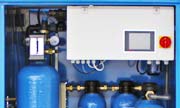
SCM 24
|
|
Cleans 24.000 liters per day
|
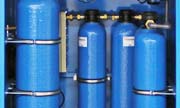
SCM 60
|
|
Cleans 60.000 liters per day
|
Video: How it works
The SCG Advantage
Our market-leading, water cleaning solutions have many advantages. To read more click the items below:
No Chemicals
Our machines and technology does not use any chemicals, at all.
Read more...
No Waste Water
Our machines do not waste any water. Yield = 100%.
Read more...
Low energy use
Uses 50 times less energy than a Reverse Osmosis Machine.
Read more...
Low ownership cost
Lower maintenance and operation costs due to our technology.
Read more...
Easy to install
Simple "plug and play" installation makes for easy deployment.
Read more...
Extremely compact
A compact system, contained in an easy to transport cabinet.
Read more...
Outperforms R.O.
SCG technologies outperform Reverse Osmosis systems.
Read more...
Faster ROI
Get a faster Return on Investment with our systems.
Read more...
Latest News
Latest Blog Posts
| Chemicals in water treatment? |
| Water storage - Whats best for keeping water clean and drinkable? |
| Case: Disaster Management Water Treatment |
Contact SCG
891 Showroom Place
Suite 101
Chula Vista, CA, 91914
Phone: +1 619-878-2730
Contact us by email