






Pesticide Contamination In Agricultural Runoff: Treatment Solutions That Work
Rainfall and irrigation can carry herbicides, insecticides, fungicides, and pesticide metabolites from fields into drainage channels, rivers, reservoirs, and groundwater. This agricultural runoff can affect drinking-water sources, livestock supplies, aquatic ecosystems, and water used for food processing. The risk is highest where intense farming, permeable soils, steep slopes, or heavy seasonal rain allow contaminants to move quickly beyond the application area.
Pesticides rarely occur as a single, predictable contaminant. Concentrations can change after every storm, while different compounds respond differently to filtration, adsorption, oxidation, and biological treatment. A reliable water-treatment strategy therefore begins with sampling and risk assessment rather than selecting equipment based on a general contaminant category.
Effective treatment combines source control with a properly designed purification train. When the water must meet drinking-water requirements, the system should be validated for the specific pesticide mixture, flow rate, seasonal variation, and target quality.
Why Agricultural Runoff Is Difficult To Treat
Pesticide residues can enter surface water as dissolved chemicals, particles attached to soil, or residues transported with organic matter. The same compound may behave differently depending on pH, temperature, turbidity, dissolved organic carbon, and contact with sediment. A storm can produce a short contamination peak that is much higher than the average concentration measured during dry weather.
Some pesticides break down relatively quickly, while others persist in soil and water. Their degradation products may also require attention because a parent compound can transform into metabolites with different mobility or toxicity. Sampling only once may therefore provide an incomplete picture of the actual water-quality problem.
Treatment design is further complicated when agricultural runoff contains manganese, iron, bacteria, algae, fertilizers, or suspended solids. These substances can consume oxidants, foul membranes, block filter media, or reduce the adsorption capacity of activated carbon. Pretreatment is often essential before the main pesticide-removal stage.
Start With Testing And Risk Assessment
A useful investigation covers the whole water source and its seasonal behavior. Samples should be collected upstream and downstream of agricultural areas, after rainfall events, and during low-flow periods. Laboratory analysis may include commonly applied active ingredients, relevant metabolites, turbidity, organic carbon, pH, conductivity, and microbiological indicators.
The intended use of the treated water determines the required performance. Water for irrigation may have a different treatment target from water used for drinking, food production, livestock, or sensitive industrial processes. Regulatory limits also vary by location, so the final design should be checked against applicable drinking-water and environmental standards.
A strong sampling program identifies both peak contamination and baseline conditions. Pilot testing is valuable when the pesticide profile is complex or when the source contains high organic matter. It can show whether a selected medium remains effective over time, whether pretreatment is sufficient, and how often filters or membranes will require service.
Treatment Technologies That Remove Pesticides
Activated carbon is widely used for dissolved organic contaminants. Granular activated carbon can adsorb many herbicides, insecticides, and fungicides as water passes through a fixed bed. Powdered activated carbon can be dosed for shorter-term treatment, although it creates a spent-material stream that must be managed. Carbon performance depends on the chemical structure of the pesticide, competing organic matter, empty-bed contact time, and media condition.
Membrane processes can provide a physical barrier for many contaminants. Nanofiltration and reverse osmosis are often considered where a broad range of dissolved substances must be reduced. Their effectiveness depends on membrane selection and operating conditions, and they produce a concentrate stream that needs a lawful and practical management route. Ultrafiltration is highly useful for particles, microorganisms, and colloids, but it should not be assumed to remove dissolved pesticides without an additional treatment stage.
Advanced oxidation can break down certain persistent organic compounds through highly reactive species. Ozone, ultraviolet-based processes, and other oxidation methods may be useful for difficult contaminant mixtures, but the chemistry requires careful control. Partial oxidation can create transformation products, and water quality must be monitored to confirm that the process achieves the intended result.
Biological treatment can support the removal of biodegradable pesticide compounds under controlled conditions. Constructed wetlands, biofilters, and biological activated-carbon systems may reduce pollutant loads while supporting a lower-energy treatment approach. Their performance can vary with temperature, flow, hydraulic retention time, and the available microbial population, so they must be matched to the site rather than treated as universal solutions.
Choosing A Practical Treatment Train
No single process is ideal for every agricultural water source. A common arrangement may include screening and sediment removal, oxidation or biological pretreatment where appropriate, activated carbon, membrane filtration, and final disinfection. The sequence depends on the contaminant profile and the quality required at the point of use.
The table below summarizes the role of several widely used approaches:
| Treatment approach | Main strength | Important limitation | Suitable application |
|---|---|---|---|
| Activated carbon | Adsorbs many dissolved pesticides and organic compounds | Media becomes exhausted and needs replacement or regeneration | Drinking-water polishing and moderate pesticide loads |
| Nanofiltration | Reduces many dissolved organic contaminants with a compact footprint | Produces concentrate and requires protection from fouling | High-quality water production |
| Reverse osmosis | Broad removal of salts and many dissolved contaminants | Higher pressure and energy demand; concentrate management required | Challenging source water and stringent quality targets |
| Advanced oxidation | Can degrade selected persistent organic compounds | Requires process control and by-product verification | Difficult or variable pesticide mixtures |
| Biological treatment | Can reduce biodegradable compounds with low chemical use | Sensitive to temperature, loading, and biological stability | Larger systems with suitable operating conditions |
| Constructed wetlands | Uses natural processes and can provide ecological benefits | Requires land and may respond slowly to peak contamination | Source protection and pre-treatment |
The most dependable systems use monitoring to verify performance. Online instruments can track flow, pressure, turbidity, conductivity, and other operating indicators, while laboratory testing confirms pesticide concentrations and possible by-products. A treatment system should include alarm points and a plan for diverting water if quality falls outside the required range.
Reducing Loads Before Water Reaches The Plant
Treatment becomes more reliable when fewer pesticides enter the water source. Buffer strips, grassed waterways, sediment traps, cover crops, contour farming, and controlled drainage can reduce the movement of soil-bound residues. Correct application timing, weather-aware spraying, equipment calibration, and integrated pest management also reduce the amount of chemical available for runoff.
Farm operators and water utilities can work together to identify high-risk fields, drainage routes, and application periods. Mapping the catchment helps determine whether a small intervention near the source could prevent a larger treatment burden downstream. Protecting wells from surface inflow and maintaining vegetated zones around waterways are also important parts of a complete strategy.
When a treatment facility must handle changing loads, modular equipment can offer operational flexibility. Systems can be expanded, operated in parallel, or assigned to specific uses such as drinking water, livestock water, or process water. The no-waste water approach is especially relevant when conservation, recovery, and responsible water handling are central requirements.
Making Treatment Efficient And Sustainable
Energy use, residuals, replacement media, and maintenance should be evaluated alongside contaminant-removal performance. A process that removes pesticides effectively may still be unsuitable if it creates an unmanaged concentrate, requires frequent chemical dosing, or cannot be serviced locally. Life-cycle cost is more meaningful than the initial equipment price alone.
Chemical-free or low-chemical technologies may be appropriate in settings where chemical storage, transport, and dosing are difficult. However, “chemical-free” should never replace performance verification. The system still needs measurable targets, regular sampling, and a clear method for handling retained contaminants or treatment by-products.
Swiss Cleanwater Group presents a range of purification options for different water sources and operating environments. Its water-cleaning products can be reviewed alongside the project’s test results, flow requirements, and intended end use. Equipment selection should be based on demonstrated suitability for the actual pesticide compounds rather than on broad claims about general filtration.
Practical Design Priorities
- Test for active pesticide ingredients, metabolites, turbidity, organic carbon, and seasonal variation.
- Use source-control measures to reduce soil erosion and chemical transport before treatment.
- Add pretreatment to protect carbon, membranes, oxidation units, or biological stages from fouling and overload.
- Validate the system with pilot trials or documented performance data for the relevant contaminant mixture.
- Plan for monitoring, maintenance, spent media, concentrate, and any other treatment residuals from the beginning.
Applying Solutions Across Different Sites
A municipal water supplier may need a robust, continuously monitored plant with multiple barriers and documented compliance. A farm or livestock operation may require a smaller modular installation that protects drinking water during seasonal runoff. Industrial users may need treated water with a defined quality for washing, cooling, production, or discharge.
Mobile and emergency applications present additional constraints, including limited power, rapid deployment, compact equipment, and variable source water. In these cases, pretreatment and monitoring must be simple enough for field operation while still providing defensible water-quality results. The same design principles apply: identify the contaminants, define the end use, and match the treatment barrier to measured risk.
A long-term solution should also include operator training, spare parts, maintenance schedules, and clear escalation procedures. The company’s mission for sustainable water reflects the broader need to produce safe water while limiting waste, energy use, and unnecessary chemical inputs. Those goals are best achieved through an engineered system supported by testing and responsible operation.
Pesticide contamination in agricultural runoff is manageable when prevention, analysis, and treatment are designed as one connected process. Contact Swiss Cleanwater Group to discuss source-water testing, treatment objectives, and a purification configuration suited to the site’s pesticide profile, flow requirements, and final water use.
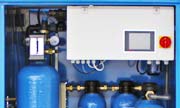
SCM 24
|
|
Cleans 24.000 liters per day
|
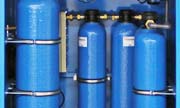
SCM 60
|
|
Cleans 60.000 liters per day
|
Video: How it works
The SCG Advantage
Our market-leading, water cleaning solutions have many advantages. To read more click the items below:
No Chemicals
Our machines and technology does not use any chemicals, at all.
Read more...
No Waste Water
Our machines do not waste any water. Yield = 100%.
Read more...
Low energy use
Uses 50 times less energy than a Reverse Osmosis Machine.
Read more...
Low ownership cost
Lower maintenance and operation costs due to our technology.
Read more...
Easy to install
Simple "plug and play" installation makes for easy deployment.
Read more...
Extremely compact
A compact system, contained in an easy to transport cabinet.
Read more...
Outperforms R.O.
SCG technologies outperform Reverse Osmosis systems.
Read more...
Faster ROI
Get a faster Return on Investment with our systems.
Read more...
Latest News
Latest Blog Posts
| Chemicals in water treatment? |
| Water storage - Whats best for keeping water clean and drinkable? |
| Case: Disaster Management Water Treatment |
Contact SCG
891 Showroom Place
Suite 101
Chula Vista, CA, 91914
Phone: +1 619-878-2730
Contact us by email