









Reducing Energy Costs In Industrial Water Purification
Industrial facilities need dependable water quality, but purification can become a significant operating expense. Pumps, pressure vessels, aeration equipment, ultraviolet units, heating systems, and wastewater handling all contribute to energy demand. When treatment is designed around broad assumptions rather than actual water conditions, the facility may consume more power than necessary.
A lower-energy strategy begins with understanding the source, the required water quality, and the process that will use the treated water. The right system can reduce pressure requirements, limit water losses, avoid chemical handling, and maintain stable output without making purification less reliable.
Swiss Cleanwater Group develops sustainable water treatment solutions for industrial, agricultural, municipal, and mobile applications. Its approach includes technologies for contaminants such as manganese, arsenic, bacteria, pesticides, and uranium, with an emphasis on efficient operation and reduced environmental impact.
Where Industrial Water Energy Goes
Pumping is often the largest direct energy cost in a treatment plant. Every increase in pressure, elevation, flow resistance, or pipe distance raises the work required to move water. Filters with excessive pressure loss can force pumps to operate harder, while poorly sized equipment may run outside its most efficient range.
Energy is also used during backwashing, aeration, membrane separation, ultraviolet disinfection, heating, and the management of concentrate or wastewater. These loads are easy to overlook when equipment is purchased as separate components. A complete assessment should measure the energy used per cubic metre of treated water rather than focusing solely on the rated power of an individual machine.
Start With Source Water Analysis
A laboratory analysis establishes which contaminants require removal and at what concentration. This information prevents a facility from installing intensive processes for pollutants that are absent or present only at negligible levels. It also identifies conditions such as turbidity, hardness, pH, temperature, and organic content that can influence filter performance.
The required flow profile matters just as much. A factory with a steady 24-hour demand has different needs from a site with short production peaks and long idle periods. Designing around peak flow alone can result in oversized pumps and treatment vessels. A storage tank, staged operation, or variable-speed drive may allow the system to meet demand with less frequent high-load operation.
Match Treatment To Contaminants
Treatment should be selected according to the specific risk rather than using a standard sequence for every application. Physical filtration can address suspended particles, while specialized media may target manganese, arsenic, or uranium. Disinfection can be selected according to microbial risk, contact time, water chemistry, and the required level of protection.
A focused treatment train often uses less energy than a complex system with overlapping functions. For example, removing solids before a fine purification stage can protect downstream equipment and reduce pressure buildup. Where chemical dosing is unnecessary, a facility may also reduce the energy and infrastructure associated with chemical storage, mixing, monitoring, and residual management.
For sites handling moderate flows, the Water Cleaning Unit 600 can be evaluated as part of a tailored treatment concept. The appropriate configuration depends on source-water quality, flow requirements, and the intended industrial use.
Design For Low Operating Load
Hydraulic design has a direct effect on power consumption. Short, correctly sized pipe runs, smooth internal surfaces, low-loss valves, and well-positioned equipment can reduce friction throughout the plant. Pumps should be selected for the actual duty point, with controls that prevent unnecessary throttling and allow output to follow demand.
The treatment unit itself should be accessible for inspection and cleaning. A system that is difficult to service may remain partially blocked or poorly adjusted, increasing pressure loss and reducing water production. Modular equipment can also help facilities expand capacity gradually instead of installing a large, underused system from the beginning.
Simple installation can reduce construction time and limit the need for extensive auxiliary equipment. Reviewing easy-to-install equipment may be useful for facilities seeking a compact layout, shorter commissioning work, and fewer installation-related energy losses.
Compare Efficiency Across Systems
A meaningful comparison should include the full operating cycle. Purchase price alone does not show whether a system is economical. Managers should consider electricity, consumables, cleaning, replacement parts, water used for backwash, wastewater disposal, labour, and downtime over the expected service life.
The following framework can help compare treatment options before procurement:
| Performance factor | Lower-energy design characteristic | Cost impact to review |
|---|---|---|
| Pump demand | Low pressure loss and correctly matched flow | Electricity per cubic metre |
| Water recovery | Limited reject and controlled backwash volume | Disposal and make-up water |
| Chemical use | Minimal or no dosing where technically suitable | Chemical purchase, storage, and handling |
| Maintenance | Accessible components and clear service intervals | Labour and unplanned downtime |
| Operating flexibility | Variable flow or modular capacity | Reduced idle running and peak-load costs |
| Monitoring | Sensors linked to useful control points | Faster fault detection and stable quality |
A life-cycle calculation should use realistic production data. A unit that consumes slightly more power but lasts longer may outperform a cheaper system with frequent media changes or high maintenance needs. Conversely, sophisticated automation may add complexity without delivering savings if the plant has a stable, predictable flow.
Protect Efficiency Through Maintenance
Energy performance often declines gradually. Filters load with solids, pumps lose efficiency, sensors drift, and valves may fail to open fully. Because the change is slow, operators may notice higher electricity use only after treatment costs have already increased.
Preventive maintenance should include checking differential pressure, pump performance, flow rates, disinfection output, and water quality. Trends are more useful than isolated readings. A rising pressure difference across a filter, for example, can signal the need for cleaning before the pump has to compensate with sustained higher power.
Operators should also confirm that automatic controls match the real production schedule. Night-time operation, standby cycles, and backwashing can be adjusted when demand data shows that the original settings are excessive. Staff training is equally important because incorrect valve positions or bypass operation can undermine an otherwise efficient design.
Practical Measures For Industrial Facilities
A structured energy review can identify savings without compromising treatment quality. The most useful actions are usually operational and design decisions taken together:
- Measure electricity use against treated-water volume for each major process stage.
- Test source water periodically so treatment intensity remains aligned with actual conditions.
- Select pumps and motors around the normal operating range rather than an occasional peak.
- Reduce pressure loss through appropriate pipe sizing, clean filters, and efficient valve layouts.
- Schedule inspection, cleaning, and media replacement before fouling causes higher energy demand.
Industrial sites should also define the quality required at each point of use. Process water, boiler feedwater, cooling water, wash water, and drinking water may require different specifications. Treating every litre to the highest standard can waste energy and capacity, while a fit-for-purpose approach directs advanced purification only where it is necessary.
This approach supports sustainability goals while protecting production continuity. Lower electricity demand reduces operating costs and can decrease the facility’s indirect carbon emissions. Reduced wastewater, chemical consumption, and equipment wear can produce additional savings that are missed when energy is assessed in isolation.
Energy optimization should be validated against safety and regulatory requirements. A lower-power process is useful only when it consistently delivers the required contaminant removal and microbiological protection. Pilot testing, performance monitoring, and documented operating limits help ensure that efficiency improvements remain dependable under changing source-water conditions.
Facilities planning a new installation or upgrading an existing plant can review their requirements with Swiss Cleanwater Group through its project contact page. A clear description of flow, contaminants, operating hours, and intended use helps technical specialists assess an appropriate low-energy configuration.
Efficient industrial purification comes from matching technology to water quality, reducing hydraulic resistance, controlling operating schedules, and maintaining equipment before performance declines. By evaluating energy, water recovery, maintenance, and treatment results as one system, industrial operators can achieve reliable clean water with a lower long-term resource burden. Contact Swiss Cleanwater Group to discuss a treatment solution designed around the facility’s actual requirements.
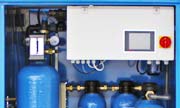
SCM 24
|
|
Cleans 24.000 liters per day
|
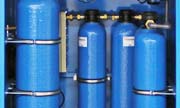
SCM 60
|
|
Cleans 60.000 liters per day
|
Video: How it works
The SCG Advantage
Our market-leading, water cleaning solutions have many advantages. To read more click the items below:
No Chemicals
Our machines and technology does not use any chemicals, at all.
Read more...
No Waste Water
Our machines do not waste any water. Yield = 100%.
Read more...
Low energy use
Uses 50 times less energy than a Reverse Osmosis Machine.
Read more...
Low ownership cost
Lower maintenance and operation costs due to our technology.
Read more...
Easy to install
Simple "plug and play" installation makes for easy deployment.
Read more...
Extremely compact
A compact system, contained in an easy to transport cabinet.
Read more...
Outperforms R.O.
SCG technologies outperform Reverse Osmosis systems.
Read more...
Faster ROI
Get a faster Return on Investment with our systems.
Read more...
Latest News
Latest Blog Posts
| Chemicals in water treatment? |
| Water storage - Whats best for keeping water clean and drinkable? |
| Case: Disaster Management Water Treatment |
Contact SCG
891 Showroom Place
Suite 101
Chula Vista, CA, 91914
Phone: +1 619-878-2730
Contact us by email