







Sustainable water systems for off-grid cabins and remote buildings
Remote cabins, mountain lodges, field stations, and small buildings often sit beyond the reach of municipal water and sewer networks. Their owners must secure a dependable supply, protect the surrounding environment, and manage wastewater with limited electricity, maintenance access, and storage capacity. A practical water strategy therefore needs to work as part of the building’s entire off-grid design.
Sustainable water treatment can reduce dependence on bottled water, frequent tanker deliveries, and disposable filter cartridges. Properly selected equipment can help remove contaminants from groundwater, rainwater, surface water, or a delivered supply while keeping energy use and operating costs under control.
The best solution depends on the source, the intended use, the number of occupants, and seasonal patterns. A hunting cabin used on weekends has different requirements from a remote research building, agricultural shelter, or permanent eco-lodge. Testing and professional planning should come before purchasing treatment equipment.
Start with the water source and building profile
Every remote installation begins with a water assessment. Borehole water may contain iron, manganese, arsenic, uranium, hardness, or naturally occurring microorganisms. Surface water and collected rainwater can be affected by bacteria, pesticides, sediment, and organic matter. Even a clear source can carry contaminants that are invisible, odorless, and potentially harmful.
A source test should examine microbiological quality and relevant chemical parameters. The results establish whether the system needs sediment removal, disinfection, oxidation, adsorption, membrane treatment, or a combination of technologies. Testing also helps prevent over-treatment, which can add cost and energy consumption without improving safety.
The building profile matters just as much. Designers should calculate daily demand for drinking, cooking, showers, laundry, cleaning, livestock, and occasional visitors. Peak flow is important too: a small storage tank and a low-flow treatment unit may be adequate for a two-person cabin, while a remote lodge needs greater capacity and redundancy.
Seasonal occupancy affects the design. Systems in buildings that remain empty during winter may need freeze protection, drainage points, remote monitoring, and a controlled restart procedure. Cabins in warm climates may require protection against high temperatures, algae growth, and irregular demand.
Build a complete water cycle
A resilient off-grid setup separates water into several stages: collection or abstraction, storage, treatment, distribution, use, and wastewater management. This approach makes it easier to identify where water quality can change and where conservation measures will have the greatest effect.
Rainwater harvesting can supplement a well or delivered supply, particularly for toilet flushing, irrigation, washing, or other non-potable uses. Roof materials, first-flush diversion, covered tanks, and routine inspection all influence the quality of collected water. If rainwater is used for drinking, it still requires treatment suited to the test results and local regulations.
Potable water storage should be protected from light, insects, animals, and accidental contamination. A sealed tank with appropriate access, ventilation, and cleaning provisions is preferable to improvised containers. Pump controls and pressure vessels should be selected for the expected flow rather than the maximum capacity of the source.
Greywater deserves attention because it can represent a large share of domestic wastewater. Water from showers, hand basins, and laundry may be treated for controlled reuse or safely discharged, depending on the site and legal requirements. A dedicated greywater treatment system can support water reuse while reducing the load on a septic tank or infiltration area.
Match treatment technology to the risk
No single technology solves every water-quality problem. Sediment filters protect downstream equipment from particles, while activated carbon can reduce certain organic compounds, tastes, and odors. Ultraviolet treatment can inactivate many microorganisms when the water is clear and the equipment receives the correct flow and maintenance.
Some groundwater contaminants need more specialized treatment. Manganese and iron may require oxidation and filtration. Arsenic and uranium may call for adsorption or membrane-based processes, depending on concentration and chemistry. Pesticides can require targeted media or advanced treatment. The right choice should be based on laboratory data rather than assumptions about the local geology.
For remote properties, chemical-free or low-chemical treatment can simplify storage and handling. Swiss Cleanwater Group focuses on systems designed to remove contaminants such as manganese, arsenic, bacteria, pesticides, and uranium while limiting chemical use, waste, and unnecessary energy demand. This approach can be particularly useful where deliveries are expensive or hazardous materials are difficult to manage.
Treatment should also be arranged in a logical sequence. Pre-filtration can extend the service life of finer filters and disinfection equipment. A clean water tank after treatment provides a reserve for variable source conditions and peak demand. Bypass lines, isolation valves, pressure gauges, and sampling points make inspection and maintenance safer.
| Water challenge | Suitable approach | Remote-building priority |
|---|---|---|
| Sediment and turbidity | Screening and staged filtration | Protect pumps and downstream equipment |
| Bacteria and other microbes | UV, suitable membrane treatment, or approved disinfection | Maintain safe drinking water after storage |
| Iron and manganese | Oxidation followed by filtration | Prevent staining, taste problems, and blocked fixtures |
| Arsenic or uranium | Site-specific adsorption or membrane technology | Confirm performance with regular testing |
| Pesticides and organic compounds | Activated carbon or specialized media | Replace or regenerate media on schedule |
| Limited water availability | Rainwater capture, storage, and greywater reuse | Reduce extraction and tanker dependence |
Reduce energy use without reducing reliability
Energy efficiency is central to an off-grid water system because every pump, UV lamp, control panel, and treatment cycle draws from a limited supply. Solar panels and batteries may support the building, but water equipment must be matched to available generation and storage.
Low-pressure treatment processes can reduce the power required for pumping. Gravity-fed pre-treatment may be possible when terrain and tank placement allow it. Variable-speed pumps can adjust output to actual demand, while timed operation can avoid unnecessary cycling during low-occupancy periods.
Storage can improve both reliability and efficiency. A treated-water reservoir allows a smaller treatment unit to operate during periods when solar energy is available, then supply the building when demand occurs. However, water should not remain stagnant for excessive periods. Tank size, turnover, temperature, and microbiological control must be considered together.
Efficient fixtures provide another straightforward gain. Low-flow showerheads, aerated taps, dual-flush toilets, leak detection, and pressure control can reduce the required treatment capacity. Conservation is especially valuable when source recharge is slow or water must be transported to the site.
Design maintenance for limited access
A remote system is sustainable only when people can maintain it. Components should be accessible, clearly labeled, and protected from freezing, moisture, rodents, and accidental impact. Consumables should have predictable replacement intervals, and the property should hold essential spares such as seals, pre-filters, lamps, fuses, and pump components.
Remote monitoring can provide alerts for low tank levels, pump faults, pressure changes, leaks, or abnormal treatment performance. This does not remove the need for physical inspections, but it helps owners respond before a minor issue becomes a failure during bad weather or an occupied period.
Maintenance records should include source-test results, filter changes, cleaning dates, flow readings, and any repairs. Drinking water should be tested after commissioning and at intervals appropriate to the source and local rules. Changes in taste, odor, color, pressure, or flow should prompt investigation rather than being treated as a minor nuisance.
Professional advice is valuable when the site has complex contamination, multiple water sources, public users, or a high consequence of failure. A consultation with water treatment specialists can help compare treatment methods, storage requirements, energy demand, and long-term service needs before installation.
Plan the system around safety and sustainability
An environmentally responsible installation protects more than the occupants. Concentrated wastewater, filter backwash, brine, and contaminated media must be managed so they do not pollute soil, streams, or groundwater. Disposal methods should be established during design and comply with local permits.
Materials and equipment should be chosen for service life, repairability, and realistic availability. A highly sophisticated system may be unsuitable if replacement parts require international shipping or specialized technicians. In some locations, a modular design with standard fittings and clear operating procedures will deliver better long-term performance.
The following decisions help shape a durable plan:
- Test every proposed source before selecting treatment equipment.
- Separate potable, non-potable, and wastewater flows where practical.
- Size pumps, storage, and treatment capacity for real occupancy patterns.
- Choose low-energy equipment with accessible components and clear maintenance needs.
- Provide freeze protection, bypasses, sampling points, and safe wastewater disposal.
- Keep written operating instructions and essential spare parts on site.
A remote building can achieve water independence without relying on a complicated collection of disconnected devices. Source protection, efficient use, appropriate treatment, storage, and wastewater management work best as one coordinated system. This reduces operating surprises and gives owners a clearer way to protect health, conserve resources, and maintain comfort far from municipal infrastructure.
For a cabin, lodge, farm building, mobile unit, or remote public facility, the next step is a site-specific assessment based on water analysis, occupancy, climate, energy supply, and local requirements. Review the available treatment options with Swiss Cleanwater Group and move toward a dependable, lower-impact water system designed for the realities of your location.
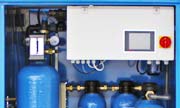
SCM 24
|
|
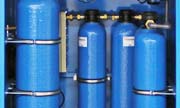
Cleans 24.000 liters per day
|
SCM 60
|
|
Cleans 60.000 liters per day
|
Video: How it works
The SCG Advantage
Our market-leading, water cleaning solutions have many advantages. To read more click the items below:
No Chemicals
Our machines and technology does not use any chemicals, at all.
Read more...
No Waste Water
Our machines do not waste any water. Yield = 100%.
Read more...
Low energy use
Uses 50 times less energy than a Reverse Osmosis Machine.
Read more...
Low ownership cost
Lower maintenance and operation costs due to our technology.
Read more...
Easy to install
Simple "plug and play" installation makes for easy deployment.
Read more...
Extremely compact
A compact system, contained in an easy to transport cabinet.
Read more...
Outperforms R.O.
SCG technologies outperform Reverse Osmosis systems.
Read more...
Faster ROI
Get a faster Return on Investment with our systems.
Read more...
Latest News
Latest Blog Posts
| Chemicals in water treatment? |
| Water storage - Whats best for keeping water clean and drinkable? |
| Case: Disaster Management Water Treatment |
Contact SCG
891 Showroom Place
Suite 101
Chula Vista, CA, 91914
Phone: +1 619-878-2730
Contact us by email