





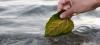
The Role of Ultrafiltration in Eliminating Bacteria from Drinking Water
Safe drinking water depends on controlling microorganisms as well as chemical contaminants. Bacteria can enter a supply through surface water, damaged infrastructure, agricultural runoff, poorly protected wells, or failures in storage and distribution. Because many bacterial cells are larger than the pores of an ultrafiltration membrane, ultrafiltration has become an important physical barrier in modern water purification.
Ultrafiltration, often abbreviated as UF, uses pressure to move water through a membrane with extremely small pores. Suspended solids, colloids, parasites, and many microorganisms are retained while treated water passes through. The process does not require disinfectant chemicals to create the separation, although disinfection may still be used as an additional safeguard against contamination after the membrane.
Its effectiveness depends on correct system design, membrane condition, operating controls, and the quality of the incoming water. A clear understanding of what UF can remove—and what it cannot—helps municipalities, farms, buildings, industries, and mobile treatment operators select a reliable drinking-water solution.
How Ultrafiltration Removes Bacteria
An ultrafiltration membrane acts as a selective physical barrier. Typical UF membranes have nominal pore sizes in the approximate range of 0.01 to 0.1 micrometres, while many common bacteria are larger than these openings. Under pressure, water molecules and some dissolved substances move through the membrane, whereas bacterial cells and other retained particles remain on the feed side.
This mechanism is different from chemical disinfection. Chlorine, ozone, or ultraviolet light inactivates microorganisms, while ultrafiltration separates them from the product water. Physical removal can be valuable where chemical handling, taste, residual disinfectant, or by-product formation is a concern. However, the membrane must remain intact, and the system must prevent untreated water from bypassing the barrier.
UF can also remove turbidity, algae, protozoan cysts, and many suspended particles. It is less effective against dissolved salts, individual ions, and very small dissolved organic molecules. Viruses are generally smaller than bacteria, so virus control may require a tighter membrane process, ultraviolet treatment, chemical disinfection, or a validated combination of barriers. The water treatment FAQs can help clarify how different contaminants are addressed in a complete purification system.
The Membrane Process From Intake to Tap
Raw water first enters a feed system that controls flow and pressure. Depending on the source, pretreatment may include screening, sediment removal, coagulation, activated carbon, iron or manganese treatment, or another process suited to the local water analysis. Pretreatment protects the UF membrane from rapid fouling and reduces the frequency of cleaning.
During filtration, the membrane separates the feed into permeate and concentrate. Permeate is the filtered water that continues toward storage or final disinfection. Concentrate contains the retained particles and is managed through a controlled discharge, recovery process, or waste-handling arrangement. The exact configuration depends on water quality, production volume, regulations, and the intended application.
Most systems operate in cycles. A filtration period is followed by a backwash or forward flush that removes accumulated material from the membrane surface. Some installations use air scouring or periodic chemical cleaning when hydraulic cleaning is insufficient. Automated pressure, flow, turbidity, and integrity monitoring helps operators detect declining performance before it affects the treated-water supply.
How UF Compares With Other Barriers
Ultrafiltration is one part of a broader drinking-water treatment toolkit. The best choice depends on the contaminants present, the required flow rate, available energy, maintenance capacity, and the applicable water-quality standards. A membrane that is excellent for bacterial removal may not address dissolved arsenic, uranium, pesticides, hardness, or salinity.
| Treatment method | Main strength | Limitation for bacterial control | Typical role |
|---|---|---|---|
| Ultrafiltration | Physical removal of bacteria, particles, and protozoa | Requires intact membranes and suitable pretreatment | Primary microbial barrier |
| Microfiltration | Removes larger suspended particles and many bacteria | Smaller organisms may pass through | Clarification and basic filtration |
| Reverse osmosis | Removes dissolved salts and many chemical contaminants | Higher pressure, concentrate management, and energy demand | Desalination and advanced purification |
| Ultraviolet treatment | Inactivates many bacteria and viruses | Provides no physical removal and needs clear water | Final disinfection barrier |
| Chlorination | Offers residual protection in distribution | May create taste, handling, and by-product concerns | Disinfection and network protection |
| Activated carbon | Reduces many organic compounds and odors | Does not reliably provide a standalone microbial barrier | Chemical polishing and taste control |
UF is often particularly useful when the main concern is microbial contamination combined with turbidity or suspended matter. A treatment train may pair UF with activated carbon for pesticides, specialized media for arsenic or manganese, or reverse osmosis for dissolved minerals. This layered approach avoids asking one technology to solve every water-quality problem.
Protecting Bacterial Removal Performance
The presence of a membrane does not automatically guarantee safe water. Fibre damage, loose seals, incorrect valve positions, pressure shocks, or unmonitored bypasses can allow untreated water into the permeate line. For this reason, integrity testing is a central part of professional UF operation. Tests may include pressure decay, air-based methods, turbidity monitoring, particle counting, or other techniques validated for the equipment.
System controls should record feed pressure, permeate pressure, flow, temperature, turbidity, and cleaning events. A rise in transmembrane pressure at a stable flow can indicate fouling. A sudden change in permeate turbidity or particle count may indicate a membrane or seal problem. Alarm settings and automatic shutdown functions help limit the volume of water produced during an abnormal condition.
Microbiological sampling remains important, even when online instruments show normal readings. Testing frequency should reflect the source risk, system design, regulatory requirements, and consequences of failure. Storage tanks and distribution lines also need attention because treated water can be recontaminated after leaving the membrane unit.
Energy, Chemicals, And Resource Use
Ultrafiltration generally operates at lower pressure than reverse osmosis, which can support lower electricity consumption for applications focused on particulate and microbial removal. Energy requirements still vary with membrane type, recovery, feed-water temperature, elevation, pump efficiency, and the degree of fouling. A properly sized system can reduce unnecessary pumping and cleaning demand. Swiss Cleanwater Group describes its low-energy approach in the context of efficient water-treatment operation.
Chemical use can also be limited because the separation itself is physical. Nevertheless, membranes may require periodic chemical cleaning, particularly when organic matter, oil, iron, manganese, or biological growth accumulates on the surface. Reducing cleaning frequency through source protection and appropriate pretreatment can lower operating costs and simplify wastewater management.
UF does produce a concentrate or backwash stream that must be handled responsibly. The volume is often smaller than the reject stream associated with reverse osmosis, but it cannot be ignored. Site conditions, contaminant concentration, local discharge rules, and water recovery targets determine whether the stream can be returned, settled, treated, or safely discharged.
Selecting A System For The Application
System sizing begins with a water analysis rather than a catalogue flow rate. Important parameters include bacterial indicators, turbidity, total suspended solids, natural organic matter, iron, manganese, arsenic, pesticides, hardness, salinity, and seasonal variation. The source may change significantly after heavy rainfall, drought, flooding, or agricultural activity, so a single sample may not represent every operating condition.
The application also shapes the design. A municipal plant may require automated redundancy and continuous monitoring, while a farm may prioritize robust operation and straightforward cleaning. A building system may need compact installation and quiet pumps. Mobile, emergency, or military units may place greater emphasis on transportability, rapid deployment, and operation with variable feed-water quality.
Before purchase, operators should establish bacterial reduction targets, required production volume, peak demand, acceptable recovery, cleaning procedures, and the responsibilities for maintenance. They should also confirm how the supplier validates membrane integrity and how replacement modules, sensors, and technical support will be provided. These details have a direct effect on long-term safety and availability.
Practical Recommendations For Reliable UF Operation
A sound ultrafiltration program combines membrane technology with disciplined operation. The following practices help preserve bacterial removal and protect the wider treatment process:
- Test the raw water across different seasons and after significant weather events.
- Use pretreatment that targets the actual causes of fouling, such as sediment, oils, iron, manganese, or organic matter.
- Install alarms and automatic safeguards for abnormal pressure, turbidity, flow, and membrane-integrity readings.
- Schedule backwashing, inspection, and chemical cleaning according to measured performance rather than guesswork.
- Keep storage tanks, pipework, sampling points, and treated-water outlets protected from post-treatment contamination.
Operator training is equally important. Staff should know how to respond to an integrity alarm, isolate suspect permeate, document a cleaning cycle, and collect representative samples. Maintenance records can reveal gradual changes in feed-water quality and help determine when pretreatment or operating settings need adjustment. If administrative messages or updates need to be managed, the newsletter preferences page provides a relevant point of reference for communication settings.
Ultrafiltration offers a strong and adaptable barrier against bacteria when it is integrated into a properly designed treatment train. Its physical separation mechanism can reduce dependence on treatment chemicals, improve clarity, and support consistent water quality, but it should not be treated as a universal solution for dissolved contaminants or every type of microorganism. Membrane integrity, monitoring, cleaning, and post-treatment hygiene determine whether the theoretical barrier becomes dependable protection.
Swiss Cleanwater Group can help organizations assess source-water conditions, compare treatment technologies, and develop a system suited to municipal, agricultural, industrial, building, mobile, or emergency use. Contact the company to discuss the water analysis, bacterial risks, capacity requirements, and practical operating conditions behind a safe ultrafiltration installation.
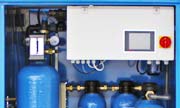
SCM 24
|
|
Cleans 24.000 liters per day
|
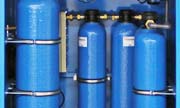
SCM 60
|
|
Cleans 60.000 liters per day
|
Video: How it works
The SCG Advantage
Our market-leading, water cleaning solutions have many advantages. To read more click the items below:
No Chemicals
Our machines and technology does not use any chemicals, at all.
Read more...
No Waste Water
Our machines do not waste any water. Yield = 100%.
Read more...
Low energy use
Uses 50 times less energy than a Reverse Osmosis Machine.
Read more...
Low ownership cost
Lower maintenance and operation costs due to our technology.
Read more...
Easy to install
Simple "plug and play" installation makes for easy deployment.
Read more...
Extremely compact
A compact system, contained in an easy to transport cabinet.
Read more...
Outperforms R.O.
SCG technologies outperform Reverse Osmosis systems.
Read more...
Faster ROI
Get a faster Return on Investment with our systems.
Read more...
Latest News
Latest Blog Posts
| Chemicals in water treatment? |
| Water storage - Whats best for keeping water clean and drinkable? |
| Case: Disaster Management Water Treatment |
Contact SCG
891 Showroom Place
Suite 101
Chula Vista, CA, 91914
Phone: +1 619-878-2730
Contact us by email