







The Science Behind Specialty Media For Contaminant Adsorption
Clean drinking water depends on more than removing visible particles. Dissolved contaminants such as arsenic, manganese, uranium, pesticides, and traces of industrial chemicals can pass through conventional sediment filters because their particles are too small or chemically distinct from suspended solids. Adsorption offers a targeted way to capture these substances at the surface of a treatment material.
In an adsorption process, water flows through a porous medium while dissolved compounds attach to active sites. The medium may be engineered from mineral oxides, activated carbon, ion-selective resin, or a composite material. Its performance depends on the contaminant, the water chemistry, contact time, temperature, and the number and type of available binding sites.
This approach is valuable for municipal supplies, groundwater systems, farms, industrial facilities, and mobile treatment units. When correctly selected and operated, specialty media can reduce chemical consumption, limit waste streams, and support efficient water purification.
Why Contaminant Adsorption Matters
Adsorption differs from filtration. A filter primarily separates particles according to size, while an adsorbent attracts dissolved molecules or ions through physical and chemical interactions. A clear sample can still contain arsenic or pesticide residues, so visual quality is not a reliable indicator of safety.
The process takes place at the boundary between water and a solid surface. Specialty media are manufactured with a high internal surface area, often containing microscopic pores and reactive mineral groups. Although a small volume of media may appear compact, its combined surface can provide thousands of square metres of contact area.
Adsorption also supports selective treatment. A medium can be chosen for affinity toward a particular contaminant, reducing the need to apply a broad chemical treatment to the entire water stream. This selectivity is especially useful when the target substance is present at low concentrations but carries significant health, environmental, or operational risks.
How Specialty Media Capture Dissolved Compounds
Physical adsorption, often called physisorption, is driven by relatively weak forces such as van der Waals attraction. It is common in activated carbon treatment, where organic molecules enter pores and adhere to the carbon surface. Larger molecules may be captured strongly if their shape fits the pore structure, while competing organic matter can occupy the same spaces.
Chemisorption involves stronger, more specific interactions. A dissolved arsenate ion, for example, may bind to hydroxyl groups on an iron-based surface through ligand exchange. In this reaction, the contaminant replaces a surface-bound hydroxyl or water molecule. This explains why certain iron hydroxide media can remove arsenic more effectively than a general-purpose carbon.
Ion exchange is another related mechanism. Resin or mineral sites carry fixed charges that attract oppositely charged ions. Uranium, ammonium, or specific metal ions can be captured in this way, depending on pH and competing ions. Some media combine adsorption, ion exchange, oxidation, and precipitation, making the overall treatment mechanism more complex than simple surface adhesion.
The distinction matters because each mechanism responds differently to water conditions. A medium that performs well through electrostatic attraction may lose capacity when pH changes. A redox-active material may require oxygen or a regeneration cycle. Understanding the mechanism helps engineers select equipment that remains reliable beyond laboratory conditions.
What Controls Adsorption Performance
pH is one of the most influential variables. It changes the electrical charge of both the contaminant and the media surface, affecting whether they attract or repel each other. It can also change the chemical form of arsenic, uranium, or organic compounds. A small shift in pH may therefore improve removal for one contaminant while reducing it for another.
Competing substances consume active sites. Natural organic matter, phosphate, silica, sulphate, bicarbonate, and suspended solids can interfere with adsorption or block pores. Water temperature, ionic strength, flow velocity, and dissolved oxygen also affect reaction rates. For this reason, a media specification based only on a contaminant concentration may produce an incomplete design.
Contact time is commonly expressed as empty bed contact time, or EBCT. It represents the theoretical time water remains in the media bed. A longer EBCT generally provides more opportunity for attachment and reaction, but it also requires a larger vessel or lower flow rate. The correct value must be established through testing rather than copied from a generic catalogue.
Adsorbents eventually approach exhaustion. At that point, the concentration leaving the vessel begins to rise, even if the media still appears clean. Breakthrough curves show how quickly this occurs and help determine when to replace, regenerate, or backwash the material. Monitoring treated water is essential because operating life depends on the complete water matrix, not just the design concentration.
Comparing Media Mechanisms
The most suitable medium depends on the contaminant’s chemistry and the operating goals of the installation. The following comparison describes common options used in drinking water and industrial treatment.
| Media type | Primary mechanism | Typical targets | Important design considerations |
|---|---|---|---|
| Activated carbon | Pore capture and surface attraction | Pesticides, solvents, taste, odour, some organic compounds | Organic matter competition, pressure loss, microbial growth |
| Iron-based oxide media | Surface complexation and ligand exchange | Arsenic, phosphate, some metals | pH, competing anions, media replacement and disposal |
| Manganese dioxide media | Oxidation and catalytic surface reactions | Manganese, iron, hydrogen sulphide | Oxidant availability, backwashing, oxidation state |
| Ion-exchange resin | Reversible exchange of charged ions | Uranium, nitrate, hardness, selected metals | Ionic competition, regeneration, brine management |
| Molecular sieve or zeolitic media | Ion exchange and size-selective adsorption | Ammonium, selected ions, process contaminants | Pore size, water chemistry, regeneration requirements |
| Composite specialty media | Combined adsorption, oxidation, or precipitation | Multi-contaminant groundwater and industrial water | Pilot validation, hydraulic compatibility, disposal route |
The categories can overlap. An iron-based medium may also promote oxidation or precipitation, while a composite material may contain several active phases. Product selection should therefore be based on verified performance data, water analysis, and expected operating conditions rather than on the media name alone.
Matching Media To Water Chemistry
A representative laboratory analysis is the starting point for a sound design. It should include the target contaminants, pH, alkalinity, hardness, conductivity, turbidity, dissolved organic carbon, iron, manganese, sulphate, phosphate, silica, and microbiological indicators where relevant. Seasonal variation should be considered for groundwater and surface water sources.
Pilot testing then translates chemical affinity into practical performance. A small column can measure adsorption capacity, pressure drop, backwash behaviour, and breakthrough under realistic flow conditions. Empty bed contact time, media depth, loading rate, and pretreatment can be adjusted before a full-scale system is built.
For communities and facilities dealing with variable groundwater quality, a dedicated groundwater treatment system can combine contaminant-specific media with aeration, oxidation, sediment removal, or disinfection. This integrated approach prevents one stage from being overloaded by substances that should have been addressed earlier in the process.
Pretreatment often protects adsorption capacity. Removing suspended solids prevents fouling, while oxidation can convert soluble iron or manganese into particles that are easier to filter. Disinfection may be placed before or after the media bed depending on the process objectives and the risk of biological growth. Each stage should have a defined purpose and monitoring point.
From Pilot Testing To Reliable Operation
A full-scale adsorption vessel must distribute water evenly across the media bed. Channeling creates fast-flow paths that shorten actual contact time, while excessive pressure loss can increase energy consumption and reduce plant output. Inlet distributors, support layers, vessel geometry, and backwash flow rates all affect performance.
Backwashing removes trapped solids and loosens compacted media. It does not always restore adsorption capacity. Some specialty media can be regenerated, but regeneration may require chemicals, energy, or careful handling of concentrated waste. Other products are designed for replacement after exhaustion, making disposal classification and logistics part of the original design.
Instrumentation improves operational control. Flow meters, pressure gauges, turbidity sensors, pH monitors, and online contaminant analysers can reveal changes before water quality falls outside specification. Sampling should include both influent and effluent points so operators can distinguish a change in source water from media exhaustion.
Industrial applications may require a different balance between removal, water reuse, and production continuity. Systems serving manufacturing, livestock, or process water duties must account for peak flows, cleaning cycles, temperature changes, and discharge limits. Guidance on integrated industrial water treatment can help align adsorption with filtration, membrane processes, recovery, and safe residual management.
Building A Sustainable Treatment Strategy
Adsorption is often described as a low-chemical technology, but sustainability depends on the complete life cycle. Energy used for pumping and backwashing, the origin and durability of the media, transport, replacement frequency, and waste handling all contribute to environmental impact. A highly selective medium with a long service life may be preferable to a cheaper material that requires frequent replacement.
Water conservation is another important factor. Systems with efficient backwash cycles and suitable pretreatment can reduce wastewater production. Where regeneration is practical, recovered chemicals and concentrated streams must be managed responsibly. Where media is disposable, suppliers should provide clear information about contaminant loading, transport, and disposal requirements.
A robust design also includes contingency planning. Parallel vessels allow one bed to remain in service while another is inspected or replaced. Lead-lag arrangements provide additional protection against breakthrough, with the first vessel carrying most of the contaminant load and the second acting as a polishing stage. This arrangement can improve reliability without excessive oversizing.
Practical Priorities For Media Selection
The following recommendations help connect adsorption science with dependable water treatment:
- Analyse the complete water chemistry, including competing ions and seasonal changes.
- Match the media mechanism to the contaminant species, pH range, and required treatment target.
- Use pilot columns or validated field data to confirm capacity, contact time, and breakthrough behaviour.
- Include pretreatment, backwashing, monitoring, and media disposal in the initial system design.
- Compare total operating impact, including energy, replacement frequency, waste, and maintenance.
Turning Chemistry Into Clean Water
Specialty media work best when their surface chemistry is treated as part of a complete process rather than as an isolated product choice. Careful water analysis, pilot validation, hydraulic design, and routine monitoring convert adsorption capacity into consistent contaminant removal.
Swiss Cleanwater Group provides treatment technologies for applications ranging from groundwater and municipal supply to industrial, agricultural, mobile, and institutional use. To evaluate a contaminant-specific solution and develop a practical treatment pathway, contact the water experts through the company’s service channels.
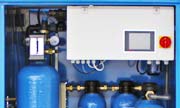
SCM 24
|
|
Cleans 24.000 liters per day
|
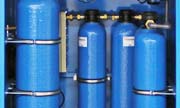
SCM 60
|
|
Cleans 60.000 liters per day
|
Video: How it works
The SCG Advantage
Our market-leading, water cleaning solutions have many advantages. To read more click the items below:
No Chemicals
Our machines and technology does not use any chemicals, at all.
Read more...
No Waste Water
Our machines do not waste any water. Yield = 100%.
Read more...
Low energy use
Uses 50 times less energy than a Reverse Osmosis Machine.
Read more...
Low ownership cost
Lower maintenance and operation costs due to our technology.
Read more...
Easy to install
Simple "plug and play" installation makes for easy deployment.
Read more...
Extremely compact
A compact system, contained in an easy to transport cabinet.
Read more...
Outperforms R.O.
SCG technologies outperform Reverse Osmosis systems.
Read more...
Faster ROI
Get a faster Return on Investment with our systems.
Read more...
Latest News
Latest Blog Posts
| Chemicals in water treatment? |
| Water storage - Whats best for keeping water clean and drinkable? |
| Case: Disaster Management Water Treatment |
Contact SCG
891 Showroom Place
Suite 101
Chula Vista, CA, 91914
Phone: +1 619-878-2730
Contact us by email