








A Practical Water Strategy for High Manganese in Food Processing
Treating High-Manganese Water for a Food Processing Plant requires more than installing a filter at the incoming water line. Manganese can stain equipment and products, create dark deposits, affect taste, and undermine the consistency of washing, cooking, cooling, and ingredient preparation. The right solution begins with understanding the raw water and ends with controls that protect hygiene, production uptime, and finished-product quality.
Manganese may occur naturally in groundwater, especially where oxygen levels are low and geological conditions release minerals into the aquifer. It can also appear alongside iron, arsenic, ammonium, hardness, or microbial contamination. A treatment system should therefore be designed around the complete water profile rather than a single laboratory result.
For a food manufacturer, water quality has several roles at once. It may be an ingredient, a cleaning medium, a boiler feedwater source, a cooling utility, or a contact water stream. Each use can require a different quality target, so separating applications and identifying critical control points is essential.
Why Manganese Requires Careful Control
Dissolved manganese is often difficult to see at the point of extraction. Once the water is exposed to oxygen or a treatment surface, however, manganese can oxidize and form insoluble particles. These deposits may appear as black or brown fouling in pipes, tanks, membranes, valves, spray nozzles, and filling equipment.
The problem is both aesthetic and operational. Manganese can produce metallic or unpleasant taste, discolor food products, and leave persistent marks on processing surfaces. Deposits may reduce flow, interfere with sensors, and increase the frequency of sanitation and maintenance work. If particles detach downstream, they can also create a visible defect in packaged goods.
A food plant must distinguish between water used directly in products and water used for utilities or general washing. Potable water standards may apply to the supply, while additional internal specifications may be appropriate for sensitive processes. The treatment design should reflect the strictest intended use, not just the average daily consumption.
Start With Water Analysis And Process Mapping
A reliable design begins with representative sampling. Test for total and dissolved manganese, iron, pH, alkalinity, turbidity, hardness, conductivity, temperature, ammonium, arsenic, uranium, pesticides, and microbiological indicators where relevant. The sample should reflect normal operation and, where possible, seasonal changes in the source.
Flow rate is as important as concentration. A plant may have modest average demand but substantial peaks during shift changes, cleaning-in-place cycles, tank filling, or simultaneous production lines. Record hourly demand, pressure, available space, drain capacity, and the required treated-water reserve before selecting equipment.
Map every water endpoint and classify it by risk. Ingredient water, final rinsing water, and water that touches open product usually need the strongest control. Boiler makeup, cooling towers, and yard washing may follow separate treatment paths. This approach avoids over-treating low-risk uses while ensuring that critical lines receive stable, verified water.
Select A Treatment Train That Fits The Site
Manganese removal commonly combines oxidation with filtration. Oxidation changes dissolved manganese into a solid form, while the filter captures the resulting particles. Depending on the chemistry, oxidation may use air, oxygen, catalytic media, ultraviolet-assisted processes, or another chemical-free method. Contact time, pH, temperature, and the presence of iron strongly influence performance.
For plants seeking to reduce chemical storage and handling, the choice between dosing and chemical-free oxidation deserves a detailed engineering review. This oxidation comparison explains how different approaches affect iron removal, and many of the same operational considerations apply when manganese is present.
A typical process may include raw-water screening, oxidation, a reaction or contact stage, manganese filtration, and final disinfection. Additional steps may be needed for hardness, arsenic, uranium, pesticides, or microbiological risk. Reverse osmosis can be valuable for specific contaminants, but it should not automatically be used as the first response to manganese because pretreatment, concentrate disposal, and energy demand may be significant.
| Treatment approach | Typical role | Advantages | Points requiring review |
|---|---|---|---|
| Aeration with filtration | Oxidizes dissolved manganese before media filtration | Low chemical dependence and simple operating concept | Needs suitable pH, contact time, venting, and backwash capacity |
| Catalytic filtration media | Promotes oxidation and captures manganese particles | Compact footprint and effective polishing | Media selection, regeneration, loading, and backwashing must match the water |
| Chemical oxidation and filtration | Uses an oxidant followed by particle removal | Flexible for variable or difficult water chemistry | Requires dosing control, storage, safety procedures, and residual management |
| Membrane treatment | Removes a broad range of dissolved contaminants | Can provide high-quality water for selected applications | Higher energy use, pretreatment needs, fouling risk, and concentrate handling |
| Final disinfection | Controls microorganisms after main contaminant removal | Adds protection for potable and product-contact supplies | Does not replace manganese removal and needs validated dosing or exposure |
Engineer For Hygiene And Production Continuity
Food-processing equipment must be accessible for cleaning, inspection, and maintenance. Treatment vessels should have sanitary materials, suitable internal coatings, hygienic pipework, and drain arrangements that prevent stagnant water. Dead legs, poorly positioned sample points, and unprotected storage tanks can create microbial risks even when manganese removal is effective.
Backwashing deserves particular attention. Filters need enough water, flow, and drainage capacity to remove accumulated manganese solids. If backwash is too weak, the media may become compacted or fouled. If the waste stream is discharged without assessment, local requirements for manganese-bearing water or sludge may be overlooked.
Provide clear monitoring points before and after treatment. Useful measurements include manganese concentration, turbidity, pressure differential, pH, oxidation conditions, flow, and disinfectant residual where applicable. Automated alarms can identify breakthrough, blocked filters, low pressure, or abnormal flow before product quality is affected.
Redundancy may be justified where an interruption would stop production. Parallel filter vessels, a treated-water tank, bypass isolation, and planned standby capacity allow maintenance without sending untreated water into a critical process. Any bypass should be physically controlled and connected to a documented release procedure.
Avoid Design And Operating Mistakes
One frequent error is sizing the system from the average flow alone. High peak demand can shorten contact time and increase filtration velocity, allowing manganese to pass through. Another is assuming that a treatment medium will work at any pH or with any combination of iron, hardness, and organic matter. Pilot testing or controlled commissioning can expose these limitations before full-scale installation.
A second mistake is treating laboratory compliance as the only success measure. Water may meet a manganese target at the outlet while deposits continue to form because of intermittent peaks, dead zones, or inadequate pipe flushing. Trend data and inspections should be reviewed alongside test results.
Food plants should also avoid storing untreated water in tanks intended for product-contact use. The water safety guidance outlines practices that can create contamination, maintenance, or treatment problems. Clear separation between raw and treated water helps prevent accidental cross-connections and unauthorized bypass operation.
Finally, do not overlook waste, energy, and operator workload. Chemical-free systems can reduce consumables, but they still require power, backwashing, inspections, and media replacement. A lifecycle review should include water losses, pump energy, disposal arrangements, spare parts, service access, and staff training.
Validate Performance Before Full Production
Commissioning should proceed in stages. First verify pipework, valves, instrumentation, alarms, and disinfection arrangements. Then run the treatment system under controlled flow while measuring raw and treated water. Increase production demand gradually so the performance of the oxidation and filtration stages can be observed under realistic conditions.
Acceptance criteria should cover both water quality and operational stability. Define allowable manganese levels, turbidity, pressure loss, microbiological results, recovery time after backwash, and the response to a high-flow event. For ingredient water or direct product contact, the plant’s food safety team should approve the sampling plan and release procedure.
Routine monitoring can combine online instruments with laboratory confirmation. Operators should know what to do when manganese rises, a filter reaches its pressure limit, or a disinfectant residual falls outside the operating range. A short, practical response plan is more useful than a complex document that is rarely consulted.
Document the baseline after commissioning. Record flow, pressure, water chemistry, backwash frequency, and treated-water quality under normal conditions. Future deviations can then be identified quickly, and maintenance can be scheduled before deposits or contamination affect production.
Build The Project Around Measurable Results
A strong project connects water treatment with the plant’s wider quality and maintenance systems. Assign responsibility for sampling, alarm response, sanitation, filter servicing, and technical review. Include the treatment system in internal audits, preventive maintenance schedules, and supplier qualification procedures.
When selecting a technology partner, consider experience with municipal, industrial, agricultural, and food-related water supplies. The Swiss Cleanwater Group provides treatment technologies and application information for contaminant removal with attention to resource efficiency and site-specific design.
Useful actions for a food-processing project include:
- Test manganese alongside iron, pH, hardness, turbidity, arsenic, uranium, pesticides, and microbiological indicators.
- Separate product-contact, potable, utility, and low-risk water demands before sizing equipment.
- Confirm peak flow, contact time, backwash capacity, drainage, and treated-water storage requirements.
- Pilot or validate the oxidation and filtration process using representative source water.
- Establish sampling, alarm, bypass, sanitation, and maintenance procedures before handover.
High-manganese source water can be managed reliably when treatment is matched to the chemistry and integrated with food safety controls. Begin with a complete water survey, define the quality required at each use point, and evaluate the complete operating lifecycle rather than the equipment price alone. A site-specific assessment can turn an uncertain raw-water supply into a controlled, dependable resource for daily production.
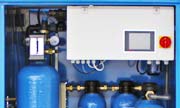
SCM 24
|
|
Cleans 24.000 liters per day
|
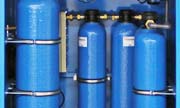
SCM 60
|
|
Cleans 60.000 liters per day
|
Video: How it works
The SCG Advantage
Our market-leading, water cleaning solutions have many advantages. To read more click the items below:
No Chemicals
Our machines and technology does not use any chemicals, at all.
Read more...
No Waste Water
Our machines do not waste any water. Yield = 100%.
Read more...
Low energy use
Uses 50 times less energy than a Reverse Osmosis Machine.
Read more...
Low ownership cost
Lower maintenance and operation costs due to our technology.
Read more...
Easy to install
Simple "plug and play" installation makes for easy deployment.
Read more...
Extremely compact
A compact system, contained in an easy to transport cabinet.
Read more...
Outperforms R.O.
SCG technologies outperform Reverse Osmosis systems.
Read more...
Faster ROI
Get a faster Return on Investment with our systems.
Read more...
Latest News
Latest Blog Posts
| Chemicals in water treatment? |
| Water storage - Whats best for keeping water clean and drinkable? |
| Case: Disaster Management Water Treatment |
Contact SCG
891 Showroom Place
Suite 101
Chula Vista, CA, 91914
Phone: +1 619-878-2730
Contact us by email