








Why Municipalities Are Switching to Zero-Waste Water Treatment Plants
Municipal water providers face a difficult balance: they must deliver safe drinking water every day while controlling operating costs, protecting natural resources, and meeting increasingly demanding environmental standards. Conventional treatment can solve contamination problems, but it may also create concentrated waste streams, chemical dependencies, sludge, and high energy consumption. Learn more about Unsubscribed From Newsletter.html.
Zero-waste water treatment offers a different direction. Instead of treating purification residues as an unavoidable by-product, municipalities can select systems that reduce or eliminate waste at the source. The goal is practical rather than theoretical: recover more water, use fewer consumables, and make treatment safer and easier to manage over its full operating life.
This shift is especially relevant where raw water contains manganese, arsenic, uranium, pesticides, bacteria, or other persistent contaminants. Technologies that work without chemical dosing or excessive energy can help communities improve water quality while strengthening long-term resilience.
Rising Pressure On Municipal Water Systems
Population growth, industrial activity, agricultural runoff, and changing rainfall patterns are placing additional pressure on local water supplies. A source that was once considered reliable may now show seasonal changes in turbidity, microbial activity, mineral content, or chemical contamination. Municipalities need treatment plants that can adapt without requiring a complete redesign whenever water conditions change.
Regulation is another driver. Drinking-water standards continue to focus on substances that were previously overlooked or poorly monitored. Arsenic and uranium, for example, can occur naturally in groundwater, while pesticides and industrial compounds may enter surface or underground sources through human activity. Meeting these requirements with a conventional, chemical-intensive process can increase both capital and operating expenses.
The financial impact extends beyond the treatment building. Chemical storage, transport, dosing equipment, sludge handling, hazardous residue management, and operator training all affect a municipality’s budget. A purification system that reduces these dependencies can make safe water production more predictable.
What Zero-Waste Treatment Means In Practice
“Zero-waste” does not always mean that a plant produces no physical residue under every condition. In water treatment, the term generally refers to minimizing reject water, sludge, spent media, disposable filters, and chemical by-products. The most effective systems focus on preventing waste while recovering as much treated water as possible.
A plant may achieve this through selective filtration, catalytic media, biological processes, membrane recovery, ultraviolet disinfection, or combinations of these methods. The right configuration depends on the source water and the contaminants that must be removed. For example, manganese treatment requires a different approach from pesticide reduction, while bacterial inactivation may require a separate disinfection stage.
The strongest designs also consider what happens after installation. Equipment should be serviceable, durable, and straightforward to monitor. A system that uses less energy but requires frequent replacement parts may not deliver a genuinely sustainable result. Municipal decision-makers therefore evaluate the entire treatment cycle, from intake and purification to maintenance and residual management.
Economic And Environmental Advantages
A low-waste plant can lower the cost of water production in several ways. Reduced chemical consumption means fewer purchases, less storage infrastructure, and fewer deliveries. Lower energy demand can reduce exposure to electricity price increases, especially for remote facilities or plants that operate continuously. Less sludge and reject water also simplify disposal and reduce transport requirements.
Environmental benefits are equally important. When treatment does not discharge concentrated contaminants back into the environment, pressure on rivers, soil, and groundwater is reduced. Avoiding unnecessary chemicals can protect aquatic ecosystems and lower the risk associated with accidental spills. Efficient water recovery also matters in regions where drought, groundwater depletion, or competing agricultural demand limits available supply.
The comparison below illustrates why municipalities are reassessing traditional treatment models. Actual results vary according to the raw-water profile, plant size, treatment technology, and local disposal rules.
| Consideration | Conventional Chemical-Intensive Plant | Low-Waste Treatment Plant |
|---|---|---|
| Chemical demand | Often requires continuous dosing and storage | Can reduce or avoid chemical use for selected contaminants |
| Residuals | May generate sludge, spent media, or concentrated reject water | Designed to minimize residuals and improve recovery |
| Energy use | Can be high when pumping, aeration, or pressure systems are extensive | Optimized around efficient processes and lower operating loads |
| Maintenance | Includes dosing systems, chemical handling, and frequent consumables | Focuses on durable components, monitoring, and targeted servicing |
| Environmental exposure | Greater risk from chemical transport and disposal | Lower dependence on hazardous substances and waste handling |
| Long-term planning | Operating costs may rise with energy and chemical prices | More predictable resource use when properly designed |
Municipalities also gain a stronger sustainability story. Water authorities can demonstrate progress toward climate, resource-efficiency, and circular-economy goals without compromising public health. This can support funding applications and improve public confidence in infrastructure decisions.
Safer Operations And Greater Resilience
Removing chemical storage from part of the treatment process can improve workplace safety. Operators have fewer hazardous materials to handle, and communities face less risk from transport incidents or storage failures. This is particularly valuable for small municipalities with limited technical staff and for plants located close to homes, schools, or protected areas.
Low-waste systems can also be more resilient during supply disruptions. A plant that depends on imported chemicals, specialized consumables, or frequent tanker deliveries may struggle during severe weather or logistical interruptions. A process with fewer external inputs can continue operating more reliably when roads, suppliers, or electricity networks are under pressure.
Resilience still requires planning. Municipalities should assess backup power, spare parts, sensor calibration, flow variability, and emergency bypass arrangements. Digital monitoring can help operators identify changes in pressure, water quality, or filter performance before they become service interruptions. The objective is a treatment plant that remains dependable in ordinary conditions and recoverable during emergencies.
Choosing Technology For The Water Source
There is no universal zero-waste unit suitable for every municipality. A successful project begins with a detailed analysis of raw water, including seasonal variation and the interaction between contaminants. Testing should cover parameters such as pH, turbidity, hardness, iron, manganese, arsenic, uranium, microbial activity, pesticides, and organic matter where relevant.
The treatment objective must also be clearly defined. A small groundwater facility may need selective removal of arsenic and manganese, while a surface-water plant may prioritize bacteria, suspended solids, and pesticide residues. Agricultural communities may require systems that accommodate fluctuating demand, and remote or mobile applications may place greater emphasis on compact design and simple logistics.
The Swiss Cleanwater Group website provides information about treatment technologies, applications, and project considerations for municipalities, farms, industry, buildings, and mobile operations. Reviewing technical specifications and case studies can help decision-makers compare options before commissioning a pilot installation or issuing a tender.
Building A Practical Investment Case
Capital cost is only one part of the decision. Municipalities should calculate total cost of ownership over the expected service life, including energy, chemicals, labor, waste disposal, maintenance, replacement parts, monitoring, and compliance testing. A slightly higher initial investment may be justified if it significantly reduces recurring expenses and operational risk.
Pilot testing can clarify performance before full-scale construction. It helps confirm removal rates, flow capacity, recovery levels, cleaning intervals, and the behavior of the system under seasonal conditions. Pilot data also gives engineers a basis for sizing equipment correctly, preventing both undercapacity and unnecessary oversizing.
Procurement documents should specify measurable outcomes rather than favoring a particular technology without evidence. Requirements may include treated-water quality, residual generation, energy consumption, chemical use, uptime, operator training, and service support. This approach encourages suppliers to provide solutions that match the municipality’s actual needs.
Municipal leaders should also communicate clearly with residents. People want to know that their water is safe, but they may also question why a new plant is needed or how public funds are being used. Explaining the contaminant profile, expected benefits, environmental safeguards, and monitoring arrangements can turn a technical investment into a visible public-health improvement.
Steps For A Lower-Waste Water Strategy
A structured evaluation helps municipalities avoid selecting equipment based only on headline claims or purchase price. The following actions create a stronger foundation for a durable drinking-water project:
- Test raw water repeatedly across wet, dry, and high-demand periods.
- Identify every significant contaminant and define the required treated-water standard.
- Compare energy, chemical, residual, maintenance, and replacement costs over the full life cycle.
- Use pilot trials to verify recovery, performance, and operational simplicity.
- Include monitoring, operator training, service access, and emergency planning in procurement criteria.
The result should be a treatment process that fits the community’s scale and technical capacity. A rural district may benefit from a compact modular plant, while a larger city may need several treatment stages with automated controls and centralized monitoring. In both cases, minimizing waste should support reliability rather than add unnecessary complexity.
A municipality can also improve transparency by reporting key performance indicators after commissioning. Water recovery, energy use, residual volumes, contaminant removal, and maintenance frequency show whether the plant is meeting its design objectives. Continuous review makes it easier to adjust operating conditions and plan future upgrades.
A More Sustainable Standard For Clean Water
Municipalities are moving toward low-waste purification because the approach connects public health with responsible resource management. Systems that reduce chemicals, residuals, and excess energy can help control operating costs while protecting the environment and improving resilience.
The transition should be based on testing, life-cycle analysis, and technology matched to local water conditions. When those fundamentals are in place, a zero-waste treatment strategy becomes more than an environmental aspiration. It becomes a practical way to produce dependable drinking water with fewer inputs and fewer long-term liabilities.
Municipal water authorities, engineering teams, and project planners can explore suitable treatment configurations through municipal water solutions and request technical guidance for a site-specific evaluation. Starting with the source-water analysis is the first step toward a cleaner, safer, and more efficient plant.
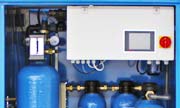
SCM 24
|
|
Cleans 24.000 liters per day
|
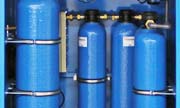
SCM 60
|
|
Cleans 60.000 liters per day
|
Video: How it works
The SCG Advantage
Our market-leading, water cleaning solutions have many advantages. To read more click the items below:
No Chemicals
Our machines and technology does not use any chemicals, at all.
Read more...
No Waste Water
Our machines do not waste any water. Yield = 100%.
Read more...
Low energy use
Uses 50 times less energy than a Reverse Osmosis Machine.
Read more...
Low ownership cost
Lower maintenance and operation costs due to our technology.
Read more...
Easy to install
Simple "plug and play" installation makes for easy deployment.
Read more...
Extremely compact
A compact system, contained in an easy to transport cabinet.
Read more...
Outperforms R.O.
SCG technologies outperform Reverse Osmosis systems.
Read more...
Faster ROI
Get a faster Return on Investment with our systems.
Read more...
Latest News
Latest Blog Posts
| Chemicals in water treatment? |
| Water storage - Whats best for keeping water clean and drinkable? |
| Case: Disaster Management Water Treatment |
Contact SCG
891 Showroom Place
Suite 101
Chula Vista, CA, 91914
Phone: +1 619-878-2730
Contact us by email