






Zero liquid discharge for small-scale water treatment
Zero liquid discharge (ZLD) is the goal of recovering usable water from a treatment process while leaving no liquid effluent for disposal. In large industrial facilities, this usually involves several treatment stages, evaporation, crystallisation, and carefully managed solids handling. For smaller systems, the same goal is possible, but the design must be proportionate to the flow rate, contaminant profile, energy supply, and operating capacity.
Small-scale ZLD can be valuable where discharge permits are difficult to obtain, wastewater transport is expensive, or water resources are limited. Remote communities, farms, mines, construction sites, military units, and industrial facilities may all benefit from recovering a high percentage of process water. However, zero discharge should be treated as an engineering target rather than a standard package that works identically at every site.
The most practical systems reduce the liquid stream step by step. Source protection, contaminant-specific filtration, membrane separation, concentrate management, and solids dewatering can work together to minimise waste. A successful installation also accounts for maintenance, seasonal changes, cleaning water, and the final destination of concentrated salts or sludge.
Why zero liquid discharge matters
Conventional water treatment often produces a reject stream. Reverse osmosis, for example, separates purified water from a concentrate containing dissolved salts, metals, nitrate, pesticides, and other contaminants. Sending that concentrate to a sewer, surface water body, evaporation pond, or tanker may be unsuitable or costly, especially in remote areas.
ZLD turns this disposal problem into a recovery challenge. The treated water can be returned to a process, used for irrigation where quality permits, supplied to livestock, or prepared as drinking water after suitable disinfection and polishing. The remaining contaminants become a smaller solid or semi-solid residue that can be tested, stored, recycled, or disposed of under local regulations.
The environmental benefit depends on the whole system. A process that eliminates liquid discharge but consumes large amounts of electricity or creates difficult-to-handle hazardous solids may offer limited sustainability. The best approach balances water recovery, energy efficiency, chemical use, waste volume, and long-term operating reliability.
What a small-scale ZLD system requires
The first step is a complete water analysis. Flow rate alone is not enough. Engineers need to understand hardness, salinity, suspended solids, organic matter, manganese, iron, arsenic, uranium, bacteria, pesticides, and any site-specific contaminants. The analysis should include changes caused by rainfall, production cycles, groundwater levels, or cleaning operations.
Pretreatment protects the core purification equipment. Screens, sediment filters, oxidation, biological treatment, activated carbon, or selective media may be appropriate depending on the source. Removing manganese and iron before membrane treatment can reduce fouling, while reducing bacteria and organic matter can improve downstream performance. A treatment train should address the actual chemistry rather than rely on a single universal process.
Membrane filtration can recover a substantial share of the feed water, but it does not make concentrate disappear. The residual stream must be thickened, further separated, evaporated, crystallised, or otherwise stabilised. At small sites, mechanical dewatering and controlled collection may be more practical than a full thermal evaporator. The correct choice depends on the concentrate volume and the cost of handling the resulting solids.
When small-scale ZLD is technically realistic
ZLD is most achievable when the water volume is moderate, the contaminants are well characterised, and the recovered water has a clear use. A building, greenhouse, livestock facility, or small industrial plant may have a manageable wastewater stream that can be treated close to where it is generated. Reusing water internally also reduces the amount that must pass through final concentration equipment.
Remote sites can gain a different advantage. Transporting wastewater away from a mountain settlement, drilling location, or temporary camp may require fuel, vehicles, and dependable access routes. A compact treatment plant can produce clean water on site and reduce liquid waste shipments. This is particularly relevant to mobile treatment systems, where transportability, rapid deployment, and operation without conventional infrastructure influence the design.
Small systems also benefit from modular construction. A project can begin with pretreatment and high-recovery filtration, then add concentrate management as operating data becomes available. Sensors for conductivity, pressure, flow, turbidity, and tank level allow operators to identify fouling or performance loss before a shutdown occurs. Automation should simplify daily operation rather than make the site dependent on a specialist who is rarely available.
Comparing treatment routes and residual streams
There is no single process called “ZLD equipment.” Instead, zero discharge is achieved through a sequence of technologies selected for the source water and intended reuse. A community drinking-water system may prioritise contaminant removal and disinfection, while an industrial facility may focus on recovering process water and concentrating dissolved solids.
Reverse osmosis is often useful because it can produce high-quality permeate at relatively low operating temperatures. However, its concentrate recovery has a practical limit, particularly when scaling minerals are present. Electrodialysis, nanofiltration, ion exchange, ultrafiltration, membrane distillation, evaporation, and crystallisation may complement or replace it in specific cases. The right combination should be tested with representative water before purchase.
| Treatment route | Main function | Strength for small sites | Limitation to manage |
|---|---|---|---|
| Ultrafiltration | Removes suspended solids, colloids, and many microorganisms | Compact pretreatment with moderate energy demand | Does not remove most dissolved salts |
| Reverse osmosis | Separates dissolved salts and many contaminants | Produces high-quality recovered water | Creates a concentrate stream and may foul |
| Ion exchange | Targets selected dissolved ions | Effective for specific contaminants such as nitrate or hardness | Media regeneration produces a residual stream |
| Electrodialysis | Moves ions through selective membranes | Useful for some brackish waters and recovery schemes | Performance depends strongly on water chemistry |
| Evaporation or crystallisation | Concentrates or solidifies residual liquid | Can approach complete liquid elimination | Higher energy, capital, and maintenance demands |
| Mechanical dewatering | Removes water from sludge or precipitated solids | Reduces transport and disposal volume | Leaves a solid residue requiring compliant handling |
A system that uses advanced water recovery should still be evaluated against site-specific operating costs and concentrate behaviour. High recovery is valuable, but preventing scale, controlling cleaning cycles, and maintaining stable water quality are equally important.
Controlling energy, chemicals, and maintenance
The energy profile of small-scale ZLD often determines whether the project is economically sensible. Pressure-driven filtration usually consumes less energy than boiling water, while thermal evaporation can require substantial heat or electricity. Waste heat from a generator, industrial process, or solar thermal system may improve the case for evaporation, but available heat must match the treatment schedule.
Chemical-free or low-chemical treatment can simplify storage and reduce occupational risks. Physical filtration, oxidation, adsorption, and selective media may remove many contaminants without continuous chemical dosing. Still, cleaning agents, pH adjustment, antiscalants, or disinfectants may be necessary in some systems. Their use should be minimised through good pretreatment and monitored dosing rather than excluded without testing.
Maintenance planning is central to water recovery. Operators need clear procedures for replacing filters, cleaning membranes, emptying solids containers, calibrating sensors, and responding to alarms. Spare parts should be available locally where possible. A simple system that can be serviced by trained site personnel may outperform a technically advanced installation that remains idle when a specialist or imported component is unavailable.
Designing for real-world applications
For municipalities and public projects, ZLD may support water resilience at small settlements, public buildings, or emergency facilities. The treatment objective could include drinking-water production, wastewater reuse, or protection of a sensitive receiving environment. Regulatory approval remains essential, especially when treated water enters a public supply or residual solids contain regulated contaminants.
Agricultural and livestock operations can reuse treated water for cleaning, irrigation, or selected non-potable tasks. These sites must account for nutrients, salts, veterinary residues, pathogens, and seasonal flow changes. A water balance can reveal where recovery creates the greatest value and whether some streams should be kept separate instead of combining all wastewater into one difficult-to-treat mixture.
Industrial users may gain from recovering rinse water, cooling water, or process water. Separating cleaner streams from heavily contaminated ones often reduces treatment costs. Mobile and military applications place extra emphasis on compact equipment, low logistics requirements, rugged construction, and fast commissioning. In each case, the system should be sized around actual demand rather than an idealised maximum that increases capital and energy consumption.
Practical priorities for project planning
A feasibility study should examine both the treatment train and the site around it. Space for tanks, access for maintenance, electrical supply, drainage during cleaning, weather protection, and secure storage for concentrated solids can determine whether the concept works in practice.
Useful priorities include:
- Measure seasonal flow and contaminant variation before selecting equipment.
- Separate relatively clean water streams from high-strength wastewater where possible.
- Compare water recovery, energy use, chemical consumption, and residual disposal together.
- Plan for membrane cleaning, filter replacement, sensor calibration, and operator training.
- Test concentrate and dewatered solids for safe storage, reuse, or regulated disposal.
Pilot testing is especially important when the source contains high hardness, silica, iron, manganese, arsenic, uranium, or changing organic loads. Laboratory water may behave differently from groundwater or industrial wastewater. A pilot can establish recovery limits, cleaning frequency, concentrate density, and the quality of the final water before a permanent system is installed.
Making the business case for water recovery
The financial value of ZLD comes from several sources: lower freshwater purchases, reduced wastewater transport, avoided discharge fees, improved permit compliance, and greater operational independence. These benefits should be compared with capital costs, electricity, replacement media, maintenance labour, testing, and residual waste management.
A phased design can reduce risk. The first phase may improve pretreatment and recover water for internal reuse. A second phase can concentrate the remaining stream, while a final solids-management stage is added when volumes and disposal requirements are confirmed. This approach creates useful performance data and avoids overbuilding the initial plant.
For Swiss Cleanwater Group’s clients, the design question is therefore broader than whether a small system can technically reach zero liquid discharge. It is whether the water source, treatment goals, energy supply, operating skills, and residual management plan support that target responsibly. In some cases, near-ZLD with a very small, controlled residual stream will provide a better environmental and economic result than absolute elimination of every liquid.
Discuss your source water, flow pattern, contaminants, and reuse objectives with Swiss Cleanwater Group to determine the most suitable treatment configuration. A site-specific assessment can show whether full zero liquid discharge, staged water recovery, or a lower-waste alternative offers the strongest path to dependable clean water.
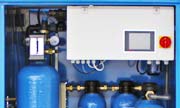
SCM 24
|
|
Cleans 24.000 liters per day
|
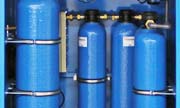
SCM 60
|
|
Cleans 60.000 liters per day
|
Video: How it works
The SCG Advantage
Our market-leading, water cleaning solutions have many advantages. To read more click the items below:
No Chemicals
Our machines and technology does not use any chemicals, at all.
Read more...
No Waste Water
Our machines do not waste any water. Yield = 100%.
Read more...
Low energy use
Uses 50 times less energy than a Reverse Osmosis Machine.
Read more...
Low ownership cost
Lower maintenance and operation costs due to our technology.
Read more...
Easy to install
Simple "plug and play" installation makes for easy deployment.
Read more...
Extremely compact
A compact system, contained in an easy to transport cabinet.
Read more...
Outperforms R.O.
SCG technologies outperform Reverse Osmosis systems.
Read more...
Faster ROI
Get a faster Return on Investment with our systems.
Read more...
Latest News
Latest Blog Posts
| Chemicals in water treatment? |
| Water storage - Whats best for keeping water clean and drinkable? |
| Case: Disaster Management Water Treatment |
Contact SCG
891 Showroom Place
Suite 101
Chula Vista, CA, 91914
Phone: +1 619-878-2730
Contact us by email