


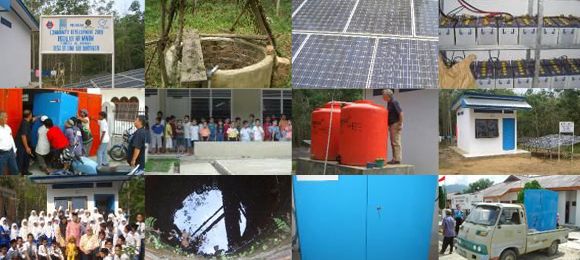







How a Bangladeshi Community Reduced Arsenic in Drinking Water
In rural Bangladesh, groundwater has long been essential for drinking, cooking, washing, and irrigation. It is accessible through tube wells and often appears clear, yet naturally occurring arsenic can remain dissolved in the water without changing its colour, smell, or taste. This makes contamination especially difficult for households to detect without reliable testing.
This case study follows a community-scale response in Bangladesh where residents needed a practical way to reduce arsenic exposure without depending on chemical dosing. The chosen treatment approach focused on physical filtration, controlled water flow, straightforward maintenance, and safe handling of the concentrated contaminants removed from the source water.
The project demonstrates how clean water technology can be adapted to local conditions. It also shows why arsenic removal must be considered as part of a complete drinking-water service, including source testing, operator training, storage hygiene, and regular verification of treated water.
The Water Challenge Facing the Community
The affected community depended on groundwater because surface water was vulnerable to pathogens, seasonal flooding, and agricultural pollution. Tube wells provided a convenient supply throughout the year, but laboratory analysis identified arsenic at levels requiring treatment before the water could be considered suitable for regular consumption.
Arsenic is a particularly serious contaminant because exposure is usually gradual. Long-term consumption may affect the skin, circulation, nervous system, and internal organs. Households may continue using an unsafe well for years because there is no immediate warning and because alternative sources can be distant, expensive, or unreliable.
The project therefore had to solve more than a technical problem. It needed to provide a dependable supply close to homes and communal facilities while keeping operating costs manageable. Any treatment system also had to work with local water quality, variable demand, available electricity, and the skills of community operators.
Selecting A Chemical-Free Treatment Approach
Conventional arsenic treatment can involve chemical oxidation, coagulation, or adsorbent media that require frequent replacement. These methods can be effective, but they may create recurring costs and produce residual sludge that needs careful management. For a remote community, the availability of chemicals and specialist servicing can determine whether a system remains operational after installation.
The selected approach used a treatment train designed to separate contaminants from the water without routine chemical dosing. Depending on the source-water composition, pretreatment can address suspended solids and iron, while a dedicated filtration stage targets dissolved arsenic. The system is sized around actual consumption rather than an assumed industrial flow rate.
This type of solution aligns with the wider work of the Swiss Cleanwater Group, which develops water treatment systems for municipalities, agriculture, buildings, industry, and mobile applications. The central principle is simple: treat the water where it is needed, minimise waste, and make routine operation understandable to the people responsible for the installation.
How The Community System Operates
Raw groundwater enters the installation through a controlled intake. Initial screening and filtration protect the main treatment components from sediment and particles. This stage matters because high turbidity can reduce treatment performance, increase maintenance, and make it harder to identify whether a later problem is caused by the source water or the purification unit.
The water then passes through media or membrane-based treatment selected for the site’s arsenic profile. The exact configuration depends on arsenic species, pH, iron and manganese levels, flow rate, and the required daily volume. In a well-designed system, these factors are confirmed through sampling rather than estimated from general regional data.
Treated water is collected in a protected tank before being distributed through taps or filling points. Keeping treated water separate from raw water is essential. Clearly marked pipes, closed storage, hygienic outlets, and a simple operating routine help prevent recontamination after the arsenic has been removed.
| Project consideration | Community requirement | Treatment response |
|---|---|---|
| Main contaminant | Naturally occurring arsenic in groundwater | Dedicated arsenic reduction stage |
| Operating conditions | Limited technical support and variable demand | Simple controls and modular equipment |
| Chemical availability | Regular dosing could be difficult to sustain | Treatment designed to avoid routine chemical use |
| Energy access | Electricity must be used carefully | Efficient pumping and controlled flow |
| Water safety | Treated water must remain protected | Closed storage and hygienic distribution |
| Long-term reliability | Local operators need practical procedures | Training, inspection, and scheduled testing |
Results Beyond The Treatment Unit
The immediate result was access to a safer drinking-water source without requiring households to boil large volumes or purchase treated water from distant suppliers. This reduced the burden on families, particularly women and children who often collect water, while giving the community a more consistent supply for cooking and drinking.
The project also changed how residents understood invisible contamination. Arsenic awareness increased when testing results were explained alongside practical demonstrations of the treatment process. Community members could see the difference between raw-water testing, treated-water testing, and routine monitoring rather than relying on appearance or taste.
A successful installation does not mean that testing can stop. Arsenic concentration may vary between wells and over time, and treatment media can eventually lose capacity. Periodic laboratory analysis confirms performance, while basic field checks can identify changes in flow, pressure, turbidity, or storage conditions before they become larger failures.
Managing Residuals And Maintenance
Chemical-free operation does not mean that treatment produces no maintenance requirements. Removed arsenic and associated metals may accumulate in filter media, cartridges, or concentrated backwash. These materials must be handled responsibly so that contaminants do not return to soil, drains, ponds, or shallow groundwater.
The community’s operating procedure should define when filters are cleaned, regenerated, replaced, or isolated. It should also record pressure changes, flow rates, cleaning dates, and water-quality results. A written log gives local operators a way to recognise gradual performance loss and provides useful information for technicians during service visits.
The same planning principle applies to other water-quality applications. A swimming facility, for example, may need a different treatment configuration for suspended solids, organic matter, or disinfection control; the company’s information on clean pool water illustrates why treatment must be matched to the source and the intended use rather than selected as a universal package.
Lessons For Future Rural Water Projects
The Bangladesh case highlights the value of beginning with analysis instead of equipment selection. A complete water profile should include arsenic concentration and species, iron, manganese, turbidity, pH, hardness, microbiological quality, and seasonal variation. This information supports accurate sizing and reduces the risk of installing a system that performs well only under ideal conditions.
Community ownership is equally important. Operators need clear instructions for starting and stopping the system, cleaning prefilters, checking storage tanks, reporting faults, and collecting samples. Residents also need to know which outlets provide treated water and why untreated sources should not be mixed with the safe supply.
Several practical principles can guide similar projects:
- Test every proposed source and confirm treated-water quality through independent analysis.
- Size equipment for real household, institutional, or seasonal demand.
- Avoid routine chemical dependence where supply chains and technical support are uncertain.
- Protect treated water with closed tanks, hygienic taps, and separated pipework.
- Plan residual handling, spare parts, operator training, and follow-up service before commissioning.
Building A Reliable Clean-Water Service
Arsenic removal is most effective when it forms part of a broader public-health strategy. Safe sanitation, handwashing, protected storage, source protection, and clear communication all influence the health benefit of a treatment project. A technically efficient filter cannot compensate for contaminated containers or an outlet that is difficult to keep clean.
The experience also shows why modular systems can be valuable in communities with changing needs. A unit can begin by serving a central water point and later support a school, clinic, food-processing facility, livestock operation, or neighbouring settlement. Expansion is easier when the original design includes accessible connections, measurable performance, and a realistic maintenance plan.
For organisations planning a similar arsenic-removal project, technical discussions should include raw-water analysis, expected daily volume, available power, site conditions, operator capacity, residual management, and verification testing. A direct meeting request can begin the process of matching those requirements with an appropriate water treatment configuration.
A community should never have to choose between accessible water and safe water. With accurate testing, chemical-free treatment technology, responsible maintenance, and local participation, groundwater affected by arsenic can become a dependable source for daily life. Projects based on these principles can help more communities move from uncertain wells to monitored, protected, and sustainable drinking-water supplies.
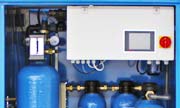
SCM 24
|
|
Cleans 24.000 liters per day
|
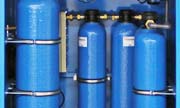
SCM 60
|
|
Cleans 60.000 liters per day
|
Video: How it works
The SCG Advantage
Our market-leading, water cleaning solutions have many advantages. To read more click the items below:
No Chemicals
Our machines and technology does not use any chemicals, at all.
Read more...
No Waste Water
Our machines do not waste any water. Yield = 100%.
Read more...
Low energy use
Uses 50 times less energy than a Reverse Osmosis Machine.
Read more...
Low ownership cost
Lower maintenance and operation costs due to our technology.
Read more...
Easy to install
Simple "plug and play" installation makes for easy deployment.
Read more...
Extremely compact
A compact system, contained in an easy to transport cabinet.
Read more...
Outperforms R.O.
SCG technologies outperform Reverse Osmosis systems.
Read more...
Faster ROI
Get a faster Return on Investment with our systems.
Read more...
Latest News
Latest Blog Posts
| Chemicals in water treatment? |
| Water storage - Whats best for keeping water clean and drinkable? |
| Case: Disaster Management Water Treatment |
Contact SCG
891 Showroom Place
Suite 101
Chula Vista, CA, 91914
Phone: +1 619-878-2730
Contact us by email