









A Texas Farm’s Shift To Chemical-Free Irrigation Water
A family-run farm in West Texas had reliable access to groundwater, yet the water was becoming a growing concern. It carried elevated manganese, traces of arsenic, and periodic bacterial contamination. These pollutants did not always appear in the same concentrations, making routine testing essential and complicating decisions about irrigation, livestock, and equipment maintenance.
The farm had traditionally relied on basic filtration and occasional chemical dosing. That approach reduced some problems but created others, including storage requirements, handling risks, maintenance interruptions, and uncertainty about what was entering the soil with each irrigation cycle. The owners wanted a treatment method that could operate continuously without adding chemicals or creating a concentrated waste stream.
The resulting project focused on producing clean water at the point of use while preserving the farm’s existing wells, pumps, and irrigation network. It became a practical example of how a rural operation can reduce its environmental footprint and improve water quality without redesigning every part of its infrastructure.
The Farm’s Starting Point
The property included irrigated fields, a cattle area, equipment sheds, and a small processing building. Groundwater supplied all of these uses. During dry periods, the farm increased pumping, which also increased the amount of dissolved minerals and naturally occurring contaminants passing through the system.
Laboratory testing identified manganese above the preferred level for agricultural and operational use. Arsenic was present at a concentration that required close monitoring, while bacterial counts varied after periods of heavy rain and changes in well use. The water also left dark deposits on filters, valves, and sprinkler components. Over time, these deposits reduced flow and increased cleaning requirements.
The farm’s challenge was therefore broader than making water look clear. It needed dependable contaminant reduction, protection for irrigation equipment, and a process that could run with limited daily supervision. Any solution also had to work with seasonal changes in demand and avoid unnecessary disruption during planting and harvest.
Why Chemical-Free Treatment Mattered
Chemical treatment can be effective, but it requires careful dosing, secure storage, staff training, and regular control of residual concentrations. On a working farm, these tasks compete with fieldwork and livestock care. A dosing error may affect crops, discharge quality, or the condition of pumps and pipes.
The owners selected a process based on physical and electrochemical treatment rather than routine chemical addition. This type of system can target several contaminants within one treatment train, including manganese, arsenic, bacteria, and other unwanted substances. The farm reviewed chemical-free treatment options as part of its search for lower operating complexity and reduced environmental impact.
The decision was also connected to soil stewardship. Irrigation water does not disappear after it reaches a field. Its dissolved constituents can accumulate in soil, influence nutrient availability, and affect groundwater over time. Removing problematic substances before distribution gave the farm greater control over what it was applying to crops and pasture.
Treatment Design For Texas Conditions
Engineers began with a water analysis rather than selecting equipment from flow rate alone. The assessment considered contaminant levels, peak irrigation demand, well output, storage capacity, pressure requirements, and the quality of water needed for different farm uses. A separate sampling point was used to compare raw well water with treated water.
The final arrangement placed pretreatment and monitoring near the wellhead, followed by the main purification unit and a clean-water holding tank. Irrigation pumps drew from the treated supply, while a bypass allowed maintenance without shutting down every farm activity. This layout also made it possible to direct different water qualities to crop irrigation, livestock, and wash-down points where appropriate.
System sizing was important. A unit designed only for average demand could struggle when several irrigation zones operated simultaneously. The farm therefore combined treatment capacity with managed storage. Water could be purified during lower-demand periods and held for short high-demand windows, reducing pressure on the treatment equipment.
The installation followed a broader water purification approach that evaluates contaminants, application, energy use, and operating conditions together. This prevented the project from becoming a narrow fix for one laboratory result.
Results Across The Growing Season
Following commissioning, the farm compared raw and treated water through scheduled laboratory testing. The treatment system reduced manganese to a level that no longer produced the same visible staining or rapid buildup on irrigation components. Arsenic concentrations fell substantially, and bacterial results became more consistent after treatment.
The operational benefits appeared gradually. Filters required less frequent cleaning, sprinkler performance became more uniform, and the farm spent less time handling treatment chemicals. Operators still maintained pumps, inspected valves, and collected samples, but these activities became predictable rather than reactive.
| Operating area | Before the upgrade | After the upgrade |
|---|---|---|
| Manganese control | Deposits on filters and irrigation parts | Much lower buildup and steadier flow |
| Arsenic management | Regular concern during water reviews | Substantially reduced after purification |
| Bacterial control | Variable results between sampling periods | More consistent treated-water quality |
| Chemical handling | Storage, dosing, and replenishment required | No routine treatment chemicals added |
| Irrigation maintenance | Frequent cleaning and troubleshooting | Longer intervals between interventions |
| Environmental profile | Chemical inputs and treatment by-products | Lower material use and limited waste |
The farm did not treat testing as a one-time activity. Samples were collected from the well, treatment outlet, storage tank, and selected irrigation points. This helped identify whether any change came from the source water, the treatment stage, or the distribution system. It also provided a record for future decisions about capacity and maintenance.
What The Farm Changed Operationally
Switching treatment technology did not remove the need for responsible water management. The farm added a simple monitoring schedule, kept service records, and trained two employees to recognize changes in pressure, flow, and water appearance. These measures helped identify issues before they affected an entire irrigation cycle.
Water use was also organized by priority. High-quality treated water was reserved for crop irrigation, livestock, and sensitive equipment, while non-potable applications were evaluated separately. This approach reduced unnecessary treatment demand without compromising health, crop quality, or equipment protection.
The project also improved communication between the farm and its laboratory. Instead of requesting tests only after a problem appeared, the operators established seasonal sampling before planting, during peak irrigation, and after major changes in well use. Data from those tests supported adjustments to operating schedules and filter service.
Practical Steps For Similar Farms
A comparable agricultural operation can use the following sequence when evaluating a chemical-free water treatment project:
- Test raw water for manganese, arsenic, bacteria, iron, pesticides, uranium, salinity, and other locally relevant contaminants.
- Record peak flow, daily water demand, storage volume, pump pressure, and the number of simultaneous irrigation zones.
- Separate drinking, livestock, crop, wash-down, and non-potable applications before selecting equipment.
- Compare treatment options by energy use, waste production, chemical requirements, maintenance, and service access.
- Create a sampling and inspection schedule that continues after installation.
The Texas farm found that early planning prevented costly changes later. In particular, mapping the existing pipework and identifying where treated water was genuinely needed helped control installation costs. The project also benefited from leaving room for future expansion as cultivated acreage and livestock numbers changed.
Farm managers should consider the full water cycle rather than focusing only on an outlet test. Source protection, well condition, storage tanks, irrigation efficiency, drainage, and soil monitoring all influence the result. A purification system is strongest when it forms part of a practical water-management program.
A Clearer Path To Reliable Farm Water
The farm’s experience showed that chemical-free treatment can be a realistic option for agricultural water supplies with mixed contamination concerns. By treating groundwater before it entered the irrigation network, the owners reduced chemical dependence, stabilized water quality, and protected equipment from recurring deposits.
The change also supported a more transparent operating model. Staff knew where water came from, how it was treated, when it was tested, and which uses required the highest quality. That clarity made it easier to manage seasonal demand and explain the farm’s environmental practices to employees, partners, and customers.
Agricultural operators considering a similar transition can begin with a complete water analysis and a review of current operating costs. Swiss Cleanwater Group can help assess the source, match treatment technology to the farm’s requirements, and develop a system designed for dependable clean water without unnecessary chemicals, waste, or energy use.
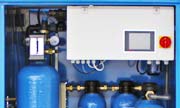
SCM 24
|
|
Cleans 24.000 liters per day
|
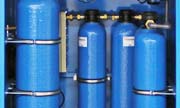
SCM 60
|
|
Cleans 60.000 liters per day
|
Video: How it works

The SCG Advantage
Our market-leading, water cleaning solutions have many advantages. To read more click the items below:
No Chemicals
Our machines and technology does not use any chemicals, at all.
Read more...
No Waste Water
Our machines do not waste any water. Yield = 100%.
Read more...
Low energy use
Uses 50 times less energy than a Reverse Osmosis Machine.
Read more...
Low ownership cost
Lower maintenance and operation costs due to our technology.
Read more...
Easy to install
Simple "plug and play" installation makes for easy deployment.
Read more...
Extremely compact
A compact system, contained in an easy to transport cabinet.
Read more...
Outperforms R.O.
SCG technologies outperform Reverse Osmosis systems.
Read more...
Faster ROI
Get a faster Return on Investment with our systems.
Read more...
Latest News
Latest Blog Posts
| Chemicals in water treatment? |
| Water storage - Whats best for keeping water clean and drinkable? |
| Case: Disaster Management Water Treatment |
Contact SCG
891 Showroom Place
Suite 101
Chula Vista, CA, 91914
Phone: +1 619-878-2730
Contact us by email