







Mobile Drinking Water Treatment for a Desert Military Base
A military base in a desert environment must secure drinking water under difficult conditions. Source water may come from a borehole, tanker delivery, or a temporary well, while heat, dust, limited infrastructure, and long supply routes place pressure on every part of the operation. Treatment equipment must be reliable, compact, and ready to move when the mission changes.
This case study examines how a mobile water purification unit can support a remote base without depending on continuous chemical deliveries. The focus is a practical deployment model: testing the source, selecting the right treatment stages, producing potable water, and maintaining performance in an austere location.
The objective is simple but demanding. Water must meet the required quality standard for personnel, kitchens, medical facilities, and emergency reserves while using as little energy, consumables, and operator time as possible.
The operational challenge in an arid location
The base relied on a local groundwater source with inconsistent quality. Laboratory testing identified elevated iron and manganese, along with concerns about microbial contamination. A broader screening programme was also required because desert aquifers can contain naturally occurring arsenic, uranium, salts, and pesticide residues depending on geology and nearby activity.
Water quality was not the only concern. The treatment system had to operate in high daytime temperatures, tolerate dust, and fit within a transportable footprint. Any process that required frequent chemical deliveries would add logistical risk. Storage, handling, and disposal of treatment chemicals would also increase the burden on personnel working at an isolated site.
The base needed a system that could be installed quickly and relocated without rebuilding a permanent plant. That made a mobile drinking water treatment unit more suitable than a conventional fixed installation designed for stable civil infrastructure.
Building the treatment train around the source
The project began with source-water analysis rather than a predetermined equipment package. Flow rate, turbidity, pH, temperature, iron, manganese, arsenic, uranium, bacteria, and other relevant parameters were reviewed. This step established which treatment stages were essential and which could remain modular.
For the base, the treatment sequence used intake screening followed by controlled oxidation and filtration. Air-based oxidation helped convert dissolved iron and manganese into particles that could be captured by specialised filter media. Depending on the source profile, additional adsorption or selective filtration stages could be included for contaminants such as arsenic or uranium.
Disinfection formed a separate safety barrier. Physical disinfection, such as ultraviolet treatment, can reduce microbial risk without adding a persistent chemical dose to the finished water. The final configuration still depends on local regulations, storage conditions, and the possibility of recontamination after treatment.
The distinction between chemical dosing and chemical-free oxidation is important when equipment is deployed in remote areas. A technical comparison of chemical-free oxidation methods explains why air-based processes can reduce chemical handling for suitable iron-removal applications.
How the mobile unit supported daily operations
The purification equipment was assembled as a compact, transportable package with connections for raw water intake, treated water discharge, power, and waste drainage. The design allowed operators to position the unit near a borehole or temporary storage tank, then connect it to a distribution network serving accommodation, food preparation areas, and medical spaces.
Automation reduced the amount of continuous supervision required. Instrumentation could track pressure, flow, and operating conditions, while programmed backwashing restored filter performance. Operators still needed to inspect the system, record readings, check disinfection performance, and respond to alarms, but routine operation did not depend on a large specialist team.
Water production was matched to the base’s daily demand and storage capacity. Producing more water than the site could use would waste energy and increase backwash requirements. A buffer tank helped balance periods of high consumption, such as meal preparation or hygiene operations, with the steady output of the treatment unit.
Mobility also provided operational resilience. If the source changed, the unit could be retested and adjusted. If the base moved, the same equipment could be drained, secured, transported, and commissioned at a new location with less disruption than a permanent plant.
Performance priorities in a field environment
The primary performance measure was safe, consistent drinking water. Removing visible turbidity was not enough; the system had to address dissolved metals, microbial hazards, and any additional contaminants identified through laboratory testing. Verification testing was therefore carried out at the raw-water inlet and treated-water outlet.
Energy efficiency was another priority. A treatment train based on gravity flow, low-pressure pumping where possible, air oxidation, and efficient filtration can reduce operating demand compared with more intensive processes. The exact energy profile depends on raw-water quality, elevation, throughput, and the selected purification stages.
The absence of routine chemical dosing simplified storage and handling. It also reduced the risk of a chemical spill and avoided the need to dispose of used dosing containers. This does not mean that every water source can be treated without chemicals; difficult contaminants, residual disinfection requirements, or local rules may call for a blended approach.
| Requirement | Mobile treatment response | Operational value |
|---|---|---|
| Variable borehole quality | Modular treatment stages selected after testing | Equipment can respond to changing source conditions |
| Iron and manganese | Oxidation followed by specialised filtration | Clearer water and reduced staining or deposits |
| Microbial risk | Physical disinfection and controlled storage | Additional protection for drinking-water use |
| Remote location | Compact skid or containerised design | Faster installation and relocation |
| Limited logistics | Reduced dependence on treatment chemicals | Less storage, transport, and handling |
| Dust and heat | Enclosed equipment with planned maintenance | Better suitability for harsh field conditions |
| Changing demand | Storage buffer and adjustable operation | Water production can follow daily consumption |
Maintenance and training for base personnel
A mobile purification system is effective only when its maintenance routine fits the people and conditions at the site. Personnel received training in start-up, shutdown, filter backwashing, sample collection, alarm response, and basic troubleshooting. Clear procedures helped operators distinguish between a normal cleaning cycle and a condition requiring technical support.
Consumables and spare parts were selected with the deployment period in mind. Replacement seals, gauges, lamps where ultraviolet treatment was used, sample containers, and critical fittings could be stored on site. A planned maintenance schedule reduced the chance that a small fault would interrupt water production during a period of high demand.
The base also maintained a water-quality record. Each entry linked operating readings with sampling results, making it easier to detect gradual changes in source water or filter performance. This documentation supported regulatory compliance and gave commanders a clearer view of the installation’s water security.
Because field conditions can change rapidly, remote technical assistance provided an additional safeguard. Photographs, instrument readings, and laboratory results allowed specialists to assess problems without requiring an immediate site visit. When the unit was redeployed, the same records helped establish the correct settings at the next location.
Environmental and logistical gains
The system reduced the need for tanker deliveries by enabling the base to use a local source after treatment. That lowered dependence on long-distance water transport, which can consume fuel, require vehicle availability, and expose supply routes to disruption. Local treatment also allowed stored water to be replenished closer to the point of use.
A chemical-free or low-chemical process can reduce the environmental load associated with dosing products, packaging, and residual waste. Efficient filtration still produces a backwash stream that must be managed responsibly, and concentrated contaminants from specialised media may require controlled disposal. Sustainability depends on the entire operating cycle, not simply on eliminating one input.
The mobile format offered value beyond the initial deployment. The unit could support a temporary base, disaster-response operation, border installation, training exercise, or emergency water point. Its ability to move between applications made the capital investment more flexible than a plant designed for one permanent site.
For defence and civil-protection planners, this flexibility matters. A water system is a strategic asset when it can continue operating through relocation, uncertain source conditions, and changing population levels. Treatment capacity becomes available where it is needed instead of remaining tied to a single building or network.
Practical recommendations for deployment
A successful field installation depends on planning before equipment arrives. The following actions provide a dependable starting point:
- Complete a full laboratory assessment of the intended source, including seasonal variation where possible.
- Size treatment capacity around actual daily demand, peak use, storage volume, and future personnel levels.
- Select modular stages so the system can address iron, manganese, microbes, arsenic, uranium, or other confirmed contaminants.
- Train several operators and keep essential spare parts, sampling supplies, and maintenance records on site.
- Establish a verification schedule covering raw water, treated water, filter performance, disinfection, and storage conditions.
From field unit to resilient water supply
The desert base demonstrated how mobile purification can turn a difficult local source into a dependable drinking-water resource. The outcome depended on matching the treatment process to the chemistry of the water, combining oxidation, filtration, and disinfection appropriately, and giving operators a system they could manage in demanding conditions.
For organisations planning a military, humanitarian, agricultural, industrial, or emergency installation, the next step is a site-specific assessment. Swiss Cleanwater Group can review source-water data, treatment objectives, mobility requirements, and available infrastructure before proposing a suitable configuration. Request technical contact to begin evaluating a resilient mobile drinking-water solution.
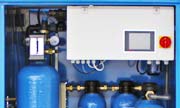
SCM 24
|
|
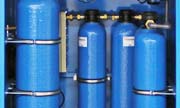
Cleans 24.000 liters per day
|
SCM 60
|
|
Cleans 60.000 liters per day
|
Video: How it works
The SCG Advantage
Our market-leading, water cleaning solutions have many advantages. To read more click the items below:
No Chemicals
Our machines and technology does not use any chemicals, at all.
Read more...
No Waste Water
Our machines do not waste any water. Yield = 100%.
Read more...
Low energy use
Uses 50 times less energy than a Reverse Osmosis Machine.
Read more...
Low ownership cost
Lower maintenance and operation costs due to our technology.
Read more...
Easy to install
Simple "plug and play" installation makes for easy deployment.
Read more...
Extremely compact
A compact system, contained in an easy to transport cabinet.
Read more...
Outperforms R.O.
SCG technologies outperform Reverse Osmosis systems.
Read more...
Faster ROI
Get a faster Return on Investment with our systems.
Read more...
Latest News
Latest Blog Posts
| Chemicals in water treatment? |
| Water storage - Whats best for keeping water clean and drinkable? |
| Case: Disaster Management Water Treatment |
Contact SCG
891 Showroom Place
Suite 101
Chula Vista, CA, 91914
Phone: +1 619-878-2730
Contact us by email