








How a Rural Indian School Secured Safe Water Without Chemicals
For children at a rural school in India, access to drinking water depends on far more than having a borehole, hand pump or storage tank. Groundwater can carry bacteria, arsenic, manganese, pesticides and other contaminants that are invisible at the tap. A source may look clear and still present a serious health risk.
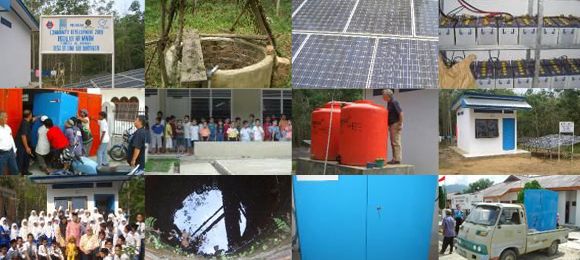
This case study follows how a school addressed that problem with a chemical-free water treatment system. The approach focused on producing reliable drinking water at the point of use while keeping energy demand, maintenance requirements and operating costs manageable for a rural setting.
The experience also has clear relevance for Australia. Schools in regional Queensland, remote Western Australia and inland New South Wales face their own combination of variable source quality, long supply chains, rainwater storage and limited technical support. A treatment solution must work in daily school life, not just in a laboratory.
The School’s Water Supply Problem
The school relied on local groundwater for drinking, cooking and handwashing. The source provided a practical supply, but basic appearance and taste could not confirm whether it was safe. Seasonal changes also affected the water, increasing the need for regular testing and dependable treatment.
The main concerns were naturally occurring minerals and microbiological contamination. Arsenic and manganese are especially important in groundwater treatment because they may remain undetected without proper analysis. Bacteria can enter through the source, damaged pipework, open tanks or poor handling after treatment.
For a school, the consequences extend beyond illness. Unsafe water can lead to student absences, disruption to lessons and increased pressure on families. In rural communities, replacing a failed treatment unit may also require specialist travel, imported parts or long delays.
Matching Treatment To Local Conditions
The first step was to assess the source water rather than install a generic filter. Testing helps identify the contaminants that need to be removed, the flow rate required during school hours and the quality needed for drinking and food preparation.
A suitable system can combine several treatment stages, depending on the analysis. Physical filtration can reduce suspended particles, while specialised media or membrane-based processes can target dissolved contaminants. Disinfection and hygienic storage are essential where bacteria are present or where treated water may be stored before use.
This source-specific approach is also central to clean water solutions designed for different applications. A remote school does not need the same configuration as a municipal plant, industrial facility or large livestock operation, even when several contaminants overlap.
A Chemical-Free Treatment Approach
The school’s solution was designed to remove harmful substances without routine chemical dosing. That matters in a setting where chemical deliveries may be unreliable, trained operators may be unavailable and safe storage can be difficult. Eliminating chemical handling also reduces the risk of incorrect dosing or accidental exposure.
The treatment process uses water-treatment technology that separates or captures contaminants while limiting waste and power consumption. The final configuration depends on the incoming water, but the operating principle is straightforward: treat the source consistently, protect the treated water and make routine checks simple enough for local staff.
Chemical-free does not mean maintenance-free. Filters, membranes, sensors, pumps and storage tanks still require inspection. However, maintenance can be planned around cleaning, replacement intervals and water-quality monitoring rather than the constant purchase and management of treatment chemicals.
Installation Around A School Day
The equipment had to fit around classes, meals and school routines. Installation therefore required more than connecting pipes. The project considered where the system would sit, how children would access the drinking points, how treated water would be stored and how staff could isolate the unit during servicing.
A compact layout helped reduce the distance between treatment and consumption. Shorter pipe runs can lower the opportunity for recontamination, while covered tanks and protected taps support better hygiene. Clear operating instructions are particularly important when a school has limited technical personnel.
This practical focus is familiar in Australia, where a regional school may depend on rainwater tanks, bore water or a small local network. In remote communities, replacement components may need to travel hundreds of kilometres from Perth, Brisbane or Adelaide. Equipment that is robust, modular and easy to inspect can reduce downtime.
Results That Matter To Students
The immediate result was access to treated drinking water without relying on regular chemical supply. Students and staff could use a dedicated source for drinking and food preparation, giving the school greater confidence in the quality of water available during the day.
The project also improved operational control. Instead of responding only when water tasted unusual or a health concern emerged, the school could follow a defined treatment and monitoring routine. This supports early detection of performance issues and helps protect the system from neglect.
The most useful outcomes can be viewed across several criteria:
| Measure | Before Treatment | After The New System |
|---|---|---|
| Drinking water source | Untreated local groundwater | Treated water from a protected outlet |
| Chemical handling | Potential need for dosing and storage | No routine treatment chemicals |
| Contaminant control | Uncertain without specialist treatment | Configuration selected for tested contaminants |
| School operation | Vulnerable to source-quality changes | More consistent daily supply |
| Maintenance focus | Reactive response to water concerns | Planned checks and component servicing |
| Community value | Limited confidence in source water | Safer access for students and staff |
Water-quality verification remains essential. The system’s performance should be confirmed through appropriate laboratory testing, with records kept for school administrators and local authorities. Safe water is a continuing service, rather than a one-time installation.
Protecting Water After Treatment
Even an effective treatment unit cannot guarantee safe water if the treated supply is allowed to become contaminated later. Storage tanks should be sealed, taps kept clean and pipework protected from backflow. Staff should also understand which outlets are approved for drinking and how to report unusual taste, odour, colour or pressure.
Hygiene is especially important in warm climates. Australian facility managers will recognise the need to manage water systems carefully in schools, community buildings and accommodation. Guidance on chemical-free Legionella control illustrates why water safety includes the whole building system, not just the treatment equipment.
The same principle applies to the Indian school. Safe source water, sound plumbing and responsible storage must operate together. A maintenance log can record filter changes, cleaning, test results, pump checks and any interruption in service.
A Model For Remote Water Security
The school demonstrates how a decentralised drinking-water system can support education and public health at the same time. It avoids dependence on bottled water, reduces the logistics of chemical supply and creates a treatment process suited to local conditions.
For Australian organisations, the model may be useful in Aboriginal and Torres Strait Islander communities, remote schools, agricultural properties, mining camps and emergency facilities. Local water sources can vary greatly, and drought, flooding or infrastructure failures may interrupt conventional supplies. A compact treatment plant can provide an additional layer of resilience where a central network is unavailable or unreliable.
Procurement teams should assess the source analysis, expected daily demand, treatment capacity, energy use, waste stream, service access and whole-of-life cost. The right question is not simply whether a unit can remove one contaminant. It is whether the complete system can deliver safe water every day with realistic local support.
Swiss Cleanwater Group provides water treatment technology for municipalities, buildings, farming, industry and mobile applications. Its experience across different water challenges reflects the central lesson of this case: successful treatment begins with the source, but it must finish with dependable use at the tap.
A school should be a place where children can learn, play and fill a bottle without uncertainty about the water. To assess a rural, regional or remote project, arrange a water-quality review and discuss a treatment configuration with Swiss Cleanwater Group. A properly designed chemical-free system can turn a vulnerable local source into a reliable drinking-water service.
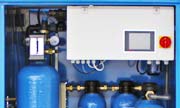
SCM 24
|
|
Cleans 24.000 liters per day
|
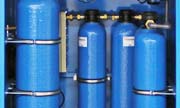
SCM 60
|
|
Cleans 60.000 liters per day
|
Video: How it works
The SCG Advantage
Our market-leading, water cleaning solutions have many advantages. To read more click the items below:
No Chemicals
Our machines and technology does not use any chemicals, at all.
Read more...
No Waste Water
Our machines do not waste any water. Yield = 100%.
Read more...
Low energy use
Uses 50 times less energy than a Reverse Osmosis Machine.
Read more...
Low ownership cost
Lower maintenance and operation costs due to our technology.
Read more...
Easy to install
Simple "plug and play" installation makes for easy deployment.
Read more...
Extremely compact
A compact system, contained in an easy to transport cabinet.
Read more...
Outperforms R.O.
SCG technologies outperform Reverse Osmosis systems.
Read more...
Faster ROI
Get a faster Return on Investment with our systems.
Read more...
Latest News
Latest Blog Posts
| Chemicals in water treatment? |
| Water storage - Whats best for keeping water clean and drinkable? |
| Case: Disaster Management Water Treatment |
Contact SCG
891 Showroom Place
Suite 101
Chula Vista, CA, 91914
Phone: +1 619-878-2730
Contact us by email