


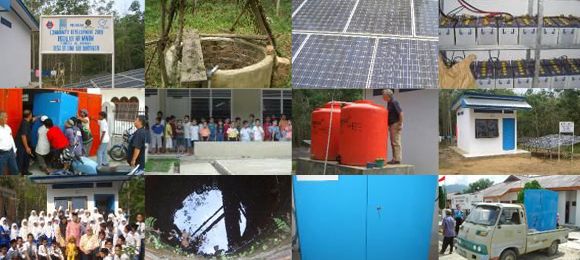







A Vineyard Protects Irrigation With Chemical-Free Filtration
A vineyard’s irrigation network is part of its production infrastructure. Pumps, valves, emitters, storage tanks, and underground lines must work reliably throughout the growing season, when any interruption can affect vine health, fruit quality, and harvest planning. Water that appears clear can still carry dissolved minerals, sediment, bacteria, or agricultural residues capable of damaging this system over time.
This case study follows a vineyard that replaced a chemically intensive water-treatment routine with a chemical-free filtration process. The objective was practical: protect irrigation equipment, reduce maintenance, and deliver consistent water to the vines without creating a new waste stream.
The project also demonstrates why treatment decisions should begin with a water analysis and an understanding of the entire irrigation cycle. A suitable solution must address the source water, seasonal variation, flow requirements, cleaning needs, and the sensitivity of the final application.
The Vineyard’s Water Challenge
The vineyard drew water from a local source that changed in quality after rainfall and during dry periods. Fine sediment entered the holding tank, while dissolved manganese and traces of other contaminants affected water appearance and contributed to deposits in parts of the distribution network. Microbial growth was another concern in storage areas exposed to warmth and sunlight.
The first symptoms appeared at the emitters. Some irrigation zones delivered less water than expected, and filters required frequent cleaning. Pressure differences between blocks became more noticeable, forcing the maintenance team to inspect valves, flush lines, and replace small components during periods when field access was inconvenient.
The existing approach relied on periodic chemical conditioning and manual intervention. Although this helped control some problems, it increased operating complexity. Staff had to manage chemical deliveries, dosing, storage, and safety procedures, while the vineyard still faced uncertainty about how much treated water would be discharged during cleaning.
Designing Treatment Around Irrigation
The treatment design began with laboratory testing and a review of the vineyard’s daily water demand. Instead of treating irrigation as a single filtration point, the project team considered the complete path from intake to vine: source water, pre-filtration, the treatment unit, storage, pumping, distribution, and emitter protection.
A chemical-free process was selected to reduce reliance on dosing equipment and consumables. Depending on the contaminant profile, physical filtration and specialized media can help remove suspended particles, manganese, arsenic, uranium, pesticides, and other unwanted substances. The exact configuration must be matched to test results rather than selected from a generic equipment list.
The installation was positioned near the existing pump and storage area. This limited civil work and made routine access straightforward. Automatic monitoring and backwashing were incorporated so that accumulated particles could be removed without requiring constant manual attention. The system was also sized for peak irrigation demand, avoiding a situation in which water quality improved but the treatment unit restricted field operations.
What Changed After Installation
Following commissioning, the vineyard observed a more stable pressure profile across its irrigation blocks. Emitters remained cleaner for longer, and the maintenance team spent less time dismantling filters and clearing deposits. The result was especially valuable during hot weather, when irrigation interruptions can quickly become operational emergencies.
The project also reduced the number of variables staff had to manage. With chemical dosing removed from the daily routine, operators no longer needed to adjust treatment levels according to changing flow conditions or handle the same volume of treatment chemicals. Routine work shifted toward inspection, monitoring, and scheduled servicing.
| Operating Area | Before Filtration Upgrade | After Chemical-Free Treatment |
|---|---|---|
| Emitter protection | Frequent cleaning and blockage checks | More consistent flow and fewer interruptions |
| Water conditioning | Chemical dosing and manual adjustment | Filtration-based treatment with automated control |
| Maintenance workload | Reactive cleaning during irrigation periods | Planned inspection and servicing |
| Waste management | Concern about discharge from cleaning and treatment | Reduced wastewater burden through efficient operation |
| Irrigation reliability | Pressure variation between vineyard blocks | More stable delivery across zones |
| Operational focus | Managing chemicals and clogged components | Monitoring system performance and water quality |
These improvements were measured operationally rather than judged only by the appearance of the water. The vineyard tracked pressure, cleaning frequency, filter condition, and service events. That approach made it easier to distinguish a temporary improvement from a durable treatment result.
Protecting Equipment And Resources
Irrigation equipment is sensitive to the cumulative effects of poor water quality. Suspended solids can obstruct narrow passages, while manganese and iron may oxidize and accumulate on surfaces. Microbiological activity can produce deposits or biofilm, particularly where water remains in tanks and low-flow sections of pipe.
A suitable filtration system helps intercept these risks before they reach pumps, valves, and emitters. This protects capital equipment and keeps the irrigation network closer to its intended hydraulic performance. It also supports more uniform water distribution, which is important when vines occupy different soil types or slopes within the same property.
Resource efficiency was another factor in the vineyard’s decision. The treatment process was selected to minimize chemical inputs, avoid unnecessary water losses, and use energy proportionately to the required flow. The project team reviewed lower ownership costs as part of the long-term evaluation, including consumables, labor, cleaning, repairs, and equipment downtime.
Managing Water Without A Waste Stream
Traditional treatment can create a secondary problem when contaminated backwash or spent process water must be collected and disposed of. For an agricultural site, wastewater handling may require extra tanks, drainage controls, transport, or regulatory review. Those requirements become more complicated when the vineyard is remote or operates with limited on-site staff.
The filtration upgrade was planned around the water balance as well as the treatment target. Backwash frequency, discharge quality, recovery, and operating cycles were considered during system selection. This helped the vineyard avoid simply transferring its water-quality problem into a waste-management problem.
A system built around zero wastewater design can be especially relevant for farms that need to conserve every available cubic meter. The practical value depends on the technology and source-water conditions, so performance claims should always be checked against the site’s laboratory results and operating requirements.
A Practical Model For Agricultural Treatment
The vineyard case offers a repeatable framework for farms, nurseries, and other agricultural operations. First, identify the contaminants that matter at the point of use. A source may contain manganese or arsenic even when turbidity is low, while another may be dominated by sediment, bacteria, pesticides, or seasonal organic material.
Second, connect water quality with equipment behavior. Blocked emitters, repeated pump cleaning, falling pressure, staining, and unusual maintenance costs are useful evidence. These symptoms can reveal how source-water chemistry is interacting with the irrigation network, but they should be confirmed through testing rather than assumed.
Third, assess the treatment process as an operating system. Flow rate, peak demand, automation, backwashing, energy use, footprint, access, and future expansion all influence whether a solution will remain effective. A technically capable filter that is difficult to maintain may perform poorly in real agricultural conditions.
Recommendations For Vineyard Operators
A vineyard considering a similar project can use these steps to build a reliable treatment plan:
- Test raw water during representative wet and dry periods, including minerals, metals, bacteria, pesticides, turbidity, and other site-specific contaminants.
- Inspect the full irrigation network, from intake and tanks to pumps, valves, filters, drip lines, and emitters.
- Define the required flow rate and pressure before selecting treatment equipment, including peak demand during the hottest part of the season.
- Compare chemical use, wastewater generation, energy consumption, labor, and replacement parts over the expected service life.
- Establish a monitoring schedule for pressure, water quality, filter condition, backwash performance, and irrigation uniformity.
The vineyard’s experience shows that filtration should be viewed as an investment in production continuity. Protecting emitters and pumps is important, but so is reducing the number of emergency interventions that compete with pruning, canopy management, harvest preparation, and other fieldwork.
For vineyards, farms, municipalities, and industrial sites, Swiss Cleanwater Group provides water-treatment technologies designed around contaminant removal, resource efficiency, and practical operation. A site assessment and water analysis can turn a recurring irrigation problem into a defined treatment project with measurable performance targets. Contact the company to evaluate a chemical-free filtration solution for a reliable, cleaner water supply.
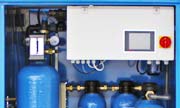
SCM 24
|
|
Cleans 24.000 liters per day
|
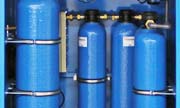
SCM 60
|
|
Cleans 60.000 liters per day
|
Video: How it works
The SCG Advantage
Our market-leading, water cleaning solutions have many advantages. To read more click the items below:
No Chemicals
Our machines and technology does not use any chemicals, at all.
Read more...
No Waste Water
Our machines do not waste any water. Yield = 100%.
Read more...
Low energy use
Uses 50 times less energy than a Reverse Osmosis Machine.
Read more...
Low ownership cost
Lower maintenance and operation costs due to our technology.
Read more...
Easy to install
Simple "plug and play" installation makes for easy deployment.
Read more...
Extremely compact
A compact system, contained in an easy to transport cabinet.
Read more...
Outperforms R.O.
SCG technologies outperform Reverse Osmosis systems.
Read more...
Faster ROI
Get a faster Return on Investment with our systems.
Read more...
Latest News
Latest Blog Posts
| Chemicals in water treatment? |
| Water storage - Whats best for keeping water clean and drinkable? |
| Case: Disaster Management Water Treatment |
Contact SCG
891 Showroom Place
Suite 101
Chula Vista, CA, 91914
Phone: +1 619-878-2730
Contact us by email