









Designing a Mobile Chemical-Free System for Military Field Hospitals
A field hospital needs a dependable water supply for drinking, food preparation, wound care, sterilization, laundry, and sanitation. In remote or disrupted environments, the available source may be a shallow well, surface water, tanker delivery, or a temporary borehole containing bacteria, sediment, pesticides, arsenic, manganese, or uranium. A treatment system must therefore be compact enough to transport while providing consistent output under demanding conditions. Learn more about Our Mission.html.
Chemical-free treatment can reduce the logistical burden associated with chlorine, coagulants, replacement chemicals, and hazardous storage. The design challenge is to combine physical filtration, membrane separation, disinfection, monitoring, and waste management in a mobile package that medical personnel can operate safely with limited technical support.
The most effective approach begins with the hospital’s actual water profile and daily demand. A system intended for a small triage unit will have different flow, storage, and redundancy requirements from one serving surgical wards, staff accommodation, kitchens, and vehicle wash-down areas.
Define The Mission Profile
The system should be sized around peak demand rather than average consumption. Drinking water is only one part of a field hospital’s requirement. Surgical handwashing, instrument cleaning, patient bathing, linen processing, toilets, kitchens, and emergency cleaning can create sharp increases in flow during specific periods.
A practical design separates water into quality tiers. Highly purified water can be reserved for drinking, food preparation, wound care, and clinical processes. Treated utility water may serve toilets, laundry, vehicle cleaning, and general hygiene. This arrangement reduces energy consumption and membrane loading without compromising critical medical activities.
Source variability also needs to be included in the specification. A river intake may bring heavy sediment after rainfall, while a borehole may contain dissolved metals or naturally occurring radionuclides. Portable sampling and laboratory analysis should establish turbidity, conductivity, pH, hardness, organic content, microbial contamination, and site-specific pollutants before final equipment selection.
Build A Layered Treatment Train
A chemical-free system should use several treatment stages, with each stage protecting the next. Coarse screening removes leaves, fibers, and debris. A self-cleaning prefilter or sediment separator then reduces suspended solids before finer filtration. This first barrier is especially important when the intake water is drawn from a surface source.
Ultrafiltration can provide a strong barrier against bacteria, parasites, and suspended particles. Depending on the source chemistry, reverse osmosis may be added to reduce dissolved salts, arsenic, uranium, pesticides, and other small contaminants. Activated carbon or specialized media can support the process where organic compounds, taste, or odor are concerns, although media selection must be based on verified water analysis.
Ultraviolet disinfection can provide an additional microbial safeguard without introducing a residual chemical into the treated stream. UV performance depends on low turbidity, correct dose, lamp condition, and adequate flow control. For a field hospital, the system should include sensors, alarms, and an automatic diversion function that prevents untreated water from reaching the clean-water tank if disinfection conditions fall outside the validated range.
A chemical-free design still produces a concentrated reject stream when reverse osmosis is used. That stream must be directed to an approved soakaway, holding tank, sewer connection, or recovery process. Discharge planning is part of the system design, particularly near temporary camps, fragile soil, flood zones, or environmentally sensitive sites.
| Design element | Recommended approach | Field benefit |
|---|---|---|
| Intake protection | Floating or elevated intake with coarse screen | Limits debris and sediment entry |
| Pretreatment | Self-cleaning filtration and turbidity monitoring | Protects membranes and reduces service intervals |
| Microbial barrier | Ultrafiltration followed by UV | Provides layered protection without chemical dosing |
| Dissolved contaminants | Reverse osmosis when analysis requires it | Reduces salts, metals, arsenic, uranium, and pesticides |
| Clean-water storage | Closed, opaque, hygienic tank with level control | Preserves treated quality between production cycles |
| Power system | Low-voltage modular equipment with battery or generator options | Supports operation in unstable grid conditions |
| Waste handling | Controlled reject and backwash collection | Prevents unsafe discharge around the hospital |
Engineer For Transport And Rapid Setup
Mobility is more than placing equipment on wheels. The package should fit available vehicles, aircraft pallets, or standard freight dimensions, while protecting pumps, membranes, electrical components, and pipework from vibration. Skid-mounted assemblies, lifting points, folding hose reels, and clearly marked connection ports can shorten unloading and installation time.
A field unit should be deployable on uneven ground with minimal civil works. Adjustable feet, a level platform, weather protection, and drainage connections help maintain reliable operation at temporary sites. Quick-connect couplings should be keyed or color-coded to prevent incorrect connections between raw water, treated water, concentrate, and waste lines.
The clean-water outlet should connect directly to a protected storage bladder or rigid tank. Storage capacity must cover periods when the source pump is unavailable, power is interrupted, or demand temporarily exceeds production. Tanks should have sealed access covers, overflow protection, level sensors, drain points, and a design that permits cleaning without contaminating the outlet.
Modularity improves resilience. A treatment skid, pump module, control cabinet, storage unit, and power module can be transported separately and replaced independently. This arrangement also allows a military medical team to scale capacity by adding parallel units rather than replacing the entire installation.
Match Power, Controls, And Monitoring
Energy efficiency is critical when fuel deliveries are uncertain. High-efficiency pumps, variable-speed drives, low-pressure filtration where appropriate, and automatic standby modes can reduce generator runtime. Solar panels and batteries may support monitoring, controls, and low-load operation, while a generator or grid connection handles high-demand treatment cycles.
The control system should display flow, pressure, conductivity, turbidity, tank levels, UV intensity, and membrane performance. Simple visual status indicators are valuable when operators are wearing protective equipment or working at night. Critical alarms should identify the fault clearly, such as low intake level, high differential pressure, exhausted pretreatment, UV failure, or abnormal product-water conductivity.
Remote monitoring can help a central technical team review performance and plan maintenance, but the unit must remain fully functional if communications are unavailable. Local manual overrides, safe shutdown procedures, and documented restart sequences are essential. Data logging also creates a useful record for water-quality verification and operational handover.
The electrical design should account for unstable voltage, generator frequency variation, dust, humidity, and temperature extremes. Components need suitable ingress protection, grounding, surge protection, and thermal management. Battery systems should be placed away from wet process areas, with ventilation and fire protection appropriate to the selected chemistry.
Protect Clinical Water Quality
A treated-water system for a medical environment requires stronger hygiene controls than a general-purpose water plant. Internal pipework should use materials suitable for potable water, with smooth surfaces and minimal dead legs. Tanks, hoses, valves, and sampling points should be selected to limit biofilm formation and simplify inspection.
Water-quality verification should occur at the source, after treatment, and at the point of use. Microbiological testing can confirm that the treatment barrier is performing as intended, while conductivity, turbidity, pH, and targeted chemical tests provide rapid operational indicators. The testing schedule should reflect source risk, system capacity, and the hospital’s clinical activities.
Operators need clear procedures for changing filters, inspecting membranes, cleaning tanks, checking UV lamps, managing reject water, and responding to alarms. Chemical-free treatment reduces chemical handling, but it does not remove the need for sanitation of tanks and distribution lines according to an approved protocol. Spare seals, cartridges, lamps, sensors, fuses, and critical pump components should be packed with the unit.
The system should also support a safe bypass policy. If treated water fails a quality check, the outlet should close automatically or divert to waste. Stored water should be isolated until testing confirms that the supply is safe. These controls prevent a single equipment fault from affecting an entire clinical operation.
Make Deployment Simple For Operators
Military field hospitals often operate with rotating personnel, so usability is a core engineering requirement. The interface should use plain language, durable labels, status lights, and a short sequence for normal startup and shutdown. A laminated operating guide can remain with the skid, while a digital manual provides diagrams, maintenance schedules, and troubleshooting information.
Training should cover source selection, hose connections, sampling, alarm response, tank hygiene, and emergency water conservation. Operators should know which faults can be corrected locally and which require a replacement module or specialist assistance. A short commissioning checklist can confirm correct flow direction, leak-free connections, sensor operation, and clean-water quality before clinical use.
The system’s environmental footprint also matters during prolonged deployments. Low chemical use reduces transport weight and storage hazards, while efficient pumps and water recovery reduce fuel demand and waste. Guidance on sustainable water treatment technologies and practical deployment principles is available through the Swiss Cleanwater mission resources, which can help planners connect technical choices with long-term operational responsibility.
Prioritize Resilience In The Final Specification
A robust design should be evaluated against realistic failure scenarios: blocked intake screens, muddy floodwater, depleted batteries, generator failure, frozen lines, high mineral content, damaged hoses, and a sudden increase in patient numbers. Each scenario should have a defined response, spare-part requirement, and minimum safe operating mode.
The following priorities help keep the specification focused:
- Use verified source-water analysis to select membranes, filters, and treatment stages.
- Separate critical potable demand from lower-grade utility demand.
- Include redundant pumps, bypass paths, sensors, and replaceable treatment modules.
- Provide protected storage sized for power interruptions and peak clinical demand.
- Pack test equipment, essential spares, connection adapters, and operator instructions with the system.
Procurement teams should request performance data under the expected temperature, pressure, turbidity, and contaminant conditions rather than relying on nominal flow figures. They should also confirm service intervals, membrane life, reject-water volume, noise levels, transport weight, and the availability of technical support in the deployment region.
A well-designed mobile purification unit becomes part of the hospital’s operational infrastructure, not a standalone appliance. When treatment, storage, power, monitoring, and training are designed together, the unit can deliver dependable water quality while reducing chemical logistics and unnecessary energy use.
For project assessment, equipment selection, or a deployment-specific configuration, contact Swiss Cleanwater Group with the source-water analysis, expected patient capacity, daily demand, transport constraints, and available power details. Subscribe to field water updates for further information on water treatment technologies and practical system developments.
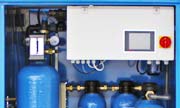
SCM 24
|
|
Cleans 24.000 liters per day
|
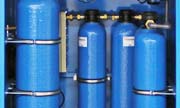
SCM 60
|
|
Cleans 60.000 liters per day
|
Video: How it works
The SCG Advantage
Our market-leading, water cleaning solutions have many advantages. To read more click the items below:
No Chemicals
Our machines and technology does not use any chemicals, at all.
Read more...
No Waste Water
Our machines do not waste any water. Yield = 100%.
Read more...
Low energy use
Uses 50 times less energy than a Reverse Osmosis Machine.
Read more...
Low ownership cost
Lower maintenance and operation costs due to our technology.
Read more...
Easy to install
Simple "plug and play" installation makes for easy deployment.
Read more...
Extremely compact
A compact system, contained in an easy to transport cabinet.
Read more...
Outperforms R.O.
SCG technologies outperform Reverse Osmosis systems.
Read more...
Faster ROI
Get a faster Return on Investment with our systems.
Read more...
Latest News
Latest Blog Posts
| Chemicals in water treatment? |
| Water storage - Whats best for keeping water clean and drinkable? |
| Case: Disaster Management Water Treatment |
Contact SCG
891 Showroom Place
Suite 101
Chula Vista, CA, 91914
Phone: +1 619-878-2730
Contact us by email