


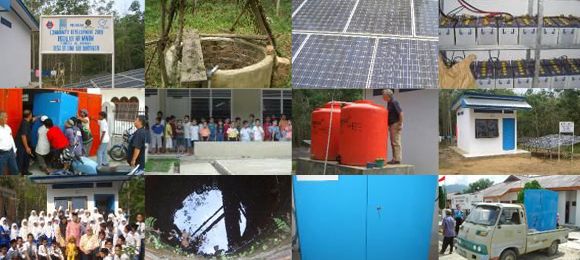







Combining Chemical-Free Filtration With Solar Distillation Off Grid
Reliable drinking water is difficult to produce when a site is far from utility networks, fuel deliveries, laboratories, and maintenance teams. Remote farms, emergency shelters, island communities, military camps, and field research stations often need a treatment train that can operate with limited electricity and minimal consumables.
Chemical-free filtration and solar distillation address different water-quality problems. Filtration can reduce suspended solids, microorganisms, and selected dissolved contaminants before water enters a distiller. Solar distillation then uses heat from sunlight to evaporate water and condense the vapor, leaving many salts, metals, and non-volatile pollutants behind.
A carefully designed combination can reduce dependence on chemicals, cartridges, diesel generators, and frequent operator intervention. The system still requires sound source-water testing, storage, hygiene controls, and a realistic assessment of solar availability.
Define The Source Water First
The correct arrangement depends on whether the source is a borehole, surface reservoir, rainwater tank, trucked supply, or brackish well. A laboratory analysis should identify turbidity, hardness, conductivity, pH, iron, manganese, arsenic, uranium, pesticides, bacteria, and organic matter. Seasonal changes matter because floodwater and drought can alter contaminant levels substantially.
Chemical-free filtration may use physical separation, pressure-driven membranes, catalytic media, adsorption, or combinations of these methods. The objective is to protect the solar still from fouling while removing contaminants that could pass into a vapor system or accumulate in storage tanks. A treatment provider with experience across municipal, agricultural, and mobile applications can help interpret the analysis; the SCG company profile provides useful background on this type of water-treatment approach.
Pretreatment should also address particles and biological growth. A coarse screen can protect pumps, while sediment filtration reduces suspended matter. If the source contains high levels of iron or manganese, oxidation and media filtration may be needed before fine filtration. These steps improve flow stability and prevent discoloration, scaling, and deposits inside the solar distillation equipment.
Arrange The Treatment Train
A practical off-grid sequence is source intake, coarse screening, chemical-free filtration, solar distillation, remineralization where necessary, and protected storage. The order can change according to the analysis. For example, ultrafiltration may be placed after sediment removal to reduce bacteria and colloids, while a dedicated adsorption stage may target arsenic or pesticides before final polishing.
The distiller should receive water with a controlled solids load. Solar evaporators work best when feedwater does not rapidly foul heat-transfer surfaces or leave heavy mineral deposits. A settling tank or filtered equalization tank can provide a buffer between variable source production and the slower, weather-dependent distillation cycle.
A compact unit such as the SCM 24 machine may be considered where a modular purification platform is appropriate. Final selection should be based on tested flow, contaminant targets, pressure requirements, climate, and the required daily volume rather than equipment size alone.
| Treatment stage | Main purpose | Energy profile | Important design point |
|---|---|---|---|
| Intake screen | Removes leaves, grit, and large particles | Very low | Include a cleanable barrier and bypass protection |
| Sediment filtration | Reduces turbidity and suspended solids | Low to moderate | Provide pressure monitoring and a maintenance route |
| Chemical-free contaminant removal | Targets microbes, metals, or selected organic compounds | Low to moderate | Choose media or membrane technology from laboratory data |
| Solar distillation | Removes many dissolved salts, metals, and non-volatile pollutants | Solar thermal energy | Allow for lower output during cloudy or short winter days |
| Product-water polishing | Improves taste and final hygiene control | Low | Use sanitary materials and prevent recontamination |
| Storage and distribution | Holds treated water for demand peaks | Low | Use a covered, cleanable tank with secure outlets |
Design Around Sunlight And Demand
Solar distillation is a thermal process, so its output depends on solar irradiance, collector area, ambient temperature, wind, cloud cover, and the design of the evaporator and condenser. A site with strong sunshine may still experience low production during winter or prolonged rain. Water demand should therefore be divided into essential drinking and cooking use, livestock or process use, and non-potable applications.
Sizing should begin with a daily demand profile rather than an average alone. A health post may require a modest but continuous supply, while a remote construction camp may need a large morning and evening peak. Storage can balance the difference between daytime production and nighttime use, but the tank must be large enough for poor-weather periods without becoming difficult to disinfect and inspect.
Solar panels can supply pumps, controls, sensors, and ultraviolet polishing, but they do not automatically provide sufficient heat for distillation. A hybrid design may use direct solar thermal collectors for evaporation and photovoltaic electricity for pumping. Batteries are useful for controls and short pumping cycles; storing heat or treated water may be more economical than sizing batteries for every operating condition.
Protect Quality At Every Transfer
The point between filtration and distillation needs careful hydraulic control. A feed tank should be shaded, sealed, and fitted with an overflow arrangement that prevents contaminated surface water from entering. Level sensors can start or stop the feed pump, while pressure gauges identify blocked filters before they reduce production.
After condensation, the product water must remain isolated from raw water, concentrate, cleaning drains, and unsealed air vents. Food-grade tanks, hygienic pipework, non-return valves, and protected taps reduce the chance of recontamination. If the distilled water is very low in minerals, a controlled remineralization stage may improve taste and reduce its aggressiveness toward plumbing.
Chemical-free does not mean maintenance-free. Filters require inspection and cleaning, membranes need appropriate flushing, and solar still surfaces need descaling. Concentrate and rejected solids must have a safe disposal route that does not contaminate the source or local soil. Operators should record feed quality, product volume, conductivity, visual condition, and any microbiological test results.
Specify A Resilient Operating Plan
A remote plant should be designed around tasks that local operators can perform safely. Routine work may include cleaning intake screens, checking differential pressure, inspecting seals, removing scale, testing storage-tank hygiene, and verifying that the product-water line has not been cross-connected with untreated water.
The following provisions make the treatment system more dependable:
- Install bypasses and isolation valves so individual stages can be serviced without draining the entire plant.
- Keep critical spare parts on site, including seals, filter elements, pump components, sensors, and cleaning tools.
- Use simple indicators for flow, pressure, tank level, conductivity, and solar production.
- Train operators to recognize fouling, unusual taste, declining yield, and microbiological risks.
- Define a safe fallback supply for periods of inadequate sunlight or equipment downtime.
A backup source does not undermine a solar strategy; it protects public health. Depending on the location, the reserve may be a sealed tank filled during high-production periods, a secondary borehole, a small photovoltaic-powered membrane unit, or a controlled delivery of certified drinking water.
Integrate The System With Site Operations
The best hybrid installation fits the daily rhythm of the site. A farm may use treated water for workers and animals while reserving distilled water for sensitive equipment. A military or disaster-response unit may prioritize compact transport, rapid deployment, and the ability to operate from variable source water. A permanent community installation may need a larger solar field, centralized storage, laboratory support, and a formal maintenance contract.
Civil works deserve the same attention as treatment equipment. Solar collectors need an orientation and mounting structure that allow cleaning and resist wind. Tanks should stand above flood levels where possible, while drainage should direct spills and concentrate away from wells and streams. Security fencing and lockable controls are important in public or temporary locations.
Before procurement, request a design review using source-water results, expected demand, climate data, available land, transport restrictions, and the local skill level. A technical discussion can clarify whether book a project consultation is appropriate for evaluating filtration, solar distillation, storage, and backup requirements together.
For an off-grid site, the strongest solution is rarely a single device. It is a coordinated water-production system in which chemical-free pretreatment protects the distiller, solar energy supplies the main thermal input, storage manages changing weather, and monitoring confirms that safe water reaches the point of use. Start with a complete water analysis and a realistic demand calculation, then develop the treatment train around those facts before selecting equipment.
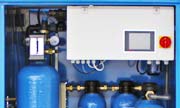
SCM 24
|
|
Cleans 24.000 liters per day
|
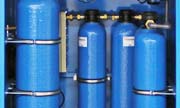
SCM 60
|
|
Cleans 60.000 liters per day
|
Video: How it works
The SCG Advantage
Our market-leading, water cleaning solutions have many advantages. To read more click the items below:
No Chemicals
Our machines and technology does not use any chemicals, at all.
Read more...
No Waste Water
Our machines do not waste any water. Yield = 100%.
Read more...
Low energy use
Uses 50 times less energy than a Reverse Osmosis Machine.
Read more...
Low ownership cost
Lower maintenance and operation costs due to our technology.
Read more...
Easy to install
Simple "plug and play" installation makes for easy deployment.
Read more...
Extremely compact
A compact system, contained in an easy to transport cabinet.
Read more...
Outperforms R.O.
SCG technologies outperform Reverse Osmosis systems.
Read more...
Faster ROI
Get a faster Return on Investment with our systems.
Read more...
Latest News
Latest Blog Posts
| Chemicals in water treatment? |
| Water storage - Whats best for keeping water clean and drinkable? |
| Case: Disaster Management Water Treatment |
Contact SCG
891 Showroom Place
Suite 101
Chula Vista, CA, 91914
Phone: +1 619-878-2730
Contact us by email