








How to Test Water Before Choosing Chemical-Free Filtration
Selecting a water filtration system begins with understanding what is actually in the water. Clear water can contain dissolved metals, microorganisms, pesticides, uranium, or gases that are invisible and may not produce an obvious taste or smell. A reliable treatment decision therefore depends on representative sampling and accurate laboratory analysis rather than appearance alone.
Chemical-free purification can be highly effective when the technology is matched to the contaminant, concentration, flow rate, and water chemistry. However, “chemical-free” does not mean that every system removes every impurity. The test results must show which contaminants require treatment, how much removal is needed, and whether several treatment stages are necessary.
A structured assessment also helps prevent oversizing, premature media exhaustion, and unexpected by-products. Municipal supplies, wells, farms, industrial sources, livestock facilities, pools, and mobile units each present different risks. Reviewing the water treatment history can provide useful context, but current source data should always guide equipment selection.
Identify The Water Source And Its Risks
Begin by documenting where the water comes from and how it changes over time. A deep groundwater well may have elevated iron, manganese, arsenic, uranium, hardness, or hydrogen sulfide. Surface water is more likely to experience turbidity, algae, bacteria, pesticides, and seasonal organic contamination. Rain-fed or mixed sources can fluctuate quickly after storms, droughts, or agricultural activity.
Record the intended use as well. Drinking water has stricter microbiological and health-based requirements than irrigation or process water. Water used for livestock, washing, boilers, cooling, swimming pools, or manufacturing may require different limits and different treatment priorities. Note the daily volume, peak flow, storage capacity, pressure, and whether treated water must be available continuously.
Past incidents can reveal risks that a single sample misses. Include well construction records, nearby land use, fertilizer or pesticide application, industrial activity, pipe corrosion, prior disinfection, and complaints about odor, color, or taste. These details help the laboratory recommend a meaningful analytical package instead of testing for an arbitrary list of substances.
Build A Representative Sampling Plan
Sampling should reflect the water that the treatment equipment will actually receive. For a well, collect a sample after the pump has run long enough to clear stagnant water from the casing and plumbing. For a building, sample at the incoming line as well as at a distant outlet if internal pipework may affect quality. For surface water, take samples from the intake location and document weather and flow conditions.
Use clean, laboratory-approved containers and follow preservation instructions carefully. Some samples need cooling, acidification, or immediate processing, especially those intended for microbiological, volatile, or metal analysis. Avoid touching the inside of containers or caps. Label every sample with the source, date, time, location, temperature, and any treatment operating at the time of collection.
One sample is rarely sufficient for a variable source. Collect repeated samples during wet and dry periods, before and after a major seasonal change, or at different production loads. If contamination is suspected, take both a routine sample and a confirmatory sample. Chain-of-custody documentation is particularly important for regulated projects, public supplies, and legal or contractual decisions.
Select Tests That Reveal Treatment Requirements
A useful water analysis includes more than a general appearance check. Start with field measurements such as temperature, pH, conductivity, oxidation-reduction potential, dissolved oxygen, and turbidity. These parameters influence how metals behave, whether biological growth is likely, and how filtration media will perform.
Laboratory testing should address the suspected contaminants and the chemistry that controls them. Common packages may include iron, manganese, arsenic, uranium, nitrate, nitrite, fluoride, chloride, sulfate, hardness, alkalinity, total dissolved solids, pesticides, and volatile compounds. Test for total and dissolved metals where relevant, because particles and dissolved substances may require different removal mechanisms.
Microbiological testing commonly covers total coliforms, Escherichia coli, and other organisms required by local regulations. Additional analysis may be warranted for viruses, protozoa, Legionella, or specific industrial organisms. If the water has a sulfur smell, ask for hydrogen sulfide or sulfide-related analysis rather than relying only on sensory observations.
| Water finding | Useful confirmation tests | Filtration design implication |
|---|---|---|
| Brown or black staining | Iron, manganese, pH, turbidity, alkalinity | Oxidation and catalytic or selective media may be considered |
| Rotten-egg odor | Hydrogen sulfide, sulfide, dissolved oxygen, pH | Gas control and media selection depend on concentration and flow |
| Possible agricultural influence | Nitrate, pesticides, conductivity, seasonal samples | Treatment may require adsorption, ion exchange, or another targeted stage |
| Natural radioactive concern | Uranium, gross alpha, radium where applicable | Specialized media or membrane treatment may be necessary |
| Microbiological contamination | Coliforms, E. coli, source-specific organisms | Barrier performance, disinfection strategy, and post-treatment protection must be evaluated |
| Cloudiness or sediment | Turbidity, particle size, total suspended solids | Pretreatment and backwashing capacity become important |
Ask the laboratory to report units, detection limits, analytical methods, and quality-control information. A result reported as “not detected” is meaningful only when the detection limit is below the concentration relevant to health or treatment design. Also distinguish a regulatory limit from a technical target: equipment may need to reduce a contaminant far below the incoming value to protect taste, processes, or downstream components.
Interpret Results Beyond A Single Number
Water chemistry is interconnected. High pH can change arsenic behavior, oxidation can convert dissolved iron into filterable particles, and alkalinity can affect pH stability. Hardness, organic matter, silica, and competing ions may reduce the capacity of a treatment medium even when the target contaminant concentration appears moderate.
Microbiological results require special care because organisms can multiply or die during transport. A negative sample does not prove that a source is permanently safe, particularly when contamination follows rainfall, flooding, poor well integrity, or intermittent pressure loss. Use source protection, sanitary inspection, and repeat sampling alongside laboratory data.
Compare results with the applicable drinking-water regulations and the intended application. A private household well, a municipality, a food-processing line, and a livestock watering point may have different legal and operational requirements. The final design should address both health protection and practical objectives such as odor control, staining prevention, taste, maintenance, and water recovery.
Match Contaminants To A Treatment Process
Once the analytical profile is complete, group contaminants according to how they must be removed. Suspended particles usually call for physical separation, while dissolved metals may require oxidation followed by filtration, adsorption, ion exchange, or a membrane process. Microorganisms need a validated barrier or disinfection approach. Pesticides and other trace organics may need activated carbon or a specialized medium.
A chemical-free approach can use physical filtration, catalytic media, adsorption, biological activity, membranes, or combinations of these methods. The right selection depends on concentration, contact time, pressure, temperature, flow variation, backwash water, and acceptable residual waste. “Chemical-free” should be evaluated as a complete operating concept, including cleaning, regeneration, disposal, and energy requirements.
Hydrogen sulfide deserves a separate assessment because odor intensity does not always indicate concentration. Its removal may involve media that promote oxidation or capture, depending on the water chemistry. A specialist explanation of hydrogen sulfide odor control can help distinguish odor treatment from broader purification requirements.
Ask the supplier to base its proposal on your laboratory report, not on a generic equipment package. The design should state expected inlet and outlet concentrations, service flow, peak flow, pressure loss, media life, backwash requirements, monitoring points, and performance limits. For complex sources, a pilot test may provide stronger evidence than calculations alone.
Validate The Design Before Full Installation
A pilot or staged installation can show how the selected technology performs under real operating conditions. Run it long enough to observe startup behavior, turbidity breakthrough, pressure changes, media exhaustion, and variations in raw-water quality. Test treated water at the beginning, during stable operation, and near the expected service limit.
Verification should cover both contaminant removal and system practicality. Confirm that the treated water meets the required standard at the actual flow rate. Measure water use for backwashing, electrical demand, operator workload, and the handling of any retained solids or concentrate. A system that removes contaminants effectively but cannot be maintained consistently may not be a sustainable choice.
Useful questions for the supplier or engineer include:
- Which laboratory results determined the selected media or membrane?
- What inlet concentration and peak flow can the system handle?
- How will performance be verified after commissioning?
- What sampling frequency and maintenance schedule are required?
- What happens when the raw-water quality changes seasonally?
Create A Monitoring And Decision Framework
Testing should continue after installation. Establish a baseline for raw and treated water, then schedule routine checks based on the risk of each contaminant. Microbiological parameters may require frequent testing, while stable mineral contaminants can often be reviewed at longer intervals. Increase sampling after flooding, construction, land-use changes, equipment failure, or an unexplained change in taste, odor, or color.
Maintain records of laboratory reports, flow volumes, pressure readings, media replacement, backwashing, alarms, and corrective actions. Trends are often more valuable than isolated results. A gradual rise in treated-water manganese or conductivity, for example, may indicate media exhaustion or membrane performance loss before users notice a problem.
For guidance on equipment options, specifications, and application-specific designs, review the Swiss Cleanwater Group resources alongside your analytical results. Share the complete source profile, intended use, flow data, and sampling history with the treatment specialist so the proposed chemical-free solution can be evaluated against measurable requirements. Begin with representative testing, then move forward with a design that can be verified, monitored, and maintained over its full service life.
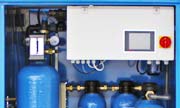
SCM 24
|
|
Cleans 24.000 liters per day
|
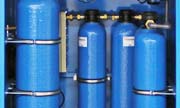
SCM 60
|
|
Cleans 60.000 liters per day
|
Video: How it works
The SCG Advantage
Our market-leading, water cleaning solutions have many advantages. To read more click the items below:
No Chemicals
Our machines and technology does not use any chemicals, at all.
Read more...
No Waste Water
Our machines do not waste any water. Yield = 100%.
Read more...
Low energy use
Uses 50 times less energy than a Reverse Osmosis Machine.
Read more...
Low ownership cost
Lower maintenance and operation costs due to our technology.
Read more...
Easy to install
Simple "plug and play" installation makes for easy deployment.
Read more...
Extremely compact
A compact system, contained in an easy to transport cabinet.
Read more...
Outperforms R.O.
SCG technologies outperform Reverse Osmosis systems.
Read more...
Faster ROI
Get a faster Return on Investment with our systems.
Read more...
Latest News
Latest Blog Posts
| Chemicals in water treatment? |
| Water storage - Whats best for keeping water clean and drinkable? |
| Case: Disaster Management Water Treatment |
Contact SCG
891 Showroom Place
Suite 101
Chula Vista, CA, 91914
Phone: +1 619-878-2730
Contact us by email