









How Flow Rate Shapes Chemical-Free Water Filtration
Flow rate is one of the most important variables in any water treatment system. It determines how long water remains in contact with a filter medium, how quickly contaminants reach treatment zones, and whether the equipment can deliver a reliable supply during peak demand. A filter that performs well in laboratory conditions may produce very different results when operated at a higher hydraulic loading rate.
Chemical-free filtration can remove or reduce contaminants through physical capture, adsorption, oxidation, biological activity, ion exchange, or a combination of these mechanisms. The selected process must match the water chemistry, target contaminants, required output, and available operating conditions. Flow rate connects these factors because it affects contact time, pressure loss, media performance, and the frequency of maintenance.
Understanding this relationship helps municipalities, farms, industrial facilities, building operators, and mobile water projects avoid a common mistake: choosing equipment according to nominal capacity alone. Effective treatment depends on the quality of the finished water at the actual operating flow.
Why Flow Rate Matters In Filtration
Flow rate describes the volume of water passing through a treatment unit during a specific period, usually litres per minute or cubic metres per hour. When flow increases while vessel size remains unchanged, the empty bed contact time decreases. Water moves through the treatment zone faster, giving the filter less opportunity to capture particles or interact with reactive surfaces.
The effect varies according to the contaminant and filtration method. Suspended solids may be removed efficiently through mechanical straining even at relatively high velocities, while dissolved arsenic, manganese, uranium, or pesticide compounds often require carefully controlled contact conditions. Bacteria and other microorganisms may also need sufficient retention, depending on whether the system relies on physical exclusion or another removal mechanism.
Hydraulic loading is equally important. It refers to the amount of water applied to a given area of filter media. A higher loading rate can increase turbulence, disturb the media bed, and push contaminants through before they are retained. Low loading rates generally improve treatment stability, but they may require larger equipment or parallel filter vessels.
Contact Time And Contaminant Removal
Empty bed contact time is a useful design measure for adsorption and other processes that depend on interaction between water and media. It is calculated from the volume of the treatment bed divided by the flow rate. A larger bed or lower flow produces more contact time; a smaller bed or higher flow produces less.
For manganese and iron removal, flow affects oxidation and capture within the filter bed. If the process depends on dissolved oxygen, catalytic media, or biological conversion, the water must move slowly enough for the reaction and subsequent solids capture to take place. Excessive flow can carry incompletely oxidized material beyond the intended treatment zone, causing colour, turbidity, or residual metal in the outlet.
Arsenic and uranium removal can also be sensitive to media capacity and contact conditions. These contaminants may be present in different chemical forms, and the water’s pH, alkalinity, competing ions, and oxidation state influence treatment efficiency. A suitable filter therefore requires more than a stated maximum flow. It requires water analysis, pilot testing where appropriate, and a design that maintains performance as the media loads over time.
Matching Equipment To Real Demand
A system should be sized around actual demand patterns rather than an idealized average. A building, livestock operation, or industrial process may use little water for long periods and then create a short peak when several outlets operate simultaneously. If the filter is selected only for average consumption, the peak flow may exceed the treatment design and reduce contaminant removal.
Peak demand can be managed through storage tanks, staged treatment, parallel vessels, variable-speed pumping, or flow-control valves. A buffer tank can allow the filter to operate at a steady rate while meeting short-term consumption spikes. Parallel units can provide additional capacity while preserving a suitable filtration velocity through each vessel.
Oversizing also deserves attention. Very low flow through a filter may produce long retention periods, but it can contribute to stagnant conditions, uneven bed use, or inefficient use of capital. The most effective design establishes an operating range rather than a single figure. Within that range, the system should maintain stable pressure, adequate contact time, and consistent treated-water quality.
The SCG advantage is relevant when evaluating this balance because sustainable treatment depends on the relationship between contaminant removal, energy consumption, maintenance, and system longevity. Chemical-free equipment still needs precise hydraulic design to deliver dependable results.
Comparing Flow Conditions
The following values illustrate general design tendencies rather than universal operating limits. Actual performance depends on media type, bed depth, particle size, water temperature, contaminant concentration, and pretreatment. A lower flow can improve contact time, while a higher flow may increase production capacity but demand more careful control.
| Operating condition | Typical effect on treatment | Main risk | Suitable design response |
|---|---|---|---|
| Low flow | Longer contact time and lower hydraulic stress | Stagnation or inefficient capacity use | Maintain a defined minimum flow or use periodic flushing |
| Design flow | Balanced throughput and contaminant removal | Performance can decline as media loads | Monitor pressure, flow, and outlet quality |
| Short peak flow | Temporary reduction in contact time | Contaminant breakthrough | Use storage, flow restriction, or parallel vessels |
| Sustained high flow | Greater production but higher loading | Media exhaustion, channeling, and poor removal | Increase bed area, add stages, or reduce velocity |
| Fluctuating flow | Variable treatment conditions | Uneven media use and unstable outlet quality | Install control valves, pumps, or equalization storage |
Flow distribution inside the vessel matters as much as the average rate. If water enters unevenly, it may form preferential channels through the media. These channels allow part of the water to bypass active treatment zones while other areas remain underused. Distributor design, bed preparation, vessel geometry, and regular backwashing help maintain even flow.
Backwashing itself involves a controlled increase in flow in the opposite direction. Its purpose is to loosen the media, remove trapped solids, and restore permeability. If the backwash rate is too low, accumulated material remains in the bed. If it is too high, valuable media can be lifted out of the vessel. The correct rate depends on media density, particle size, and water temperature.
Monitoring Performance At Operating Flow
A filter should be assessed under the conditions it will experience in service. Testing at a low flow may show excellent removal while failing to represent a morning demand peak or an irrigation cycle. Samples should be collected at the inlet and outlet during representative low, normal, and high-flow periods where practical.
Useful operating data includes flow rate, inlet and outlet pressure, turbidity, pH, conductivity, temperature, and target contaminant concentrations. A rising pressure differential usually indicates solids accumulation or bed compaction. A sudden fall in pressure may point to a damaged distributor, media loss, or internal bypass. A gradual increase in outlet contaminants may indicate media exhaustion or excessive loading.
Operators should also distinguish between flow-related breakthrough and water-quality changes caused by source conditions. Heavy rainfall, groundwater level changes, industrial discharges, or seasonal agricultural activity can alter contaminant concentrations. Recording both hydraulic and chemical data makes it easier to identify the cause and select the right corrective action.
Chemical-free treatment does not mean maintenance-free operation. Media inspection, backwashing, pump checks, valve servicing, and laboratory verification remain important. Monitoring allows maintenance to be scheduled according to actual condition instead of relying solely on a fixed calendar interval.
Practical Design Recommendations
For a reliable chemical-free filtration system, consider these priorities during specification and commissioning:
- Base the design on measured source-water quality, including contaminant concentration, pH, turbidity, temperature, and competing substances.
- Define minimum, normal, and peak flow rates before selecting vessel size, media depth, pump capacity, or storage volume.
- Preserve adequate contact time by controlling hydraulic loading rather than relying only on the filter’s nominal capacity.
- Include pressure gauges, flow measurement, sampling points, and alarms where changing conditions could affect treated-water quality.
- Verify performance at realistic operating flows and review the results as source-water conditions and media age change.
A site assessment can reveal whether the system needs pretreatment for sediment, a dedicated oxidation stage, additional adsorption capacity, or a lower operating velocity. It can also identify whether a single vessel is appropriate or whether parallel units would provide better resilience during maintenance and demand peaks.
For projects with unusual water chemistry or variable demand, remote discussions can accelerate the design process. A technical review through speak with our team can help connect flow data with treatment objectives before equipment is finalized.
Turning Hydraulic Control Into Reliable Results
The impact of flow rate on contaminant removal in chemical-free filters is ultimately a question of balance. Water must move fast enough to meet supply requirements, yet slowly and evenly enough to provide contact, capture, and reaction time. The correct operating point depends on the contaminant, filter medium, bed configuration, source-water chemistry, and demand profile.
A well-designed system protects this balance through appropriate sizing, flow regulation, storage, monitoring, and maintenance. When these elements work together, chemical-free treatment can provide dependable reduction of manganese, arsenic, bacteria, pesticides, uranium, and other unwanted substances while limiting chemical use, waste, and energy demand.
Review your source-water analysis and flow profile before selecting filtration equipment, then match the treatment process to the conditions the system will face every day. A technically sound design begins with measured data and ends with verified water quality at the outlet.
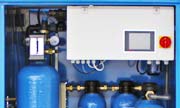
SCM 24
|
|
Cleans 24.000 liters per day
|
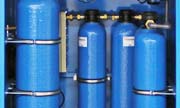
SCM 60
|
|
Cleans 60.000 liters per day
|
Video: How it works
The SCG Advantage
Our market-leading, water cleaning solutions have many advantages. To read more click the items below:
No Chemicals
Our machines and technology does not use any chemicals, at all.
Read more...
No Waste Water
Our machines do not waste any water. Yield = 100%.
Read more...
Low energy use
Uses 50 times less energy than a Reverse Osmosis Machine.
Read more...
Low ownership cost
Lower maintenance and operation costs due to our technology.
Read more...
Easy to install
Simple "plug and play" installation makes for easy deployment.
Read more...
Extremely compact
A compact system, contained in an easy to transport cabinet.
Read more...
Outperforms R.O.
SCG technologies outperform Reverse Osmosis systems.
Read more...
Faster ROI
Get a faster Return on Investment with our systems.
Read more...
Latest News
Latest Blog Posts
| Chemicals in water treatment? |
| Water storage - Whats best for keeping water clean and drinkable? |
| Case: Disaster Management Water Treatment |
Contact SCG
891 Showroom Place
Suite 101
Chula Vista, CA, 91914
Phone: +1 619-878-2730
Contact us by email