









Recovering Backwash Water in Chemical-Free Treatment Systems
Chemical-free water treatment can remove difficult contaminants while avoiding coagulants, disinfectants and other consumable chemicals. However, every filtration system still needs periodic cleaning. Backwashing uses treated or partially treated water to lift trapped particles from the filter bed, and that discharge can become a significant source of wastage when it is sent directly to a drain.
Backwash water recovery changes this balance. By collecting, settling, filtering and returning suitable water to the treatment process, operators can reduce raw-water demand and maintain reliable performance. This is especially relevant in Australia, where drought conditions, remote supply networks, water restrictions and high pumping costs make every kilolitre important.
| Approach | Water demand | Waste stream | Operational value | Common limitation |
|---|---|---|---|---|
| Direct-to-drain backwash | Highest | Full discharge to sewer or environment | Simple installation | Loses recoverable water |
| Settling and partial return | Medium | Concentrated sludge plus clarified water | Reduces make-up water | Needs a recovery tank and controls |
| Closed-loop recovery | Lowest | Periodic solids removal | Maximises reuse | Requires careful monitoring |
| Reuse for non-potable duties | Lower treatment demand | Diverted water used elsewhere | Useful for wash-down or irrigation | Must meet site and health requirements |
Why backwashing matters in chemical-free filtration
Chemical-free systems often rely on physical filtration, adsorption, oxidation, biological activity or pressure-driven separation. Media may capture manganese, iron, arsenic, uranium, pesticides, suspended solids and microorganisms, depending on the treatment design. As contaminants accumulate, the filter becomes less hydraulically efficient and pressure loss rises.
Backwashing reverses the flow through the media. The expanded bed releases retained material, restoring flow capacity and helping preserve treatment quality. The water discharged during this cycle contains concentrated solids and contaminants, so it cannot automatically return to the inlet. Recovery must be designed around the specific contaminant profile, media type and intended end use.
The volume can be material for large installations. A municipal plant, livestock operation or mining camp may backwash several filters on a repeating schedule. Even a small rural plant can lose thousands of litres over a month. In dry areas around Adelaide, Perth and regional New South Wales, this water use deserves the same attention as the main production flow.
What recovery systems actually do
A practical recovery train usually begins with a backwash holding tank. Flow is directed there instead of straight to the drain, allowing heavier particles to settle. The clarified upper layer can then pass through a polishing filter or return to an appropriate point in the treatment process. Settled sludge is removed at controlled intervals rather than being carried through the plant.
Some systems use lamella clarification, hydrocyclones, cartridge filters or membrane separation to improve recovery. The right arrangement depends on particle size, turbidity, dissolved contaminants and the quality target. Water containing concentrated arsenic, uranium or pesticide residues needs particularly careful containment and monitoring before any return or reuse decision is made.
Recovery should not compromise hygienic safety. Operators need safeguards against cross-connection, uncontrolled storage and reintroducing a contaminant load that the main treatment stage cannot manage. Automated valves, turbidity sensors, level controls and diversion logic can send unsuitable water to waste while returning only water within defined limits.
The efficiency gains for Australian sites
The clearest benefit is lower demand for source water. A recovery loop can reduce the volume drawn from a bore, reservoir, rainwater tank or town connection, while also reducing the discharge volume entering sewer infrastructure. This matters for facilities paying both water supply and trade-waste charges.
Energy use can fall as well. Less replacement water means less pumping, pressurisation and treatment of fresh feedwater. In remote Queensland communities, Western Australian mining sites and Northern Territory facilities, avoiding additional water transport can have an even greater effect than reducing treatment energy. Recovery also provides resilience when tanker deliveries are delayed or source quality changes after heavy rain.
Agricultural and livestock users can benefit from predictable water availability for cleaning, process use or animal services, provided the recovered stream is treated and approved for its intended purpose. For swimming pools, commercial buildings and industrial plants, recovered backwash water may support non-potable tasks such as equipment wash-down, toilet flushing or dust suppression, subject to local regulations and risk controls.
Designing recovery around the contaminant
The recovery method must reflect what the filter has removed. A backwash stream from a manganese or iron removal unit may mainly contain oxidised particles that settle readily. Water from an arsenic or uranium treatment process can require more stringent sludge handling because contaminants may become concentrated in the residual solids.
Pesticides and dissolved organic compounds present a different challenge. Settling may remove suspended media fines but have little effect on dissolved substances. In that case, returning the clarified water without an appropriate barrier could spread contaminants through the system. Sampling, laboratory analysis and a contaminant mass balance help determine whether recovery, further treatment or disposal is the responsible option.
A staged approach is often safer than attempting maximum recovery immediately. The first stage may recover only clear supernatant after settlement. Operators can then review turbidity, conductivity, contaminant levels and filter performance before increasing the return fraction. This protects drinking-water quality while demonstrating actual water savings.
Controls, maintenance and compliance
A recovery tank needs enough capacity for peak backwash events, including overlapping cycles or an interrupted discharge. Its design should prevent short-circuiting, allow access for cleaning and provide level alarms. Sludge removal points must be accessible, because accumulated solids reduce useful volume and can become difficult to manage if left undisturbed.
Control systems should record backwash frequency, recovered volume, rejected volume and key water-quality readings. These records reveal whether recovery is delivering its expected benefit. A sudden increase in turbidity or a fall in recovered volume may indicate media deterioration, poor settling, a blocked filter or an incorrect valve sequence.
Australian installations must consider state and territory requirements for drinking-water safety, trade waste, recycled water and environmental discharge. A system connected to a council supply may need backflow prevention, while a site in the Murray-Darling Basin may face different water-accounting and discharge considerations from a metropolitan facility. Engaging the relevant water authority early avoids costly redesign.
Where the approach creates the most value
Large plants gain from economies of scale, but compact systems can also justify recovery where water is expensive or difficult to replace. Remote communities, defence facilities, emergency response teams and temporary worksites may operate with limited storage and no dependable sewer connection. For these applications, a robust treatment package with controlled waste handling is more useful than a design that simply sends every backwash cycle away.
Mobile and military systems require particular attention to footprint, transportability and rapid commissioning. Swiss Cleanwater Group’s military treatment systems illustrate the wider need to combine purification with practical resource management when equipment must operate away from established utilities.
Municipal and commercial projects can use recovery data to support sustainability reporting and water-efficiency targets. A plant that produces safe water while reducing discharge, chemical consumption and fresh-water intake can strengthen the business case for an upgrade. Information about clean drinking water technologies is useful when comparing treatment options for communities, buildings, farms and industrial users.
Recovery is most effective when planned from the beginning rather than added after installation. Engineers can reserve space for tanks, specify suitable pumps, separate sludge handling from clarified-water return and integrate quality sensors into the control philosophy. Retrofitting remains possible, but the available footprint, pipework and automation may limit the achievable recovery rate.
Backwash water recovery turns a necessary maintenance discharge into a managed resource. It can lower water consumption, reduce waste volumes and improve operational resilience without relying on additional treatment chemicals. For Australian sites facing drought, remote logistics or rising utility costs, that combination of efficiency and dependable control makes recovery a practical part of modern water-treatment design.
Swiss Cleanwater Group can assess source-water quality, contaminant risks, backwash characteristics and reuse objectives to develop a suitable chemical-free treatment and recovery configuration. Contact the company to discuss a site-specific system for municipal, agricultural, industrial, defence or building applications.
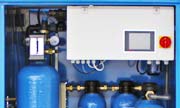
SCM 24
|
|
Cleans 24.000 liters per day
|
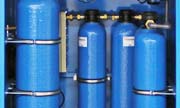
SCM 60
|
|
Cleans 60.000 liters per day
|
Video: How it works
The SCG Advantage
Our market-leading, water cleaning solutions have many advantages. To read more click the items below:
No Chemicals
Our machines and technology does not use any chemicals, at all.
Read more...
No Waste Water
Our machines do not waste any water. Yield = 100%.
Read more...
Low energy use
Uses 50 times less energy than a Reverse Osmosis Machine.
Read more...
Low ownership cost
Lower maintenance and operation costs due to our technology.
Read more...
Easy to install
Simple "plug and play" installation makes for easy deployment.
Read more...
Extremely compact
A compact system, contained in an easy to transport cabinet.
Read more...
Outperforms R.O.
SCG technologies outperform Reverse Osmosis systems.
Read more...
Faster ROI
Get a faster Return on Investment with our systems.
Read more...
Latest News
Latest Blog Posts
| Chemicals in water treatment? |
| Water storage - Whats best for keeping water clean and drinkable? |
| Case: Disaster Management Water Treatment |
Contact SCG
891 Showroom Place
Suite 101
Chula Vista, CA, 91914
Phone: +1 619-878-2730
Contact us by email