









How Dissolved Iron Supports Catalytic Manganese Filtration
Dissolved iron is often treated as an unwanted contaminant in groundwater, yet it can play an important role in manganese removal. Under the right conditions, iron is oxidized and converted into a reactive coating on filter media. This coating creates catalytic sites that accelerate the conversion of soluble manganese into particles that can be retained and removed.
The relationship is useful but highly dependent on water chemistry. Iron concentration, pH, oxygen availability, alkalinity, filtration velocity, and media condition all influence performance. A process that benefits from moderate iron loading may become unreliable when iron is excessive, poorly oxidized, or allowed to accumulate without effective backwashing.
Understanding this interaction helps engineers select suitable treatment equipment and avoid designing a manganese filter around concentration data alone. A successful system considers the complete groundwater profile, including iron, manganese, turbidity, arsenic, ammonia, organic matter, and microbial activity.
How Iron Creates A Catalytic Surface
In raw groundwater, iron commonly occurs as ferrous iron, Fe²⁺, which is dissolved and not readily captured by ordinary mechanical filtration. When exposed to oxygen, it can oxidize to ferric iron, Fe³⁺. Ferric iron then hydrolyzes and forms hydrated iron oxides, often described as ferric hydroxide or hydrous ferric oxide.
These iron oxide compounds deposit on the surface of granular filter media. Over time, the media develops an active coating that promotes manganese oxidation. Instead of relying solely on the slow reaction between dissolved manganese and oxygen, the catalytic layer provides a surface where manganese can be converted more efficiently into manganese oxide particles.
The process is sometimes described as media maturation or filter ripening. New media may initially remove manganese poorly, while an established bed can achieve much better results. This maturation must be controlled: a stable, thin, active coating is beneficial, whereas uncontrolled iron fouling can increase head loss, reduce flow, and create uneven filtration.
Why Manganese Behaves Differently
Manganese is generally more difficult to oxidize than iron. Ferrous iron may oxidize at a moderate pH when oxygen is available, but soluble manganese often requires a higher pH, stronger oxidation conditions, or a catalytic surface. This explains why a water treatment process can remove iron effectively while allowing manganese to pass through.
A mature manganese dioxide or iron oxide surface helps overcome this difference. The catalytic bed supports the oxidation of Mn²⁺ into insoluble manganese oxides, which are then retained within the granular structure. The result depends on sufficient contact time and a continuously active surface.
pH is especially important. If the water is too acidic, iron oxide formation and manganese oxidation may be slow. If the pH is raised excessively, scaling, taste, or other treatment problems may appear. Alkalinity, dissolved oxygen, oxidation-reduction potential, and temperature also affect reaction rates, so laboratory testing or pilot trials are valuable before full-scale installation.
Balancing Iron Loading And Filter Performance
Dissolved iron can act as a natural conditioning agent, but it is not automatically a substitute for engineered catalytic media. A groundwater source with very little iron may not develop an active surface quickly. A source with high iron may produce large quantities of precipitate that block the upper filter layer before manganese removal becomes consistent.
Pre-oxidation can make the process more predictable. Aeration, oxygen enrichment, or another suitable oxidation step converts ferrous iron into particulate ferric iron before the water reaches the catalytic bed. The filter then captures the precipitated iron and uses the resulting oxide coating to support manganese removal. In some installations, oxidation and filtration are combined in a single vessel; in others, separate stages provide better control.
Backwashing is essential because the bed gradually retains iron oxides, manganese oxides, and suspended solids. The frequency and intensity of backwash should match the loading rate and media specifications. Insufficient cleaning can cause channeling and pressure loss, while aggressive backwashing can remove useful coating or cause media loss. Treatment designers should also account for the handling and discharge of backwash water.
Choosing A Suitable Treatment Approach
Different filtration approaches respond differently to dissolved iron and manganese. Catalytic media, manganese dioxide-coated materials, aeration filters, and biological systems may all be appropriate, depending on the source water and operating objectives.
| Treatment approach | Role of dissolved iron | Main strength | Key operating concern |
|---|---|---|---|
| Aeration followed by filtration | Iron is oxidized before filtration and can condition the bed | Chemical-light oxidation and iron removal | Requires adequate oxygen transfer and solids management |
| Catalytic manganese media | Iron oxide can support surface activity | Effective polishing of manganese and iron | Needs suitable pH, contact time, and regular backwash |
| Manganese dioxide-based media | Iron is usually captured as an additional load | Strong catalytic oxidation potential | Media selection and oxidation conditions must match the water |
| Biological filtration | Iron and manganese may be transformed by an active biofilm | Low chemical demand after stabilization | Start-up, temperature, and disinfectant exposure require control |
| Chemical oxidation with filtration | Iron provides an oxidizable contaminant load | Fast and highly controllable reactions | Chemical storage, dosing, residuals, and by-products add complexity |
No single method is ideal for every well or surface-water source. For example, arsenic treatment information may be relevant when iron-based filtration is being considered for a water supply containing both manganese and arsenic. Iron oxides can interact with arsenic species, but arsenic removal depends on speciation, competing ions, pH, and the selected media. Manganese control and arsenic control should therefore be evaluated as related but distinct treatment goals.
Designing For Reliable Manganese Removal
A reliable system begins with representative water analysis. Testing should cover total and dissolved iron, manganese, pH, alkalinity, dissolved oxygen, turbidity, conductivity, hardness, sulfide, ammonia, organic carbon, and relevant contaminants. Sampling after periods of pumping and during seasonal changes can reveal variations that a single laboratory result may miss.
Hydraulic loading and empty bed contact time must be selected for the actual media and water chemistry. Excessive flow can reduce oxidation and filtration efficiency, while an oversized bed may raise capital costs without solving an upstream chemistry problem. A staged process with oxidation, contact, catalytic filtration, and final disinfection is often easier to operate than a single vessel expected to perform every function.
Monitoring should include inlet and outlet iron and manganese, differential pressure, flow rate, pH, and backwash performance. A sudden rise in outlet manganese may indicate insufficient oxidation, exhausted catalytic activity, media fouling, channeling, or a change in raw-water chemistry. Tracking these indicators helps operators distinguish a chemical problem from a hydraulic one.
Practical Recommendations For Operators
Operational decisions should protect the catalytic layer while preventing excessive solids accumulation. The most useful practices include:
- Measure dissolved and total iron separately to determine how much iron is available to form a catalytic coating and how much is already particulate.
- Maintain the pH and oxidation conditions required by the selected media rather than assuming that natural aeration will be sufficient.
- Establish a backwash program based on pressure loss, solids loading, and manufacturer data instead of using a fixed schedule alone.
- Test manganese breakthrough after start-up, seasonal changes, maintenance, and any alteration in pumping or aeration.
- Plan for residuals management, including the collection, settling, reuse, or compliant discharge of iron- and manganese-rich backwash water.
These measures are important for small community systems as well as larger municipal and industrial installations. They also matter where treatment equipment operates intermittently, such as remote facilities, livestock sites, mobile units, and emergency water supplies.
Applying The Process Beyond Municipal Wells
Groundwater used for farming, livestock, and food-related operations may contain iron and manganese at levels that affect irrigation equipment, plumbing, storage tanks, and product quality. Oxidized iron can stain surfaces and clog emitters, while manganese deposits may accumulate in pipes and filtration components. A properly designed pretreatment stage can protect downstream equipment and improve water usability. Guidance on clean water for farming is especially relevant when treatment must serve irrigation, livestock watering, or farm buildings.
Industrial users may require a different balance between manganese removal, water recovery, operating cost, and footprint. Some applications need process water with very low metal concentrations, while others mainly need protection from scaling and discoloration. Swimming pools, commercial buildings, and public facilities may also benefit from iron and manganese control, although their disinfection and monitoring requirements differ from those of a private well.
The most effective treatment solution is based on the source, the intended use, and the required water quality at the point of consumption. Dissolved iron can be a valuable part of catalytic filtration chemistry, but only when oxidation, media selection, hydraulics, and maintenance are coordinated. Swiss Cleanwater Group can help assess these factors and identify a sustainable system for removing manganese and related contaminants. Contact the company to discuss water analysis, pilot testing, and a treatment design suited to the application.
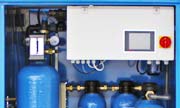
SCM 24
|
|
Cleans 24.000 liters per day
|
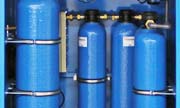
SCM 60
|
|
Cleans 60.000 liters per day
|
Video: How it works

The SCG Advantage
Our market-leading, water cleaning solutions have many advantages. To read more click the items below:
No Chemicals
Our machines and technology does not use any chemicals, at all.
Read more...
No Waste Water
Our machines do not waste any water. Yield = 100%.
Read more...
Low energy use
Uses 50 times less energy than a Reverse Osmosis Machine.
Read more...
Low ownership cost
Lower maintenance and operation costs due to our technology.
Read more...
Easy to install
Simple "plug and play" installation makes for easy deployment.
Read more...
Extremely compact
A compact system, contained in an easy to transport cabinet.
Read more...
Outperforms R.O.
SCG technologies outperform Reverse Osmosis systems.
Read more...
Faster ROI
Get a faster Return on Investment with our systems.
Read more...
Latest News
Latest Blog Posts
| Chemicals in water treatment? |
| Water storage - Whats best for keeping water clean and drinkable? |
| Case: Disaster Management Water Treatment |
Contact SCG
891 Showroom Place
Suite 101
Chula Vista, CA, 91914
Phone: +1 619-878-2730
Contact us by email