






Clean Potable Water for Construction Sites
Construction sites need a dependable supply of safe drinking water from the first day of ground preparation to the final installation. Workers require potable water for hydration, food preparation, handwashing, and basic welfare facilities, while temporary offices, laboratories, and accommodation units may also depend on the same source.
A site connection to the municipal network is not always available. Remote projects may rely on tankers, boreholes, surface water, or temporary storage tanks. Each source can introduce different risks, including bacteria, sediment, pesticides, manganese, arsenic, or uranium. Treating water for construction sites therefore requires more than placing a storage tank beside the work area.
The right treatment strategy combines source testing, suitable purification technology, hygienic distribution, and regular monitoring. It should also control operating costs and avoid creating a stream of chemical containers or contaminated treatment waste.
Why potable water matters on a worksite
Clean water is a core occupational health requirement. Workers who spend long hours in heat, dust, or protective clothing can become dehydrated quickly. If drinking water is unreliable, staff may consume untreated water or reduce their intake, increasing the risk of fatigue, heat stress, and poor concentration.
Water used for handwashing and food service must also meet appropriate hygiene standards. Construction dust, fuel residues, concrete additives, and soil contaminants can be carried into welfare areas on clothing and equipment. A properly treated supply helps protect workers from waterborne illness and supports sanitary site operations.
The source itself may change during a project. A temporary borehole can contain dissolved metals, while a tanker delivery may introduce contamination through poor cleaning or uncovered transfer equipment. Testing at the source, after treatment, and at selected outlets creates a clearer picture of actual water quality.
Assessing the source and the demand
A practical assessment begins with laboratory analysis. Basic parameters usually include turbidity, pH, conductivity, hardness, iron, manganese, and microbiological indicators. Depending on local geology and land use, the analysis may also need to cover arsenic, uranium, nitrates, pesticides, hydrocarbons, and other site-specific contaminants.
Demand calculations should account for the number of workers, shift patterns, welfare facilities, kitchens, showers, cleaning operations, and emergency reserves. A system sized only for drinking taps may fail when several cabins, washrooms, or accommodation units draw water simultaneously. Peak flow and daily volume are separate design considerations.
Storage capacity provides resilience when deliveries are delayed or treatment equipment needs servicing. However, stored water must be protected from sunlight, dust, insects, and accidental entry. Tanks should be made from suitable materials, fitted with secure covers, and cleaned according to a documented schedule.
Choosing a treatment process
Treatment depends on the contaminants and the source, rather than on the fact that water is being used temporarily. Suspended solids may require pre-filtration, while bacteria can call for disinfection or a validated physical barrier. Dissolved pollutants need targeted processes that can remove them without compromising the final water quality.
Swiss Cleanwater Group develops systems for applications where drinking water must be produced with limited chemical use, waste, and energy consumption. Its water treatment solutions can be considered for construction compounds, remote infrastructure projects, temporary facilities, and other settings where a stable mains connection is unavailable.
The selected equipment should be easy for site personnel to operate. Automated controls, clear alarms, accessible filter housings, and simple sampling points reduce the chance of errors. The installation should also include backflow protection, pressure regulation, and a secure enclosure if it is located in an exposed or busy area.
| Source or risk | Typical concern | Useful treatment approach | Site management priority |
|---|---|---|---|
| Municipal connection | Intermittent supply or aging pipework | Final filtration and disinfection where required | Protect the connection and monitor outlets |
| Borehole | Manganese, arsenic, uranium, hardness, bacteria | Contaminant-specific filtration or membrane treatment | Test seasonally and after changes in abstraction |
| Surface water | Turbidity, microbes, pesticides, organic matter | Pre-treatment, filtration, and validated disinfection | Prevent contamination around the intake |
| Tanker delivery | Variable quality or unclean transport tanks | Incoming testing, filtration, and secure storage | Verify supplier records and clean transfer points |
| Rainwater or temporary collection | Microbial contamination and debris | Filtration plus appropriate disinfection | Separate from potable lines unless fully treated |
Reducing chemical and water waste
Temporary projects often operate under strict environmental controls. Chemical dosing can create storage, handling, and training requirements, while incorrect dosing may affect taste, safety, or compliance. Spent media, sludge, and rejected water can also create disposal obligations that are difficult to manage at a remote location.
Where the raw water and regulations permit it, physical purification methods can reduce the need for consumable chemicals. Swiss Cleanwater Group describes chemical-free treatment designed to remove contaminants such as manganese, arsenic, bacteria, pesticides, and uranium without generating unnecessary chemical waste.
Chemical-free does not mean maintenance-free. Filters, membranes, ultraviolet components, pumps, and sensors still require inspection and replacement at appropriate intervals. Operators need clear instructions for cleaning, flushing, calibration, and the safe handling of any concentrated reject stream produced by the process.
Protecting water after treatment
A well-designed purification unit can still be undermined by poor distribution. Potable and non-potable lines should be physically separated and clearly identified. Hoses, fittings, and taps used for drinking water should be reserved for that purpose and protected from contact with soil, fuel, wastewater, and construction materials.
Water storage tanks should be positioned away from vehicle routes and areas where concrete washout, oils, or chemicals may spill. Delivery points need secure caps and hygienic couplings. If a tank has previously held non-potable liquid, it should not be reused for drinking water unless it has been formally assessed and thoroughly decontaminated.
Stagnation is another concern. Low-use outlets, long hose runs, and oversized tanks can allow biofilm growth and deterioration in water quality. Flushing routines, sensible pipe sizing, circulation where appropriate, and regular outlet testing help keep treated water safe until it reaches the worker.
Monitoring and compliance on temporary projects
A construction water plan should name the person responsible for the system, define sampling locations, and set out responses to abnormal results. Records can include source conditions, treatment readings, filter changes, tank cleaning, laboratory reports, corrective actions, and delivery certificates. This documentation is useful for audits and for demonstrating that worker welfare controls are being maintained.
Testing frequency depends on the source, system design, local regulations, and project risk. Microbiological checks may be needed more often than tests for stable chemical parameters. Additional sampling should follow any flooding event, equipment failure, unexplained taste or odor, tank cleaning, or major change in the water source.
Workers should know which taps provide drinking water and how to report a problem. Signs, induction briefings, and routine inspections are simple controls that prevent confusion. If results fall outside acceptable limits, the supply should be isolated or clearly marked until investigation and corrective treatment are complete.
Recommendations for a reliable site supply
- Test the proposed water source before selecting treatment equipment, including microbiological and site-specific chemical parameters.
- Size purification, storage, and distribution systems for peak demand rather than average daily use.
- Keep potable infrastructure separate from process water, firewater, greywater, and water used for dust suppression.
- Choose equipment with accessible controls, clear maintenance instructions, and manageable waste streams.
- Maintain written records for sampling, tank hygiene, servicing, incidents, and corrective actions.
A modular installation can often move with the project as work areas change. Skid-mounted units, protected pipework, and standardized connections make relocation easier, while remote monitoring can help supervisors identify pressure loss, unusual flow, or declining treatment performance before it affects the workforce.
Building a dependable water plan
Clean drinking water should be treated as essential site infrastructure, alongside power, access roads, welfare cabins, and communications. Early planning allows the project team to compare source options, arrange testing, secure permits, and install treatment before workers arrive.
For a project that needs safe water away from a reliable mains network, contact Swiss Cleanwater Group to discuss the source, expected demand, contaminants, and operating conditions. A properly matched system can give construction teams dependable potable water while reducing unnecessary chemicals, waste, and energy use.
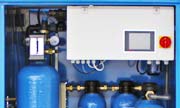
SCM 24
|
|
Cleans 24.000 liters per day
|
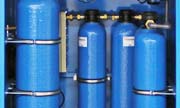
SCM 60
|
|
Cleans 60.000 liters per day
|
Video: How it works
The SCG Advantage
Our market-leading, water cleaning solutions have many advantages. To read more click the items below:
No Chemicals
Our machines and technology does not use any chemicals, at all.
Read more...
No Waste Water
Our machines do not waste any water. Yield = 100%.
Read more...
Low energy use
Uses 50 times less energy than a Reverse Osmosis Machine.
Read more...
Low ownership cost
Lower maintenance and operation costs due to our technology.
Read more...
Easy to install
Simple "plug and play" installation makes for easy deployment.
Read more...
Extremely compact
A compact system, contained in an easy to transport cabinet.
Read more...
Outperforms R.O.
SCG technologies outperform Reverse Osmosis systems.
Read more...
Faster ROI
Get a faster Return on Investment with our systems.
Read more...
Latest News
Latest Blog Posts
| Chemicals in water treatment? |
| Water storage - Whats best for keeping water clean and drinkable? |
| Case: Disaster Management Water Treatment |
Contact SCG
891 Showroom Place
Suite 101
Chula Vista, CA, 91914
Phone: +1 619-878-2730
Contact us by email