





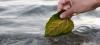
Treating Water for Fish Farms Without Chemicals
Fish farming depends on stable water quality. Fish release ammonia through their gills and waste, while uneaten feed and decomposing organic matter add further nitrogen to the system. In a well-managed pond or recirculating aquaculture system, beneficial bacteria convert ammonia into nitrite and then nitrate. When that biological balance fails, toxic compounds can accumulate quickly.
Ammonia and nitrite are especially dangerous because they can harm fish before the water appears cloudy or smells unusual. Their concentration is affected by temperature, pH, oxygen availability, stocking density, feeding rates, and the maturity of the biofilter. A treatment strategy therefore needs to address the causes of contamination rather than relying on a temporary chemical correction.
Chemical-free water treatment combines mechanical separation, biological filtration, aeration, solids management, and carefully selected purification technologies. The objective is clean, oxygen-rich water that supports fish health while reducing waste, operating costs, and environmental impact.
Why Ammonia And Nitrite Become Toxic
Ammonia enters aquaculture water primarily as total ammonia nitrogen, which includes ionized ammonium and un-ionized ammonia. The un-ionized form is significantly more toxic, and its proportion rises as pH and temperature increase. A reading that appears acceptable under cool, slightly acidic conditions can become hazardous in warmer, alkaline water.
Nitrite is produced when nitrifying bacteria oxidize ammonia. It is less immediately volatile than ammonia, but it can interfere with the fish’s ability to transport oxygen in the blood. This condition, often called brown blood disease, may cause lethargy, rapid breathing, poor feeding, and unexplained mortality.
High ammonia or nitrite usually indicates a mismatch between waste production and treatment capacity. Common causes include overfeeding, an immature or overloaded biofilter, insufficient dissolved oxygen, blocked media, sudden changes in pH, or excessive sludge accumulation. Testing should therefore include pH, temperature, dissolved oxygen, alkalinity, ammonia, nitrite, and nitrate.
The Biological Engine Of Nitrogen Removal
Nitrification is a natural, aerobic process. Ammonia-oxidizing microorganisms convert ammonia into nitrite, while nitrite-oxidizing microorganisms convert nitrite into nitrate. These organisms colonize biofilter media and require continuous oxygen, adequate surface area, stable flow, and sufficient alkalinity.
A biofilter cannot be judged by its size alone. Its performance depends on the amount of feed entering the system, the water temperature, the hydraulic loading rate, the type of media, and the contact time between water and microorganisms. If solids coat the media, oxygen transfer and bacterial activity decline.
Mechanical filtration should remove feces and uneaten feed before they reach the biological stage. Drum filters, settling units, screens, sedimentation chambers, and appropriately designed separators can reduce the organic load. Removing solids early limits decomposition and prevents additional ammonia from forming inside tanks and pipes.
Chemical-Free Treatment Technologies
Aeration is one of the simplest ways to support ammonia and nitrite removal. Air blowers, diffusers, oxygen cones, and low-energy oxygenation systems help maintain the dissolved oxygen required by fish and nitrifying bacteria. Strong circulation also prevents dead zones where organic matter can settle and decay.
Biological filters may use moving-bed media, trickling filters, bead filters, submerged media, or fixed-bed reactors. Each design has different requirements for flow, backwashing, oxygenation, and maintenance. A properly sized filter can reduce toxic nitrogen compounds without adding disinfectants or neutralizing chemicals to the culture water.
Membrane and advanced filtration systems can provide additional polishing when water quality demands are high. Depending on the application, these systems may reduce suspended particles, dissolved contaminants, or microbial risks. They should be selected after a water analysis because excessive filtration can increase energy use and maintenance without addressing the main source of ammonia.
Ultraviolet treatment can help control free-floating microorganisms, but it does not remove ammonia or nitrite. Ozone can support oxidation and water clarity in some professional installations, yet it requires careful control and residual management. A chemical-free program should distinguish between contaminant removal, pathogen control, and biological nitrogen conversion rather than treating them as the same process.
Matching Treatment To The Farm
Open ponds, raceways, hatcheries, and recirculating aquaculture systems produce different treatment demands. A pond may benefit from improved circulation, solids removal, aeration, and management of inflowing water. A recirculating system needs a coordinated treatment train because the same water repeatedly passes through fish tanks.
Species and life stage also matter. Fry and juvenile fish are often more sensitive to water quality fluctuations than mature stock. Warm-water species may generate waste rapidly, while cold-water species can experience slower bacterial activity at low temperatures. The daily feed load is usually a more useful basis for sizing treatment equipment than tank volume alone.
Farm operators should also consider water source quality. Groundwater may contain iron, manganese, arsenic, or other contaminants that affect fish health and biofilter performance. Surface water can carry pesticides, pathogens, suspended solids, and seasonal organic loads. The broader water treatment solutions offered by Swiss Cleanwater Group can be relevant when aquaculture water requires purification beyond nitrogen control.
| Treatment Stage | Main Function | Chemical-Free Benefit | Key Operating Need |
|---|---|---|---|
| Screening or settling | Removes feces and feed particles | Reduces organic decomposition | Regular solids removal |
| Aeration | Adds oxygen and improves circulation | Supports fish and nitrifying bacteria | Reliable airflow and mixing |
| Biological filtration | Converts ammonia to nitrite and nitrate | Provides continuous natural conversion | Stable loading and alkalinity |
| Fine filtration | Captures smaller suspended particles | Improves clarity and protects equipment | Correct media cleaning |
| UV or advanced polishing | Reduces selected microbial or dissolved risks | Limits reliance on disinfectants | Proper flow and maintenance |
| Water exchange or reuse control | Prevents contaminant accumulation | Reduces waste when optimized | Monitoring and balanced make-up water |
Operating Conditions That Protect Fish
A healthy biofilter requires consistency. Sudden changes in pH, temperature, salinity, flow, or feed load can reduce bacterial activity. Alkalinity is particularly important because nitrification consumes it. If alkalinity falls too far, pH can drop and the entire nitrogen cycle may slow down.
Dissolved oxygen should be measured at several points, including the fish tanks, filter inlet, filter outlet, and return line. A single reading can hide oxygen depletion in a pipe, sump, or heavily loaded biofilter. Backup aeration and emergency power are essential where a pump or blower failure could cause rapid losses.
Monitoring frequency should reflect system risk. New systems, heavily stocked tanks, and farms experiencing a water quality event may require several tests per day. Mature installations can use automated sensors for temperature, pH, oxygen, conductivity, and water level, supported by regular laboratory or field tests for ammonia and nitrite.
Data becomes useful when it is interpreted alongside feeding and maintenance records. A rising ammonia level after increased feeding suggests insufficient biological capacity or solids management. A nitrite spike with adequate ammonia control may indicate that the second stage of nitrification is lagging. These patterns help operators correct the process instead of making random adjustments.
Preventing Spikes Before They Start
Feed management is one of the most effective forms of ammonia control. Feeding should match appetite, biomass, water temperature, and oxygen availability. Excess feed increases suspended solids and decomposition, while underfeeding can also weaken stock and reduce production efficiency. Automatic feeders should be calibrated and checked against actual consumption.
Stocking density should be reviewed whenever fish grow or production targets change. A system that performs well with small juveniles may become overloaded as biomass increases. Biofilter capacity, pumping rates, oxygen delivery, and emergency response plans should be reassessed together rather than individually.
Routine cleaning must protect the biological community. Washing all filter media with chlorinated tap water or disinfecting the entire system can destroy nitrifying bacteria and create a new ammonia crisis. Mechanical components should be cleaned as needed, while biological media should generally be rinsed with suitable system water according to the equipment design.
A gradual response is safer than a sudden water-quality correction. When ammonia or nitrite rises, operators should verify the test, increase oxygenation, stop or reduce feeding temporarily, remove accumulated solids, inspect pumps and filters, and identify changes in biomass or water chemistry. Large water exchanges may be necessary in some emergencies, but source water must be tested before it enters the farm.
Designing A Resilient Aquaculture System
A professional assessment should begin with a complete water profile and a description of the farm’s production cycle. Useful information includes source water, species, tank volume, maximum biomass, daily feed input, seasonal temperature, current filtration, discharge arrangements, and the desired level of water reuse.
Equipment should be selected as a connected system. A high-capacity biofilter will not perform well if solids bypass the prefilter or if the oxygen supply is unreliable. Likewise, advanced purification cannot compensate for overfeeding, inadequate circulation, or insufficient filter surface area. Process design should balance treatment performance with energy demand, maintenance access, and spare-parts availability.
Swiss Cleanwater Group works with applications that require sustainable water purification and can discuss site-specific requirements through its contact team. For fish farms, that conversation should include both nitrogen control and any additional concerns involving source-water contaminants, microbial quality, reuse, or discharge.
Practical Priorities For Farm Operators
- Measure ammonia, nitrite, pH, temperature, dissolved oxygen, and alkalinity on a defined schedule.
- Remove feces and uneaten feed before they enter the biological filter.
- Maintain continuous aeration and provide backup power for pumps and blowers.
- Size biofiltration according to peak daily feed and biomass, not tank volume alone.
- Record feeding, maintenance, test results, and system changes to identify trends early.
Chemical-free water treatment is most reliable when it is designed as a complete process. Mechanical filtration handles solids, aeration supports life and nitrification, biological media converts toxic nitrogen compounds, and monitoring confirms that the system remains stable. This approach can protect fish health while reducing chemical dependence and unnecessary water consumption.
For a fish farm planning a new installation or upgrading an existing one, begin with a water analysis and a clear production profile. Discuss the findings with a qualified treatment specialist to develop a solution that removes the relevant contaminants, supports biological filtration, and fits the farm’s operating conditions.
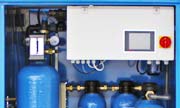
SCM 24
|
|
Cleans 24.000 liters per day
|
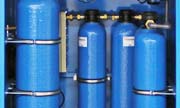
SCM 60
|
|
Cleans 60.000 liters per day
|
Video: How it works
The SCG Advantage
Our market-leading, water cleaning solutions have many advantages. To read more click the items below:
No Chemicals
Our machines and technology does not use any chemicals, at all.
Read more...
No Waste Water
Our machines do not waste any water. Yield = 100%.
Read more...
Low energy use
Uses 50 times less energy than a Reverse Osmosis Machine.
Read more...
Low ownership cost
Lower maintenance and operation costs due to our technology.
Read more...
Easy to install
Simple "plug and play" installation makes for easy deployment.
Read more...
Extremely compact
A compact system, contained in an easy to transport cabinet.
Read more...
Outperforms R.O.
SCG technologies outperform Reverse Osmosis systems.
Read more...
Faster ROI
Get a faster Return on Investment with our systems.
Read more...
Latest News
Latest Blog Posts
| Chemicals in water treatment? |
| Water storage - Whats best for keeping water clean and drinkable? |
| Case: Disaster Management Water Treatment |
Contact SCG
891 Showroom Place
Suite 101
Chula Vista, CA, 91914
Phone: +1 619-878-2730
Contact us by email