









Understanding How Multiple Contaminants Behave During Filtration
Water rarely contains just one substance that needs to be removed. A groundwater source may carry iron, manganese, arsenic, uranium, pesticides, and microorganisms at the same time. Surface water can add suspended particles, organic matter, and seasonal bacterial loads. These contaminants do not always behave independently, so a filter selected for one target may influence the removal of another.
The central challenge is to understand the chemistry of the raw water before choosing treatment equipment. pH, oxygen availability, alkalinity, temperature, turbidity, and competing dissolved substances can all alter filtration performance. A process that works reliably in one well may produce different results in another, even when the contaminant list appears similar.
Effective design therefore considers contaminant interactions, oxidation conditions, media capacity, hydraulic loading, and maintenance requirements together. Chemical-free treatment can be especially valuable where operators want to avoid chemical storage, residuals, brine, or waste streams, but it still requires accurate testing and process control.
Why Contaminants Influence One Another
Iron and manganese commonly occur together in groundwater. In their dissolved forms, they can pass through ordinary sediment filters. When exposed to oxygen or another oxidation mechanism, they form solid particles that can be captured by suitable filter media. Manganese generally requires more carefully controlled conditions than iron, particularly when the pH is low or the contact time is short.
Arsenic adds another layer of complexity. Arsenic may be present as arsenite or arsenate, and these forms do not attach to filtration media with equal strength. Oxidation can convert arsenite into arsenate, which is often easier to remove through adsorption or co-precipitation with iron hydroxides. If iron is removed too early or if insufficient iron is available to support this reaction, arsenic performance may decline.
Organic matter can also affect treatment. Natural organic compounds may consume oxidant capacity, block active sites on adsorption media, or form coatings that reduce contact between contaminants and the filter surface. Turbidity and suspended solids can clog a bed before dissolved pollutants have been treated, making prefiltration an important part of a multi-barrier design.
The Role Of Oxidation And Filter Media
Oxidation changes the physical and chemical form of a contaminant. Dissolved ferrous iron, for example, can become ferric hydroxide particles after contact with oxygen. Those particles can then be retained by a pressure filter or granular bed. The same principle may support manganese removal, although reaction rates depend strongly on pH, media properties, and available contact time.
Chemical dosing is one way to create oxidation, but aeration and other chemical-free oxidation methods can achieve the required conditions in suitable applications. The choice depends on water composition, flow variation, target limits, and the operator’s preference for consumables and residual management. A useful comparison of chemical-free oxidation explains why oxidation strategy should be matched to the source rather than selected in isolation.
Filter media also interact with one another. A catalytic medium may promote oxidation, while a downstream adsorption medium captures arsenic or other dissolved compounds. If the first bed releases fines, becomes fouled, or receives water with the wrong oxidation state, the second bed can lose capacity prematurely. Correct sequencing protects each treatment stage and improves the stability of the whole system.
Matching Treatment Stages To Water Chemistry
A multi-contaminant treatment train usually begins with source protection and analysis, followed by physical separation, oxidation, filtration, adsorption, disinfection, or a combination of these steps. The sequence is not universal. A well with high iron and manganese may need aeration and media filtration, while a source containing pesticides may require activated carbon or another adsorption technology.
Arsenic and uranium require special attention because their removal depends on species, pH, competing ions, and the selected media. Uranium, for example, can respond differently depending on carbonate concentration and water alkalinity. A filter designed for iron and manganese should not be assumed to provide reliable uranium reduction without performance data for that specific water.
The following overview shows why a single “all-purpose” filter is rarely the best way to assess complex raw water:
| Contaminant or condition | Main treatment challenge | Possible interaction | Design consideration |
|---|---|---|---|
| Iron | Dissolved iron must be oxidized before capture | Can help co-precipitate arsenic, but may foul downstream media | Provide oxidation, contact time, and backwashing |
| Manganese | Often reacts more slowly than iron | Performance changes with pH and media surface activity | Verify pH, retention time, and catalytic media suitability |
| Arsenic | Chemical form determines removability | Can attach to iron precipitates or compete for adsorption sites | Identify arsenite and arsenate separately |
| Uranium | Removal is affected by pH and carbonate chemistry | Competing dissolved ions may reduce media capacity | Select media based on laboratory or pilot results |
| Bacteria | Cells may be retained, inactivated, or pass through | Organic matter and turbidity can shield microorganisms | Use validated disinfection or a reliable physical barrier |
| Pesticides | Often require adsorption or advanced treatment | Natural organic matter can occupy adsorption sites | Test breakthrough risk and carbon replacement intervals |
This assessment also helps determine whether one integrated unit is appropriate or whether separate treatment stages are safer. Pilot testing can reveal breakthrough, pressure loss, media exhaustion, and contaminant transfer that may not be visible in a basic laboratory report.
Preventing Waste And Unwanted By-Products
Filtration does not make contaminants disappear. They may be retained in a filter bed, concentrated in a backwash stream, transformed into solids, or transferred onto replaceable media. Responsible design accounts for each destination before installation. Backwash frequency, drain capacity, sludge handling, and spent-media disposal are part of treatment performance, not secondary details.
A system that uses large quantities of water for regeneration or backwashing may create an operational burden, especially in remote facilities, agricultural settings, and regions with limited water availability. Technologies designed around efficient cleaning and minimal discharge can reduce the overall footprint. Swiss Cleanwater Group describes no-waste water treatment as a way to address water recovery and treatment efficiency while limiting avoidable waste streams.
Chemical-free filtration can reduce the need for storage tanks, dosing pumps, and chemical transport, but it does not remove the need for monitoring. Operators still need to check pressure differentials, treated-water quality, media condition, and changes in the source. A low-consumable process is successful when it remains stable over time, not simply when it has a short equipment list.
Designing For Real Operating Conditions
Laboratory concentration alone does not define treatment difficulty. Flow rate, peak demand, well recovery, seasonal changes, and temperature can change the contact time available for oxidation and filtration. A system sized for average flow may perform poorly during short periods of high demand if the empty bed contact time becomes too low.
Water quality can also shift after rainfall, pumping changes, construction, agricultural activity, or a change in the source. Municipal and industrial operators should establish a sampling program that tracks both raw and treated water. Testing should cover the contaminants of concern as well as indicators such as pH, oxidation-reduction potential, turbidity, alkalinity, conductivity, and dissolved organic carbon where relevant.
Practical design should include bypass protection, alarms, sampling points, and a clear maintenance schedule. In applications involving drinking water, livestock, food production, or public facilities, validation is especially important. The treatment train must continue to meet the required quality target when the source and demand are less predictable.
Building A Reliable Multi-Barrier System
A dependable process begins with a complete water analysis rather than a product-first decision. Samples should be representative of normal operation and, where possible, repeated over time. Results should identify contaminant concentrations, chemical forms, variability, and any substances that may compete with the chosen removal mechanism.
The system can then be organized around complementary barriers. Pretreatment protects sensitive media, oxidation converts dissolved metals into filterable solids, adsorption addresses compounds that remain dissolved, and disinfection provides microbiological protection. Each stage should have a defined purpose and measurable performance target.
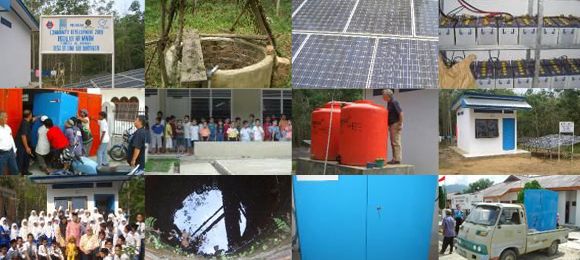
For projects serving villages, farms, industrial facilities, swimming pools, buildings, or mobile units, equipment must also match the operating environment. Automation, power availability, footprint, service access, and operator skill can be as important as removal efficiency. Swiss water treatment systems provide a starting point for exploring treatment technologies suited to different applications and contaminant profiles.
Practical Steps For Treatment Planning
The most effective way to manage interacting contaminants is to turn water analysis into a documented treatment strategy. Useful planning steps include:
- Test raw water for major contaminants, chemical forms, pH, turbidity, alkalinity, and organic matter.
- Identify which pollutants can be removed together and which require a dedicated downstream barrier.
- Confirm oxidation conditions, filter loading rates, contact time, and backwash requirements.
- Evaluate where retained solids, spent media, or cleaning water will go.
- Establish routine monitoring for both treatment performance and changes in the source.
The aim is a process that protects every stage from avoidable fouling and prevents one contaminant from undermining the removal of another. Correct sequencing, realistic flow calculations, and ongoing verification can deliver cleaner water with lower chemical use and fewer unnecessary waste streams.
Start with a detailed analysis of the source and discuss the results with a water-treatment specialist before selecting equipment. A properly designed filtration system can address complex contaminant mixtures while supporting safe, efficient, and sustainable water production.
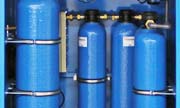
SCM 24

|
|
Cleans 24.000 liters per day
|
SCM 60
|
|
Cleans 60.000 liters per day
|
Video: How it works
The SCG Advantage
Our market-leading, water cleaning solutions have many advantages. To read more click the items below:
No Chemicals
Our machines and technology does not use any chemicals, at all.
Read more...
No Waste Water
Our machines do not waste any water. Yield = 100%.
Read more...
Low energy use
Uses 50 times less energy than a Reverse Osmosis Machine.
Read more...
Low ownership cost
Lower maintenance and operation costs due to our technology.
Read more...
Easy to install
Simple "plug and play" installation makes for easy deployment.
Read more...
Extremely compact
A compact system, contained in an easy to transport cabinet.
Read more...
Outperforms R.O.
SCG technologies outperform Reverse Osmosis systems.
Read more...
Faster ROI
Get a faster Return on Investment with our systems.
Read more...
Latest News
Latest Blog Posts
| Chemicals in water treatment? |
| Water storage - Whats best for keeping water clean and drinkable? |
| Case: Disaster Management Water Treatment |
Contact SCG
891 Showroom Place
Suite 101
Chula Vista, CA, 91914
Phone: +1 619-878-2730
Contact us by email