


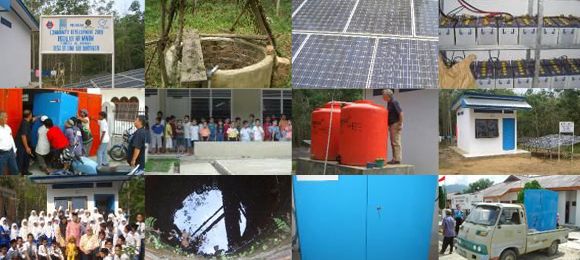







Removing manganese from iron-rich groundwater without chemicals
Groundwater can be a dependable source for farms, remote communities, industrial sites and private buildings across Australia. It can also carry dissolved iron and manganese, which create staining, metallic tastes, odours, dark deposits and problems for pumps, pipes and storage tanks. Iron-rich water often signals that manganese may require attention as well, even when initial testing focuses on only one contaminant.
A treatment system that avoids chemical additives can reduce handling requirements, chemical storage and ongoing consumable costs. The right solution still depends on the bore chemistry, flow rate, pH, temperature, dissolved oxygen and intended use. Effective design begins with laboratory testing and ends with a process that can be operated reliably in Australian conditions.
Why iron-rich bores need careful treatment
Iron and manganese commonly occur in groundwater in dissolved forms. Water may appear clear when it leaves a bore, then turn orange, brown or black after exposure to air. Oxidised iron can stain laundry and bathroom fixtures, while manganese may form dark deposits in tanks, pipes and irrigation equipment. At elevated levels, manganese can also affect taste and colour.
The two metals do not always behave in the same way. Iron generally oxidises and filters more readily, whereas manganese may need a higher oxidation potential, a suitable surface for catalytic conversion or longer contact time. A process designed only for iron can therefore leave manganese in the treated water.
Bore users in regional Queensland, Western Australia and South Australia may notice these effects in rainwater-bore combinations, stock troughs or household plumbing. In Perth and other areas where groundwater supports gardens and non-potable uses, mineral deposits can also reduce the performance of sprinklers and filtration equipment. Testing is important before selecting a system, especially where water will be used for drinking or food preparation.
How chemical-free manganese removal works
“Chemical-free” does not mean that the water receives no treatment. It means the process is designed without routine dosing of substances such as potassium permanganate, chlorine, ozone chemicals or other oxidising additives. Depending on the technology, treatment may use aeration, electrochemical oxidation, controlled contact with specialist media, filtration, membrane separation or a combination of these methods.
The first stage is often oxidation. Dissolved manganese must be converted into a particulate form that a filter can retain. Iron can assist some filtration processes by creating reactive surfaces, although relying on naturally occurring iron alone is not a dependable design method. The system must maintain suitable conditions through changing bore quality and seasonal demand.
Filtration then captures oxidised particles and protects downstream plumbing. A robust design may include pre-filtration for sediment, an oxidation chamber, a manganese-specific filter stage and an automatic backwash cycle. The exact sequence should be matched to the raw water analysis rather than selected from a generic catalogue.
Matching the process to Australian water conditions
Australian groundwater varies significantly between regions. A bore near Adelaide may have a different pH and mineral profile from one serving a cattle property in northern New South Wales. Salinity, hardness, silica, tannins, turbidity and organic matter can influence manganese removal and the service life of treatment components.
Remote locations add practical constraints. A station or small community may have limited access to technicians, unreliable grid power or a need to operate from solar and battery systems. Treatment equipment should therefore be assessed for energy consumption, automation, spare parts, remote monitoring and the simplicity of routine maintenance. Compact systems can be valuable where plant space and transport access are limited; the 600 water treatment unit provides an example of equipment designed for specialised water-cleaning applications.
Water intended for drinking must be treated as a regulated public-health service, not simply as clear-looking water. The Australian Drinking Water Guidelines provide the national reference framework for aesthetic and health-related water quality. State and territory requirements, local council expectations, plumbing rules and project-specific approvals may also apply. A qualified designer should verify the applicable obligations before installation.
Avoiding common treatment mistakes
A frequent mistake is to choose equipment based on the iron concentration alone. Manganese performance can change sharply with pH, oxidation conditions and flow rate. A system that works during a short demonstration may struggle when several taps, troughs or production lines operate at once.
Another mistake is underestimating backwash water and solids management. Oxidised iron and manganese accumulate in the filter bed, so the system needs an appropriate cleaning cycle. The backwash flow must be available, and the discharge must be managed in accordance with local environmental requirements. For a rural site, this may require planning around dams, drains, stock areas and soil conditions.
It is also important to distinguish between potable and non-potable applications. Livestock, irrigation, industrial washing and process water may have different quality targets from household drinking water. A farm using bore water for cattle and a regional facility supplying staff kitchens should not automatically receive the same treatment design.
Operating a low-chemical system reliably
Chemical-free treatment can simplify operations by reducing the need to store, transport and handle dosing products. This is useful for farms, construction compounds, defence applications and remote Australian communities. It does not remove the need for inspection. Sensors, valves, pumps, filter media and electrical components still require servicing.
Routine checks should include raw and treated manganese, iron, pH, turbidity, flow, pressure loss and any changes in taste or colour. Water testing should be repeated after commissioning and at intervals appropriate to the source. A sudden rise in pressure loss may indicate fouling, while a gradual return of black staining can signal exhausted media, inadequate oxidation or an incorrect flow setting.
Operators should keep records of backwash cycles, test results, alarms and maintenance work. This creates an early warning system and supports compliance documentation. In areas affected by drought, bore drawdown or seasonal changes, the chemistry may shift as water levels and pumping patterns change.
Planning installation from test results to service
A practical project begins with representative samples taken from the operating bore, not from a storage tank that has already been exposed to air. The analysis should cover manganese, iron, pH, alkalinity, hardness, conductivity, turbidity, dissolved oxygen and any other contaminants relevant to the site. Arsenic, uranium, pesticides, bacteria and salinity may also need consideration in Australian groundwater projects.
The designer can then establish the required treatment rate, peak flow, storage volume, backwash arrangement and power supply. Pilot testing is valuable where manganese is high, water chemistry is unusual or the consequences of poor treatment are significant. It confirms whether the chosen process achieves the target under realistic flow and temperature conditions.
A chemical-free system can be particularly attractive for a council facility, livestock operation, industrial plant or mobile unit where logistics matter as much as water quality. The best solution is one that consistently meets the required standard while using manageable energy, space and maintenance resources. Swiss Cleanwater Group provides technical information and project support for organisations comparing treatment options; users can also receive water treatment updates through the company’s newsletter.
For Australian projects, installation should include clear operating instructions, commissioning tests and a service plan suited to the location. Local technicians, replacement components and training can determine whether a system remains effective after the initial handover.
Have the bore water tested by an accredited laboratory and share the results with a water-treatment specialist. Swiss Cleanwater Group can help assess iron and manganese conditions, identify a suitable chemical-free treatment approach and develop equipment options for a home, farm, municipality, industrial site or remote operation. Begin with the water analysis, required flow and intended use so the treatment design is based on evidence rather than guesswork.
SCM 24
|
|
Cleans 24.000 liters per day
|
SCM 60
|
|
Cleans 60.000 liters per day
|
Video: How it works
The SCG Advantage
Our market-leading, water cleaning solutions have many advantages. To read more click the items below:
No Chemicals
Our machines and technology does not use any chemicals, at all.
Read more...
No Waste Water
Our machines do not waste any water. Yield = 100%.
Read more...
Low energy use
Uses 50 times less energy than a Reverse Osmosis Machine.
Read more...
Low ownership cost
Lower maintenance and operation costs due to our technology.
Read more...
Easy to install
Simple "plug and play" installation makes for easy deployment.
Read more...
Extremely compact
A compact system, contained in an easy to transport cabinet.
Read more...
Outperforms R.O.
SCG technologies outperform Reverse Osmosis systems.
Read more...
Faster ROI
Get a faster Return on Investment with our systems.
Read more...
Latest News
Latest Blog Posts
| Chemicals in water treatment? |
| Water storage - Whats best for keeping water clean and drinkable? |
| Case: Disaster Management Water Treatment |
Contact SCG
891 Showroom Place
Suite 101
Chula Vista, CA, 91914
Phone: +1 619-878-2730
Contact us by email