









Media grain size for chlorine-free iron and manganese removal
Groundwater used for drinking, irrigation and livestock across regional New South Wales, northern Victoria and parts of South Australia and Western Australia can carry dissolved iron and manganese. The problem is especially familiar to property owners with bores, while contractors also encounter it in mine dewatering, food processing and remote camps. Iron can stain fixtures and pipes, and manganese can discolour water and leave dark deposits around pumps and irrigation emitters.
The Australian Drinking Water Guidelines set aesthetic objectives of 0.3 mg/L for iron and 0.05 mg/L for manganese, so treatment may be required even where the principal concerns are appearance, taste and equipment fouling. Chlorine is often used to oxidise soluble metals before conventional filtration, but some operators seek chlorine-free systems because of chemical handling, discharge concerns or site restrictions. This makes media selection and hydraulic design central rather than incidental.
The role of media grain size in optimising chlorine-free filtration for iron and manganese is therefore precise: particle size affects the contact available for oxidation and capture, as well as the flow and maintenance the vessel can sustain. The right specification must match the actual form of the metals, treatment flow and operating rhythm. A smaller or more uniform bed can improve performance in one condition and create problems in another.
Why grain size changes filtration performance
Media grain size is described through effective size, the uniformity coefficient and the full particle-size distribution. Effective size represents the characteristic grain diameter, while uniformity indicates how consistently the bed is graded. A narrow distribution creates predictable pore passages; a broad distribution lets fine particles migrate through larger voids, producing short-circuiting, higher turbidity and early breakthrough. Media grain size must also be distinguished from contaminant particle size, since the two perform different functions in the treatment process.
For dissolved iron that has first been oxidised, finer grains and tighter grading generally provide more opportunities to intercept the resulting ferric particles. For manganese, the governing step is often slower oxidation on a catalytic surface before the precipitate is retained. Grain size influences reactive surface area and residence time, but it cannot replace the chemistry needed to convert dissolved manganese into a filterable form.
This distinction is important for chlorine-free installations. Air, passive oxygenation and suitable catalytic media can support oxidation without routine chemical dosing, while avoiding the extra handling associated with prechlorination. This whole-system focus is reflected in the Swiss Cleanwater Group portfolio, which combines treatment equipment with information for source-water assessment and application-specific design.
Matching media to iron and manganese chemistry
Source-water analysis should identify total and dissolved iron, dissolved manganese, pH, dissolved oxygen, alkalinity, turbidity and the presence of bacteria. It should also establish whether iron arrives mainly as ferrous ions or as already oxidised particles. The analysis is ideally repeated across seasons or after significant rainfall because dilution and redox changes can shift treatment demand. Designing from one clear-water sample can leave a filter undersized for the most demanding operating condition.
A finer catalytic bed generally offers greater reactive and adsorptive area per volume, which can improve manganese-removal kinetics and retain small flocs. The trade-off is lower permeability, greater head loss and more frequent backwashing. A coarser bed usually supports higher flow and easier cleaning, yet offers less contact area and may allow fine manganese precipitates to penetrate. A deliberately graded bed can place fine reactive media in the zone with required contact while coarse support media protects it from washout, provided loading and backwash are designed together.
Manganese is less readily oxidised than iron, particularly around neutral pH, and treatment may need a dedicated aeration or catalytic step rather than a deeper bed alone. Media options such as manganese-dioxide-coated sand, greensand or proprietary catalytic formulations must be verified against the proposed oxidation process. Bacterial growth can also influence manganese removal because microorganisms can catalyse oxidation. Chlorine-free operation therefore requires a cleanable layout, adequate oxygen transfer and monitoring for biological activity instead of relying on routine sterilisation.
Balancing contaminant capture and hydraulic capacity
Hydraulic design turns particle size into an operating constraint. At a fixed flow, smaller grains create smaller voids and greater resistance, raising pressure loss and reducing usable filter capacity. Designers compare hydraulic loading, service velocity, empty bed contact time, run length between washes and backwash expansion. Underdrain design must distribute wash water evenly; otherwise some grains fluidise while others remain packed, leaving channels that release treated water prematurely.
Backwashing is where grain-size decisions become visible. The flow and duration must lift and separate the bed enough to release accumulated flocs without losing reactive media or creating fines. Excessive energy comes from unnecessary pumping, while weak cleaning leads to short filter runs and biofilm growth. A properly specified grain, support layer and wash rate reduces both waste and labour, particularly at remote sites where service visits are costly.
Captured iron and manganese add to the solids burden. If the process generates heavier floc, surface loading may rise faster than head loss alone suggests, and upstream clarification or oxidation control can reduce the load entering the media. The available water filtration systems should therefore be assessed as complete process trains, with source-water data, flow profiles and cleaning access included in the comparison. Selecting a vessel solely by treatment diameter can create an attractive price but an unreliable duty cycle.
Designing around Australian operating conditions
Australian conditions add several layers to this engineering. In rural Victoria and New South Wales, bore water may change with pumping and drought, so operators need vessels that can adjust loading or staging. In Western Australia’s Pilbara, mining and camp-water systems must handle variable groundwater and difficult logistics. Dairy farms in Gippsland and other livestock districts need dependable treatment for stock and irrigation systems, where iron staining can block watering points and spray equipment.
Urban applications also differ by scale. A building tank in Sydney or Melbourne may need compact, quiet equipment with limited access, while a commercial operation in Perth or Adelaide may prioritise easy replacement of media or cartridges. These examples concern private bore, tank or process-water supplies rather than implying that metropolitan tap water has the same untreated-metal profile. The design basis remains the water at the point of use and the quality standard applying there.
Local procurement adds further practical requirements. Imported vessels and control equipment must clear Australian customs with accurate descriptions and supporting documentation, while electrical components and workplace machinery must meet applicable Australian requirements. Municipal, mining and agricultural buyers also value local technical support, readily available spare parts and transparent operating costs. Chlorine-free equipment can fit that market well when it reduces chemical logistics, but only if energy use, media lifespan and maintenance are documented rather than described solely as environmentally preferable.
Piloting, monitoring and commissioning
Pilot testing should be treated as part of design, not as a late demonstration. A representative column or trial vessel can compare candidate grain sizes at the intended hydraulic loading, with paired samples measuring iron, manganese, turbidity, pressure loss and wash recovery. Testing should run long enough to include biofilm establishment and several backwash cycles. Break-through curves then show whether a finer medium provides useful additional removal or merely shortens the run between washes.
Commissioning should establish a baseline and clear triggers for action. Operators need to know how pressure, treated-metal levels and flow change as the bed loads, when media needs inspection, and which adjustments are permitted without specialist support. Documentation should include source-water limits, allowable loading, backwash settings, sampling points and a media-replacement plan. For manganese, a short initial result should not be mistaken for long-term performance because gradual oxidation and biological changes can alter removal behaviour.
Specify the source-water analysis, peak and average flow, available footprint, required water quality and maintenance capacity, then request a treatment recommendation and trial plan from Swiss Cleanwater Group. The team can compare media options against those conditions and clarify the role of grain size within a complete chlorine-free system. Moving from a generic vessel selection to a measured, site-specific design gives Australian operators a stronger basis for reliable water, lower chemical handling and predictable lifecycle costs.
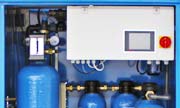
SCM 24
|
|
Cleans 24.000 liters per day
|
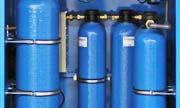
SCM 60
|
|
Cleans 60.000 liters per day
|
Video: How it works
The SCG Advantage
Our market-leading, water cleaning solutions have many advantages. To read more click the items below:
No Chemicals
Our machines and technology does not use any chemicals, at all.
Read more...
No Waste Water
Our machines do not waste any water. Yield = 100%.
Read more...
Low energy use
Uses 50 times less energy than a Reverse Osmosis Machine.
Read more...
Low ownership cost
Lower maintenance and operation costs due to our technology.
Read more...
Easy to install
Simple "plug and play" installation makes for easy deployment.
Read more...
Extremely compact
A compact system, contained in an easy to transport cabinet.
Read more...
Outperforms R.O.
SCG technologies outperform Reverse Osmosis systems.
Read more...
Faster ROI
Get a faster Return on Investment with our systems.
Read more...
Latest News
Latest Blog Posts
| Chemicals in water treatment? |
| Water storage - Whats best for keeping water clean and drinkable? |
| Case: Disaster Management Water Treatment |
Contact SCG
891 Showroom Place
Suite 101
Chula Vista, CA, 91914
Phone: +1 619-878-2730
Contact us by email