








Chemical-Free Sulfide Removal From Australian Groundwater
Hydrogen sulfide in groundwater is easy to recognise: a rotten-egg odour, metallic or bitter taste, black staining and sometimes rapid corrosion around pumps, pipes and storage tanks. The gas may be present at low concentrations that are unpleasant, or at higher levels that create a genuine safety concern in enclosed areas. Treating the source water correctly is important for homes, farms, public supplies and industrial facilities.
A chemical-free treatment train can remove dissolved sulfide by using air, oxygen, biological activity and filtration rather than chlorine, permanganate or other oxidising chemicals. The suitable design depends on groundwater chemistry, flow rate, temperature, pH, iron, manganese, turbidity and the intended use of the water. Australian conditions make a site assessment especially valuable, particularly for remote bores and variable-quality aquifers.
Why Hydrogen Sulfide Appears In Bore Water
Hydrogen sulfide forms when microorganisms reduce sulfate in oxygen-poor underground environments. It is common in some deep bores, confined aquifers and groundwater affected by organic deposits. The gas can occur alongside iron and manganese, producing dark particles, cloudy water, staining and a strong odour after the water is pumped into a tank or pressure vessel.
Odour is often the first warning, but smell is not a reliable safety test. At higher concentrations, hydrogen sulfide can affect breathing and the ability to detect the gas. A borehead, pump room or poorly ventilated tank enclosure requires particular care. Water should be tested before anyone opens a confined space or works on equipment that may release accumulated gas.
In rural Queensland or New South Wales, groundwater may be the only dependable supply for a property, while communities drawing from the Great Artesian Basin may operate long bore networks with different water qualities at each site. A treatment system must therefore be sized from measured results, rather than selected from odour strength alone.
How Chemical-Free Treatment Works
The most common approach is controlled aeration. Air is brought into contact with the groundwater through an air-injection system, cascade, venturi, spray nozzle or packed contact vessel. This transfers volatile hydrogen sulfide from the water into an off-gas stream and introduces oxygen that can convert dissolved sulfide into less soluble forms, including elemental sulfur and sulfate.
After aeration, filtration captures oxidised sulphur and any associated iron or manganese. A suitable filter bed may support naturally occurring bacteria that use oxygen to transform sulfide, while the media retains suspended particles. Biological filtration can be highly efficient, but it needs stable hydraulic conditions, adequate oxygen and a commissioning period before performance becomes consistent.
Chemical-free does not mean maintenance-free. Filters require backwashing, air systems need inspection, and off-gas must be discharged safely away from occupied areas. The system should also prevent untreated water from bypassing the contact and filtration stages. For a broader view of equipment suited to different applications, review Swiss Cleanwater Group’s clean water solutions alongside the project’s laboratory results.
Designing For Australian Water Conditions
A reliable design begins with a complete groundwater analysis. Key parameters include total sulfide, dissolved hydrogen sulfide, pH, alkalinity, dissolved oxygen, sulfate, iron, manganese, ammonia, salinity, turbidity and bacterial indicators. Flow data matters just as much: a household bore, cattle trough, caravan park and municipal supply have very different peak-demand patterns.
Temperature affects biological activity and gas transfer, while high alkalinity and mineral content can alter oxidation behaviour. In parts of Western Australia, groundwater may also carry elevated salinity, making a sulfide solution only one part of the overall treatment strategy. In the Northern Territory and remote inland regions, limited access to technicians and spare parts favours robust systems with simple controls and locally manageable maintenance.
The Australian Drinking Water Guidelines provide the principal health framework for potable supplies, while state and territory regulators may impose additional requirements. A council, mining operator or remote community project may also need verification of materials, discharge arrangements, electrical equipment and commissioning records. Treatment should be validated at the actual operating flow, not just under ideal workshop conditions.
Protecting Pumps, Tanks And Distribution Lines
Sulfide can accelerate corrosion in metal pipework and contribute to problems in pumps, valves, storage tanks and hot-water systems. When sulfide oxidises, sulphur particles may accumulate in filters or low points in the network. Sulfur-oxidising bacteria can create slime and odour inside tanks, although their presence and treatment requirements should be confirmed through testing rather than assumed from smell alone.
Aeration vessels should be designed with appropriate ventilation and gas management. A vent that terminates near a house, shed, air-conditioning intake or livestock area can simply move the problem rather than solve it. In a treatment room, hydrogen sulfide monitoring and safe access procedures may be necessary, especially where concentrated gas could collect.
Turbidity can reduce filter performance by blocking media and consuming backwash capacity. If the bore also produces suspended solids or surface-water intrusion, a separate solids-management stage may be needed. Guidance on coagulant-free turbidity treatment is useful when cloudy water is part of the wider treatment challenge.
Matching The System To The End Use
Potable water generally requires a more controlled process than water used for irrigation, dust suppression or livestock. Drinking-water systems must address odour, taste, microbiological quality and any co-contaminants, with monitoring points before and after treatment. A farm may prioritise dependable trough filling and protection of pumps, while a food processor may need tighter control of water quality and records.
For mining camps, defence sites and mobile units, compact aeration and filtration packages can reduce chemical storage and simplify transport. Remote Australian installations often need solar-compatible controls, weather-resistant enclosures, low operator input and clear alarm functions. A system that works well near Brisbane may need a different enclosure, power arrangement or service model in the Pilbara.
It is also worth separating sulfide treatment from unrelated water-quality goals. Reverse osmosis, ultraviolet disinfection, softening and activated carbon each have specific roles, but none should be added automatically. A process based on measured contaminants will generally use less energy, generate less waste and be easier to operate than a collection of oversized treatment stages.
Measuring Performance And Managing Residuals
Commissioning should include samples at the raw-water inlet, after aeration, after filtration and at the point of use. Operators should record sulfide concentration, odour, pH, pressure loss, flow, dissolved oxygen and backwash frequency. These records show whether the treatment media is maturing, fouling or losing capacity.
Backwash water and captured sulphur solids still need a practical disposal route. Chemical-free treatment avoids routine oxidant dosing, but it does not make the removed material disappear. Disposal may involve a designated drain, settling arrangement or regulated waste pathway, depending on the site and the concentration of other contaminants.
Clear performance expectations help prevent poor decisions. A groundwater project should consider both removal efficiency and operational risk; simple probability examples, such as this discussion of a straight-up betting outcome, illustrate why a single result should not be mistaken for a complete reliability assessment. Water treatment needs repeated measurements across changing conditions.
| Treatment approach | Main action | Chemical use | Typical strengths | Important considerations |
|---|---|---|---|---|
| Aeration and venting | Transfers dissolved H₂S into air | None | Simple, effective for odour and gas removal | Requires safe off-gas management |
| Aeration with biological filtration | Oxidises sulfide and retains sulphur | None | Low chemical demand and suitable for continuous supplies | Needs commissioning and regular backwashing |
| Catalytic or specialised media | Promotes oxidation and captures reaction products | Usually none | Compact footprint and consistent polishing | Media selection depends on water chemistry |
| Chlorine or permanganate oxidation | Chemically oxidises sulfide | Yes | Fast reaction and familiar operation | Creates chemical handling and residual-management needs |
| Activated carbon polishing | Adsorbs remaining odour compounds | None at point of use | Useful as a final polishing stage | Capacity can be exhausted by high sulfide loads |
A properly engineered system can make unpleasant or corrosive bore water suitable for its intended purpose without routine chemical dosing. Swiss Cleanwater Group can assess raw-water results, application requirements and site constraints to develop a treatment concept for an Australian property, council, industry, livestock operation or remote installation. Contact the company to discuss testing, equipment selection and a practical commissioning pathway for hydrogen sulfide removal.
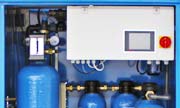
SCM 24
|
|
Cleans 24.000 liters per day
|
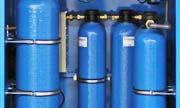
SCM 60
|
|
Cleans 60.000 liters per day
|
Video: How it works
The SCG Advantage
Our market-leading, water cleaning solutions have many advantages. To read more click the items below:
No Chemicals
Our machines and technology does not use any chemicals, at all.
Read more...
No Waste Water
Our machines do not waste any water. Yield = 100%.
Read more...
Low energy use
Uses 50 times less energy than a Reverse Osmosis Machine.
Read more...
Low ownership cost
Lower maintenance and operation costs due to our technology.
Read more...
Easy to install
Simple "plug and play" installation makes for easy deployment.
Read more...
Extremely compact
A compact system, contained in an easy to transport cabinet.
Read more...
Outperforms R.O.
SCG technologies outperform Reverse Osmosis systems.
Read more...
Faster ROI
Get a faster Return on Investment with our systems.
Read more...
Latest News
Latest Blog Posts
| Chemicals in water treatment? |
| Water storage - Whats best for keeping water clean and drinkable? |
| Case: Disaster Management Water Treatment |
Contact SCG
891 Showroom Place
Suite 101
Chula Vista, CA, 91914
Phone: +1 619-878-2730
Contact us by email