









The Role of Dissolved Oxygen in Catalytic Arsenic Removal
Groundwater can look clear and still contain dissolved arsenic, iron, manganese and other contaminants at concentrations that make it unsuitable for drinking. Arsenic is particularly concerning because it has no taste or smell, and long-term exposure can affect human health. Private bores and community supplies therefore need reliable treatment based on the actual chemistry of the water they draw.
Many Australian properties rely on groundwater for drinking, stock watering and irrigation. In northern areas, aquifers can contain naturally elevated arsenic alongside iron and manganese. Nearby bores may also produce very different water, so a treatment choice based on one sample can fail when the source changes.
Swiss Cleanwater Group’s catalytic filtration approach uses naturally occurring chemistry to remove contaminants without relying on chemical oxidants. Dissolved oxygen, usually abbreviated as DO, is central to this process: it supports the reactions that prepare filter surfaces and keep arsenic attached to them.
Why Dissolved Oxygen Governs Performance
DO refers to molecular oxygen dissolved in water. Its presence indicates that the water has access to an oxidising agent, although DO alone does not describe every aspect of redox chemistry. Groundwater from deep aquifers is often oxygen-poor because it has travelled through buried strata without contacting air.
During treatment, DO acts as a terminal electron acceptor. It enables dissolved manganese and iron to oxidise into solid forms that can form coatings on suitable filter media. These manganese and iron oxide surfaces are not merely inert deposits. They provide reactive sites for further contaminant removal, including the transformation and capture of arsenic.
This distinction matters because DO does not simply push arsenic out of solution or directly make every arsenic compound harmless. Rather, oxygen supports the formation of catalytic surfaces, while those surfaces mediate reactions that convert dissolved arsenite, As(III), into arsenate, As(V). Arsenate is generally adsorbed more strongly by iron oxides under common groundwater conditions.
Oxidation and Adsorption in the Filter Bed
Arsenic in groundwater may occur as arsenite or arsenate, and the two forms behave differently during treatment. The oxidation step and the adsorption step work together: oxidation changes arsenic into a form that is easier to capture, while adsorption holds it on the media. Simply increasing oxygen concentration without suitable surfaces would not provide equivalent removal.
Catalytic filtration media commonly use manganese and iron oxides supported on a porous substrate. As oxygenated water passes through the bed, reactive coatings develop over time. The media then acts as both a chemical catalyst and an adsorbent, allowing arsenic to be retained while treated water continues through the filter.
A mature bed can also remove dissolved iron and manganese, improving both the appearance and operational performance of the supply. However, catalytic activity has limits. Phosphate and other anions can compete for adsorption sites, organic matter can foul surfaces, and reducing conditions can weaken or dissolve oxide coatings. DO must therefore be managed throughout operation, not checked only during commissioning.
Preparing Water for Catalytic Filtration
Before water reaches the filter bed, its condition needs to support oxidation and allow enough contact time for arsenic capture. The relevant variables include DO, pH, temperature, flow, turbidity and the presence of competing ions. A water analysis performed after abstracting groundwater may not represent conditions within the filter once iron oxidation and gas exchange have occurred.
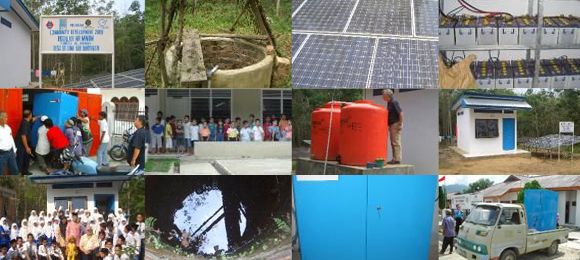
Aeration can raise DO through natural cascades, vented tanks, controlled air injection or oxygenated water. In remote installations, gravity-fed layouts and solar-powered pumps may reduce energy demand. Excessive aeration is unnecessary, and the design objective is controlled oxidation without wasting power or producing undesirable by-products.
Flow rate determines how long water remains in contact with the active media. Too little contact time can produce incomplete removal, while excessive flow may reduce the benefit of the reactive coating. Backwashing or other cleaning methods help control accumulated solids, although cleaning restores hydraulic performance rather than automatically restoring exhausted adsorption capacity. Equipment sizing must account for both the clean-water demand and the practical demands of maintenance.
Designing Around Australian Groundwater
Northern Australia provides a clear example of why source-specific design matters. Groundwater around Tennant Creek and across the Barkly Tableland can contain arsenic together with variable iron and manganese concentrations. The chemistry may differ between aquifers and even between bores close together, making site testing essential.
Remote Aboriginal communities face additional practical constraints. Reliable operation, simple maintenance and access to replacement media can matter as much as initial treatment performance. Where community operators manage a system, training and clear operating procedures should be part of the project rather than an optional extra. Municipal systems around Darwin and other northern cities also need treatment solutions suited to changing source conditions.
The Australian Drinking Water Guidelines set the health-based guideline value for arsenic at 0.01 mg/L. Local requirements may be stricter, and relevant legislation includes the Water Act 2000 in the Northern Territory, which governs water extraction and supply activities. Installation and maintenance must also align with applicable plumbing, licensing and water-authority requirements.
Australian use patterns add further considerations. Many rural households rely on private bores and keep bottled water for drinking, while livestock operations and farms use groundwater for stock watering and irrigation. In the Murray–Darling Basin, irrigation demands may place greater emphasis on salinity and other agricultural parameters. Any reuse of groundwater for drinking or stock watering requires its own assessment rather than reliance on a general treatment claim.
Monitoring Performance and Media Life
Routine monitoring should track more than treated-water clarity. DO and pH reveal whether oxidising conditions remain suitable, while differential pressure indicates clogging or fouling. Arsenic results should be compared against the health-based guideline, with periodic accredited laboratory testing providing the strongest verification.
Operational records also help identify changes in the aquifer or well. A rising iron concentration, falling DO or increasing turbidity can signal that source conditions have shifted. Maintenance staff need practical thresholds that indicate when media cleaning, replacement or an updated water analysis is required.
Media life depends on water chemistry, loading and treatment rather than a universal calendar. The longer history of water treatment traces the progression from basic sediment removal to engineered oxidation and adsorption, but modern performance still depends on accurate site data. A filter should never be considered effective solely because its outlet water appears clean.
Matching Treatment to Local Use
Municipal systems need treatment that can operate consistently, meet monitoring requirements and integrate with existing pumping and storage. Government projects require transparent performance data and clear handover procedures. For remote communities, a compact system with straightforward maintenance can be more valuable than a sophisticated installation that depends on specialist daily attention.
Agricultural, livestock and industrial applications have different priorities. Irrigation water may require control of iron, manganese, salinity or suspended solids, while livestock systems demand an assessment of animal exposure pathways. Industrial applications can require treatment tailored to process-water flows. Each application needs its own design basis, even when the catalytic filtration principle is similar.
Service coverage and technical support are important parts of that design. For Australian enquiries, Swiss Cleanwater Group’s office contact details provide a starting point for technical discussions, site planning and assessment of local installation and maintenance requirements.
Protecting a drinking-water supply begins with a representative water analysis and an understanding of how the source behaves. Share arsenic, iron, manganese, pH, DO and other relevant results with Swiss Cleanwater Group, along with flow requirements and intended use. The team can then recommend a suitable configuration and discuss a site trial where appropriate. Request a source-water assessment and a site-specific proposal for your location.
SCM 24
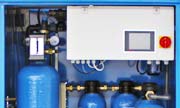
|
|
Cleans 24.000 liters per day
|
SCM 60
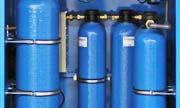
|
|
Cleans 60.000 liters per day
|
Video: How it works

The SCG Advantage
Our market-leading, water cleaning solutions have many advantages. To read more click the items below:
No Chemicals
Our machines and technology does not use any chemicals, at all.
Read more...
No Waste Water
Our machines do not waste any water. Yield = 100%.
Read more...
Low energy use
Uses 50 times less energy than a Reverse Osmosis Machine.
Read more...
Low ownership cost
Lower maintenance and operation costs due to our technology.
Read more...
Easy to install
Simple "plug and play" installation makes for easy deployment.
Read more...
Extremely compact
A compact system, contained in an easy to transport cabinet.
Read more...
Outperforms R.O.
SCG technologies outperform Reverse Osmosis systems.
Read more...
Faster ROI
Get a faster Return on Investment with our systems.
Read more...
Latest News
Latest Blog Posts
| Chemicals in water treatment? |
| Water storage - Whats best for keeping water clean and drinkable? |
| Case: Disaster Management Water Treatment |
Contact SCG
891 Showroom Place
Suite 101
Chula Vista, CA, 91914
Phone: +1 619-878-2730
Contact us by email