







Catalytic and adsorptive media: a practical water treatment guide
Clean-looking water can still contain manganese, arsenic, uranium, pesticides or bacteria. These contaminants may cause taste, staining and odour, or create long-term health concerns when water is consumed, used in livestock production or released into the environment. Australian properties often combine several water sources, from a household bore and rainwater tank to a municipal supply or a commercial abstraction, so treatment decisions need to reflect the actual source rather than a generic laboratory result.
A packed-bed treatment system can remove contaminants in two fundamentally different ways. Catalytic media alter dissolved substances through a chemical reaction, usually oxidation, while adsorptive media hold contaminants on a prepared surface until the bed needs servicing. Both processes may sit inside a similar vessel, use similar pumps and look identical from the outside, yet their design requirements, operating costs and failure indicators differ substantially.
That difference is especially important in Australia. Sydney properties drawing from sandstone aquifers may encounter iron and manganese, while groundwater around Perth and Adelaide can combine salinity with trace metals. Remote communities in the Northern Territory and Western Australia frequently depend on deep bores, and farms in regional New South Wales, Queensland and Victoria need dependable water for stock. Rainwater tanks remain common, and many households also use bottled water or cartridge filters because they want extra protection at the kitchen tap.
For councils, mine sites, food processors, builders and swimming-pool operators, the correct question is not simply which media sounds most advanced. It is which process will deliver a stable result under the local water chemistry, with manageable maintenance, little routine chemical use and no avoidable waste stream. Reliable performance therefore depends on the mechanism, site chemistry and long-term operating plan.
How filtration changes contaminants
In a catalytic process, water passes through a bed whose surfaces accelerate a reaction. Dissolved manganese, for example, may be oxidised from a soluble manganese form into an insoluble manganese dioxide coating that can be captured within the filter. The catalyst supports the reaction, although deposits can gradually cover active sites and change the bed’s performance.
Adsorption works differently. The contaminant remains chemically recognisable but migrates from the water into pores or onto active sites on the media. Activated carbon can capture many pesticide and organic compounds, while specialised resins or aluminium-based media can retain arsenic, uranium or other dissolved ions. The bed has a finite capacity, so removal declines as it approaches breakthrough.
Some systems combine both mechanisms. An oxidising filter may create iron or manganese solids that are then removed by filtration, while iron-coated media can adsorb arsenic after pre-oxidation. The trade name alone is rarely enough: the contaminant, oxidant, reaction conditions and final waste route determine the real process.
Catalytic media in practice
Catalytic oxidation is particularly relevant to groundwater containing dissolved iron or manganese. Aeration or another controlled oxidation step supplies the reaction partner, and the filter captures the resulting solids. This can support low-pressure, continuous operation, but pH, dissolved oxygen, alkalinity and competing substances still need assessment.
The approach can suit sites where chemicals are undesirable, including livestock holdings, food businesses and remote installations. Swiss Cleanwater Group provides equipment designed to remove manganese, arsenic, bacteria, pesticides and uranium without chemical dosing, waste or excessive energy demand. Its livestock water treatment options address the flow rates, seasonal water quality and stocking pressures encountered on farms.
Performance must still be demonstrated for the intended application. Catalytic surfaces can foul with iron, manganese, organics or scale, and bacterial claims depend on validated contact conditions rather than appearance alone. Regular turbidity, residual manganese and differential-pressure checks reveal whether a bed is coping with the source or merely delaying a failure.
Adsorptive media in practice
Adsorptive beds are chosen for specific contaminants and capacity requirements. Granular activated carbon is commonly considered for trace pesticides, taste-and-odour compounds and other organic chemicals. Activated alumina and ion-exchange resins may be specified for arsenic, uranium or fluoride. Each product has its own pH window, particle size, flow rate and permitted loading.
For municipal drinking-water projects, Swiss Cleanwater Group offers clean drinking water systems aimed at sustainable contaminant removal without chemical inputs or excessive energy use. The relevant design decision is whether the proposed media can treat the full analysis, including seasonal variation, and whether a replacement or regeneration route is realistic for that site.
Operational limits are central to adsorption. Heavy metals can compete for sites, and a carbon bed treating organic-rich water may exhaust quickly. Ion-exchange regeneration produces a concentrated waste stream, while thermal carbon regeneration consumes energy and requires collection. Where the application is drinking water, operator training, certification and a clear change-out trigger matter as much as the initial vessel price.
Water chemistry and operating conditions
A water analysis should cover more than the target contaminant. pH influences oxidation and surface charge; alkalinity buffers reactions; dissolved oxygen affects aerobic treatment; and turbidity can shield reactive sites. Dissolved organic carbon, nitrate, sulfate, hardness and silica may also compete, foul media or upset a balanced treatment train. Systems marketed as chemical-free may still require an oxidation partner such as dissolved oxygen, so the specification should state any oxidant requirements clearly.
The Australian Drinking Water Guidelines provide the national reference for contaminants such as arsenic, manganese and uranium, but they are not a substitute for site-specific verification. State and territory water and public-health legislation, together with regulator codes, create the enforceable framework for public suppliers. Flow and pressure also affect performance: particle size influences head loss, peak demand determines vessel area and contact time, and pilot testing can reveal fouling or breakthrough before full installation.
Lifecycle costs and application fit
Capital comparisons should include vessels, pumps, controls, pretreatment, media replacement and disposal. A catalytic system may have modest chemical requirements but need periodic backwashing or surface management. An adsorptive system may start with simpler controls but carry recurring costs for resin, carbon or activated alumina, plus regeneration or transport. Whole-of-life performance should be expressed per cubic metre and per year, including energy, water lost during backwash, operator hours and waste volumes.
Application fit changes the balance. A remote community system must be reliable with limited skilled attendance, so simplicity and remote monitoring can outweigh lower media cost. A livestock operation needs enough capacity for troughs and washdown without sensitive equipment exposed to dust and stock. A laboratory, high-rise building or food processor may prioritise consistent quality and compact installation, while a mine needs treatment matched to variable extraction chemistry.
Selecting and validating the system
Start with representative samples rather than a single clear-water test. Collect across wet and dry periods where possible, identify every contaminant of concern and establish design flow, pressure and available footprint. Compare media against the actual treatment objective, including taste, staining, disinfection, irrigation suitability or drinking-water production. Laboratory and pilot data should reveal how quickly the bed reaches breakthrough, what causes fouling, whether it can be backwashed safely and which monitoring signals a loss of performance.
The final design may use catalytic media, adsorptive media or a sequence of both, with pretreatment and disinfection as required. Swiss Cleanwater Group can be contacted about project requirements, water analyses and equipment suitability through its enquiry process. A sound specification records the source water, duty, test methods, commissioning criteria and service plan rather than relying on a product name alone.
| Consideration | Catalytic media | Adsorptive media |
|---|---|---|
| Main action | Speeds a reaction that changes the contaminant | Transfers contaminants from water onto a medium’s active surface |
| Common targets | Dissolved iron and manganese; bacteria only where the validated process includes disinfection | Pesticides, organics, arsenic, uranium and selected ions |
| Capacity | Reaction conditions and active surface area govern performance | Finite site capacity governs performance and breakthrough |
| Main operating issue | Fouling, scale, loss of activity or inadequate oxidation | Saturation, competing contaminants and flow-channeling |
| Servicing | Backwashing, media cleaning or eventual replacement | Media exchange or regeneration, depending on the material |
| Waste and energy | Often low chemical use; backwash water and spent media need management | Brine, contaminated media or regeneration energy may be significant |
| Best project fit | Continuous groundwater treatment and applications seeking low-waste operation | Targeted removal where the contaminant profile and replacement route are clear |
The next step is a source-specific assessment and an application-specific media trial. Record the water analysis, peak and average demand, treatment target and site constraints, then compare reaction-based and surface-based options on lifecycle performance. This prevents an expensive generic system from being installed where a smaller pretreatment stage or a different process would work better.
Request a project discussion with Swiss Cleanwater Group and describe the application, source and available test results through its contact form. After submission, the message receipt page provides immediate confirmation that the enquiry has arrived. Give the team enough detail to recommend a treatment train, operating controls and monitoring plan, then move from uncertain water quality to a defined and maintainable supply.
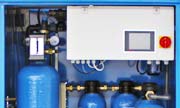
SCM 24
|
|
Cleans 24.000 liters per day
|
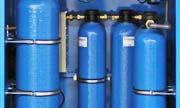
SCM 60
|
|
Cleans 60.000 liters per day
|
Video: How it works
The SCG Advantage
Our market-leading, water cleaning solutions have many advantages. To read more click the items below:
No Chemicals
Our machines and technology does not use any chemicals, at all.
Read more...
No Waste Water
Our machines do not waste any water. Yield = 100%.
Read more...
Low energy use
Uses 50 times less energy than a Reverse Osmosis Machine.
Read more...
Low ownership cost
Lower maintenance and operation costs due to our technology.
Read more...
Easy to install
Simple "plug and play" installation makes for easy deployment.
Read more...
Extremely compact
A compact system, contained in an easy to transport cabinet.
Read more...
Outperforms R.O.
SCG technologies outperform Reverse Osmosis systems.
Read more...
Faster ROI
Get a faster Return on Investment with our systems.
Read more...
Latest News
Latest Blog Posts
| Chemicals in water treatment? |
| Water storage - Whats best for keeping water clean and drinkable? |
| Case: Disaster Management Water Treatment |
Contact SCG
891 Showroom Place
Suite 101
Chula Vista, CA, 91914
Phone: +1 619-878-2730
Contact us by email