








Building A Resilient Water Supply on a Small Municipality Budget
A dependable water supply does not require a large city budget or an oversized treatment plant. Small municipalities can improve safety and continuity by matching treatment technology to the actual quality of their source water, prioritizing essential upgrades, and designing systems that remain manageable for local operators.
The strongest plans begin with evidence. Seasonal sampling, records of previous failures, electricity costs, maintenance capacity, and future demand all help determine whether the municipality needs filtration, disinfection, contaminant removal, storage, pumping improvements, or a combination of measures. This prevents limited funds from being spent on equipment that solves the wrong problem.
Resilience also means preparing for interruptions. Drought, flooding, contamination events, power failures, aging pipes, and sudden population changes can all affect a small network. A practical strategy combines efficient purification, simple controls, backup procedures, and a phased investment plan that can grow as funding becomes available.
Start With The Water Risk
The first task is to establish a clear baseline for the source and distribution network. Test for bacteria, turbidity, manganese, arsenic, pesticides, uranium, nitrates, hardness, and other locally relevant contaminants. Samples should represent different seasons because groundwater and surface water can change after heavy rain, drought, agricultural activity, or changes in the water table.
Testing the source alone is not enough. Collect samples after treatment and at selected points in the network to identify pipe corrosion, pressure problems, or contamination entering after purification. Reviewing complaints, boil-water notices, pump failures, and laboratory results can reveal patterns that a single sampling campaign might miss.
A risk register makes the information useful. Rank each hazard by likelihood, health impact, warning time, and cost of failure. Bacterial contamination may require rapid detection and reliable disinfection, while manganese or arsenic may call for a dedicated filtration process. The appropriate solution depends on concentration, flow rate, local regulations, and the desired treated-water quality.
Design Around Essential Capacity
Small systems often become expensive when they are designed for rare peak demand rather than normal operation. Calculate average daily use, seasonal demand, fire-flow obligations, livestock or industrial consumption, and the capacity needed during maintenance. A modular treatment line can provide a better balance than one large unit because additional capacity can be added when the municipality grows.
Treatment should also be divided into clear functions. Intake protection, pre-filtration, contaminant removal, disinfection, storage, and distribution each have different roles. Separating these stages makes troubleshooting easier and allows the municipality to upgrade one part without replacing the entire installation.
Chemical-free or low-consumable treatment can reduce recurring costs when the technology fits the water chemistry. Systems designed to remove contaminants such as manganese, arsenic, bacteria, pesticides, or uranium without creating large waste streams may simplify logistics for remote communities. Before selecting equipment, confirm expected flow, operating pressure, backwashing needs, replacement intervals, and the handling of any concentrated residuals.
Reduce Lifetime Operating Costs
A low purchase price can become unaffordable if a system consumes excessive electricity, requires frequent chemical deliveries, or depends on specialized technicians. Evaluate the total cost of ownership over at least ten years. Include energy, consumables, laboratory testing, service visits, spare parts, operator training, disposal, and potential downtime.
Pumps are often among the largest energy users in a municipal water system. Variable-speed drives, efficient pump selection, minimized pressure losses, and gravity-fed sections can reduce consumption without compromising service. Scheduling high-energy processes during suitable tariff periods may provide additional savings where local electricity pricing allows it.
Municipal decision-makers can also review practical guidance on reducing energy costs in purification systems. Although the examples may relate to industrial applications, the principles—efficient hydraulics, appropriate sizing, monitoring, and preventive maintenance—are relevant to smaller public networks as well.
Automation should be proportionate to local capacity. Remote alarms for pressure, tank level, flow, turbidity, and treatment performance can help one operator supervise several sites. However, controls must include manual operating procedures and safe fallback modes in case sensors, communications, or software fail.
Compare Practical Investment Paths
A municipality can build resilience through several approaches. The correct choice depends on source-water quality, available land, staffing, power reliability, and the urgency of the problem. A packaged system may shorten installation time, while a staged upgrade may be more appropriate when the budget is released over several years.
| Investment path | Best suited to | Main advantage | Budget consideration |
|---|---|---|---|
| Optimize existing plant | Stable source with inefficient operation | Fast savings from controls, maintenance, and hydraulics | Requires accurate performance data |
| Add a modular treatment unit | Rising demand or one specific contaminant | Expands capacity without rebuilding everything | Needs space and compatible connections |
| Upgrade storage and backup power | Frequent outages or pressure losses | Maintains service during short disruptions | Does not remove source contaminants |
| Install advanced contaminant removal | Persistent arsenic, uranium, pesticides, or manganese | Targets a defined health or quality risk | Requires testing and residual-management planning |
| Use a mobile or temporary system | Emergency supply or construction period | Rapid deployment while permanent work proceeds | Higher cost per unit of treated water |
The least expensive option is often a combination rather than a single purchase. For example, improving leak detection and storage management may free capacity, while a compact treatment module addresses a contaminant that cannot be removed through operational changes alone.
Procurement documents should specify performance outcomes instead of naming equipment prematurely. Request guaranteed flow, treated-water quality, energy use, maintenance requirements, commissioning support, and operator training. This allows qualified suppliers to propose suitable solutions while giving the municipality clear criteria for comparing bids.
Build Resilience Beyond The Treatment Plant
A treatment plant cannot compensate for a fragile distribution system. Divide the network into manageable pressure zones, repair high-loss sections, protect critical valves, and maintain accurate maps. District metering can help identify abnormal night flows and hidden leaks before they become major failures.
Storage provides time during a power interruption, source contamination event, or equipment repair. The reservoir should be sized according to demand, fire protection requirements, local regulations, and the time needed to restore treatment. Backup generators or alternative power connections should be tested under realistic loads, not simply installed and left unused.
Emergency plans should assign responsibilities before an incident occurs. Identify who can authorize a shutdown, contact laboratories, communicate with residents, arrange bottled or tanker water, and restart the system safely. Keep critical spare parts on site, including seals, sensors, fuses, filter components, and communication equipment that may take weeks to replace.
Partnerships can make a small municipality more capable without adding permanent staff. Regional utilities, engineering firms, laboratories, neighboring towns, and technology providers may share training, emergency equipment, or specialist support. A municipality can review available partner networks when seeking implementation, service, or local expertise for a water-treatment project.
Plan Phases That Protect Cash Flow
A phased program makes capital spending easier to defend and easier to finance. The first phase should focus on urgent compliance risks, accurate monitoring, leak reduction, and low-cost operational improvements. The second can add treatment capacity, storage, or backup power. Later phases can address automation, source diversification, or expansion for population growth.
Each phase needs measurable targets. Examples include reducing non-revenue water by a defined percentage, maintaining a minimum reserve volume, lowering energy use per cubic meter, meeting bacterial standards consistently, or cutting emergency response time. These indicators show residents and funding bodies that investment is producing a visible public benefit.
External financing may be available through national infrastructure programs, regional development funds, climate-resilience grants, or public health initiatives. Strong applications usually connect water safety with energy efficiency, drought preparedness, environmental protection, and economic continuity. A documented asset condition, risk ranking, and costed sequence of works can be as important as the requested equipment.
Local participation also matters. Residents need clear information about water quality, planned interruptions, conservation measures, and the reasons for investment. Transparent communication reduces confusion during construction and helps the municipality build support for tariffs that are necessary to maintain reliable service.
Choose Support That Fits Local Capacity
Technology selection should include the people who will operate the system. Ask whether staff can perform routine inspections, interpret alarms, collect samples, clean components, and document maintenance. If the answer is no, the project should include training, simplified controls, remote assistance, or a service agreement.
Suppliers should explain what happens after commissioning. Clarify response times, warranty coverage, spare-parts availability, software access, calibration requirements, and the expected service life of major components. A modest system with dependable support can outperform a technically sophisticated installation that local staff cannot maintain.
Municipalities can also consult regional office locations when assessing how technical support and communication may be organized. Local or nearby representation can be valuable when commissioning, troubleshooting, operator training, and replacement parts affect the continuity of public service.
The final decision should be based on verified water data and a realistic operating model. Request pilot testing when source chemistry is uncertain, especially for difficult contaminants or changing seasonal conditions. A short demonstration can confirm treatment performance, residual handling, energy demand, and the level of supervision required.
A resilient municipal water program can begin with a focused assessment, a few high-value repairs, and a treatment system sized for real needs. It becomes stronger through modular expansion, efficient operation, protected storage, trained staff, and clear emergency procedures. Start by documenting the highest risks, assign costs to each practical response, and move the most urgent, affordable measures into procurement. Reliable clean water is built through disciplined decisions made one phase at a time.
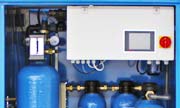
SCM 24
|
|
Cleans 24.000 liters per day
|
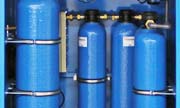
SCM 60
|
|
Cleans 60.000 liters per day
|
Video: How it works
The SCG Advantage
Our market-leading, water cleaning solutions have many advantages. To read more click the items below:
No Chemicals
Our machines and technology does not use any chemicals, at all.
Read more...
No Waste Water
Our machines do not waste any water. Yield = 100%.
Read more...
Low energy use
Uses 50 times less energy than a Reverse Osmosis Machine.
Read more...
Low ownership cost
Lower maintenance and operation costs due to our technology.
Read more...
Easy to install
Simple "plug and play" installation makes for easy deployment.
Read more...
Extremely compact
A compact system, contained in an easy to transport cabinet.
Read more...
Outperforms R.O.
SCG technologies outperform Reverse Osmosis systems.
Read more...
Faster ROI
Get a faster Return on Investment with our systems.
Read more...
Latest News
Latest Blog Posts
| Chemicals in water treatment? |
| Water storage - Whats best for keeping water clean and drinkable? |
| Case: Disaster Management Water Treatment |
Contact SCG
891 Showroom Place
Suite 101
Chula Vista, CA, 91914
Phone: +1 619-878-2730
Contact us by email