









How a brewery cut water waste with chemical-free treatment
Brewing depends on water at every stage, from mashing and sparging to fermentation, cleaning, cooling, and packaging. For many breweries, the water used to make one litre of beer represents only part of the total demand. Much larger volumes can be consumed during equipment washing, bottle or keg rinsing, floor cleaning, and utility operations. Learn more about Our Mission.html.
A regional brewery faced this familiar problem as production increased. Its municipal supply was reliable, but the site used more water than expected because process areas required frequent rinsing and several water streams were discharged after a single use. The brewery wanted to reduce its intake without compromising hygiene, product quality, or operator safety.
The resulting project combined source-water purification, separation of suitable process streams, and controlled reuse. It shows how a chemical-free water treatment system can support resource efficiency when it is designed around actual brewery operations rather than installed as a standalone filter.
The brewery’s water challenge
The brewery produced several beer styles in weekly batches and operated a small packaging line. Water consumption fluctuated with production, but cleaning-in-place cycles and final rinses remained substantial even when the brewhouse was running below capacity. The site also needed water for cooling circuits, steam generation, staff facilities, and general sanitation.
An initial water audit found that the brewery was tracking total consumption at the main meter but not at individual process points. This made it difficult to identify avoidable losses. Water used for an early rinse, for example, was sent directly to the drain even though its quality was adequate for a lower-risk application such as floor washing or first-stage equipment cleaning.
The brewery also wanted to avoid a treatment approach that relied on regular chemical dosing. Chemical storage created handling requirements, while treatment residues and regeneration streams increased the amount of wastewater requiring management. The preferred solution had to be practical for a working production site, with limited space and minimal disruption to brewing schedules.
Mapping quality to each use
The project began with sampling rather than equipment selection. Incoming water, rinse water, cooling-loop water, and selected discharge points were tested for suspended solids, hardness, metals, microbiological indicators, and other parameters relevant to the brewery’s processes. The purpose was to determine which streams required high-purity treatment and which could be safely reassigned.
This distinction was important. Brewing liquor used in recipes and final rinses for cleaned equipment require tighter control than water used for an initial wash or non-product-contact utility task. Treating every litre to the same specification would have increased energy use and operating cost without delivering a corresponding benefit.
The design therefore created several water grades. Purified incoming water was reserved for brewing and sensitive process steps. Recovered rinse water was directed to approved secondary uses after treatment and verification. Higher-risk or unsuitable streams remained isolated and were not returned to production. This risk-based approach helped the brewery reduce demand while keeping food safety controls clear.
A chemical-free treatment train
The installed system used staged physical treatment to improve water quality without routine chemical dosing. Depending on the stream, the sequence included prefiltration, fine filtration, and a membrane-based polishing stage. Ultraviolet disinfection was used where microbiological control was required, providing an additional barrier without adding disinfectant to the process water.
Some contaminants are difficult to address through a single step, especially when dissolved metals, microorganisms, and organic residues occur together. The brewery’s engineers used a treatment sequence suited to the source-water profile and the intended reuse applications. This aligns with the principle explained in multi-stage filtration, where different barriers are assigned different removal tasks.
The system was configured for automated monitoring, including flow, pressure, and treatment performance indicators. Operators could see when filters required attention and could confirm that recovered water met the internal criteria for its designated use. This reduced dependence on guesswork and made water reuse part of normal production control rather than an informal conservation effort.
What changed on the production floor
The brewery did not attempt to reuse every discharge stream. Instead, it selected flows with predictable composition and a clear operational destination. Final rinse water from certain cleaning cycles was treated and stored for first-stage washing, while purified water was retained for brewing and final contact rinses. Cooling applications were reviewed separately because temperature and microbiological stability affected their suitability.
Staff procedures were updated alongside the equipment. Hoses were fitted with shut-off controls, rinse times were standardized, and operators were trained to distinguish recovered water from potable or recipe water. Simple changes helped prevent accidental overuse, such as stopping a rinse while tanks were being inspected rather than leaving a valve open between tasks.
After commissioning and a settling-in period, the brewery recorded a reduction in mains-water demand of approximately 28 percent. Water sent to drain from the selected process areas fell by roughly one-third. The exact results varied with production volume, but the strongest savings appeared during packaging runs and intensive cleaning days.
| Area | Before treatment | After implementation | Operational effect |
|---|---|---|---|
| Total site water demand | 100% baseline | About 72% of baseline | Lower mains-water intake |
| Selected rinse streams discharged | 100% baseline | About 65% of baseline | More water assigned to secondary use |
| Routine treatment chemicals | Regular dosing in utility equipment | No routine chemical dosing for the new system | Reduced storage and handling |
| Process-water monitoring | Main meter and manual checks | Online indicators plus scheduled sampling | Faster response to deviations |
| Water-use visibility | Site-wide total | Metered process areas | Better targeting of future savings |
Protecting hygiene and beer quality
Water reduction only matters if it preserves the brewery’s sanitation program. For this reason, recovered water was never treated as automatically suitable for every task. The brewery established written acceptance criteria for each water category, including where it could be used, how long it could be stored, and what action was required if monitoring showed a deviation.
Recipe water and final product-contact rinses remained subject to the strictest controls. Storage tanks were designed to limit stagnation, and sampling schedules were linked to risk rather than convenience. The quality team also retained the authority to divert recovered water if a batch, cleaning cycle, or treatment parameter fell outside the approved range.
This separation gave operators confidence that sustainability goals would not undermine production standards. It also demonstrated that chemical-free treatment is not the same as maintenance-free treatment. Filters, membranes, sensors, tanks, and disinfection units still require inspection, cleaning, calibration, and documented performance checks.
Financial and environmental results
The brewery’s financial benefit came from several sources. Lower mains-water consumption reduced supply charges, while lower discharge volumes eased wastewater costs. The site also reduced spending associated with chemical storage and dosing for the targeted water streams. Because the system was built around reuse opportunities already present on-site, the brewery did not need to expand its water intake as quickly when production increased.
Energy performance was reviewed as part of the project. The treatment system was selected to avoid excessive pumping and to match purification intensity with the end use. Water that only needed to meet a secondary-use specification was not processed to the same level as brewing water. This helped limit the energy penalty often associated with over-treating water.
The project also supported the brewery’s environmental reporting. Instead of citing a general ambition to conserve water, the business could document intake reduction, recovered volumes, treatment performance, and discharge changes. The approach reflects the wider SCG advantage: focusing on efficient water treatment that reduces reliance on chemicals, waste, and unnecessary energy where the application allows.
Lessons for other breweries
A successful brewery water-reuse project usually depends more on process knowledge than on equipment size. The most useful early questions concern where water is used, what quality is required, and which streams can be separated before they become mixed with heavier contamination.
The brewery also found that employee participation was essential. Clear pipe identification, simple operating instructions, and accessible monitoring data made the new system easier to trust. When staff could see that a recovered stream had an approved purpose, reuse became routine rather than an additional task competing with production priorities.
For breweries assessing a similar project, the following practices provide a practical starting point:
- Measure water use at brewhouse, cleaning, packaging, cooling, and sanitation points.
- Classify streams by contamination risk and intended reuse instead of treating all water identically.
- Reserve the highest-quality water for brewing and critical product-contact applications.
- Use staged, chemical-free treatment with monitoring suited to each water source.
- Document storage limits, sampling requirements, operator responsibilities, and diversion procedures.
The broader lesson is that water efficiency does not require compromising quality or installing a complex recovery network all at once. A phased design can begin with one predictable rinse stream, establish reliable controls, and expand when the brewery has verified the results. This makes capital planning easier and gives production teams time to adapt.
A brewery seeking a longer-term water strategy can also connect the project to its wider sustainability policy. The SCG mission emphasizes responsible access to clean water and treatment approaches designed to reduce environmental burdens. For food and beverage producers, that principle becomes tangible when fewer litres are extracted, fewer streams are discharged, and each water grade is used appropriately.
Review your brewery’s water map, identify the safest reuse opportunity, and assess it with a qualified treatment partner. A well-designed chemical-free process-water system can turn routine rinses and utility flows into measurable savings while protecting the standards that keep beer production safe and consistent.
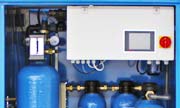
SCM 24
|
|
Cleans 24.000 liters per day
|
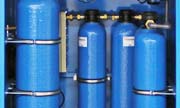
SCM 60
|
|
Cleans 60.000 liters per day
|
Video: How it works
The SCG Advantage
Our market-leading, water cleaning solutions have many advantages. To read more click the items below:
No Chemicals
Our machines and technology does not use any chemicals, at all.
Read more...
No Waste Water
Our machines do not waste any water. Yield = 100%.
Read more...
Low energy use
Uses 50 times less energy than a Reverse Osmosis Machine.
Read more...
Low ownership cost
Lower maintenance and operation costs due to our technology.
Read more...
Easy to install
Simple "plug and play" installation makes for easy deployment.
Read more...
Extremely compact
A compact system, contained in an easy to transport cabinet.
Read more...
Outperforms R.O.
SCG technologies outperform Reverse Osmosis systems.
Read more...
Faster ROI
Get a faster Return on Investment with our systems.
Read more...
Latest News
Latest Blog Posts
| Chemicals in water treatment? |
| Water storage - Whats best for keeping water clean and drinkable? |
| Case: Disaster Management Water Treatment |
Contact SCG
891 Showroom Place
Suite 101
Chula Vista, CA, 91914
Phone: +1 619-878-2730
Contact us by email