








Why layered filtration matters for chemical-free water treatment
Clean drinking water rarely depends on a single filter. Source water may contain suspended solids, dissolved metals, microorganisms, pesticides, and naturally occurring radioactive elements at the same time. Each contaminant behaves differently, so a process that captures one substance may leave another untouched.
Chemical-free treatment uses physical filtration, adsorption, biological activity, aeration, and carefully controlled flow rather than relying on large chemical doses. This approach can reduce residuals, handling requirements, and environmental impact, but it requires a process designed around the complete water profile.
Multi-stage filtration provides that structure. Instead of asking one medium or membrane to solve every problem, the treatment train gives each stage a specific task. The result can be more stable water quality, longer equipment life, and a better fit for municipal, agricultural, industrial, and mobile applications.
Why contaminant profiles matter
Water contaminants are divided broadly into particles, dissolved substances, and living organisms. Sand, clay, rust, and organic debris can often be removed through screening and sediment filtration. Dissolved manganese, arsenic, uranium, and pesticides require different mechanisms because they remain in the water even when it looks clear.
Microorganisms create another challenge. Bacteria and some viruses may pass through a coarse filter, while a fine membrane or disinfection barrier can control them. A filter that removes metals is not automatically a reliable microbiological barrier, and a biological stage designed for nutrient removal may not capture pesticides.
The source also changes over time. Rainfall can increase turbidity, agricultural activity can affect nitrate or pesticide levels, and groundwater chemistry can shift seasonally. Testing should therefore include both baseline measurements and operational variations. A treatment train built from accurate analysis is more dependable than one selected from a single contaminant result.
What staged treatment accomplishes
The first stage usually protects everything that follows. Screens, strainers, or coarse media remove leaves, grit, sediment, and larger particles. This reduces clogging and prevents pumps, valves, membranes, and finer filters from carrying an unnecessary solids load.
A second stage may target turbidity and suspended matter through pressure vessels, granular media, or specialized filter beds. When dissolved metals are present, oxidation can convert soluble iron or manganese into particles that a later filter can retain. Aeration may support this conversion without adding chemical oxidants, provided pH, contact time, and oxygen transfer are suitable.
Later stages address contaminants that remain dissolved or too small for ordinary media. Adsorptive materials can bind arsenic or certain organic compounds, while ion-selective media can target uranium or other charged substances. Membranes can provide a fine separation barrier, although they need effective pretreatment to avoid fouling and excessive cleaning.
How chemical-free filtration works
Chemical-free does not mean process-free. A system may use gravity, pressure, air, mineral media, activated carbon, catalytic surfaces, biological filtration, or membranes. The key difference is that contaminants are removed through separation or transformation rather than being neutralized with added coagulants, disinfectants, or regenerants.
For example, manganese removal may combine oxygen exposure with a catalytic filter bed. Arsenic treatment may depend on adsorption or oxidation followed by media filtration. Pesticide reduction often involves activated carbon or another adsorbent, while bacteria control may require ultrafiltration or ultraviolet treatment. These methods have different operating limits and should not be treated as interchangeable.
The absence of treatment chemicals can simplify storage and reduce the formation of chemical by-products, yet the system still produces retained solids or concentrated reject water in some configurations. Responsible design accounts for media replacement, backwash water, membrane concentrate, and safe handling of captured contaminants.
| Contaminant or challenge | Useful treatment stage | Why another stage may be needed |
|---|---|---|
| Sand, silt, and turbidity | Screening and granular filtration | Fine particles can still clog downstream barriers |
| Iron and manganese | Aeration or oxidation followed by filtration | Dissolved metals must first become filterable solids |
| Arsenic | Adsorptive or specialized media | Ordinary sediment filters do not remove dissolved arsenic |
| Uranium | Selective media or membrane separation | Its dissolved form passes through conventional filters |
| Bacteria and microorganisms | Fine membrane or validated disinfection barrier | Clear water can still contain pathogens |
| Pesticides and organic compounds | Activated carbon or advanced adsorption | Different compounds require suitable contact time and media |
| Variable flow and seasonal loads | Controls, storage, and monitoring | Treatment performance depends on stable operating conditions |
Matching treatment to the source
Groundwater often has low turbidity but elevated concentrations of dissolved minerals or metals. Surface water tends to carry more suspended matter, organic material, and microorganisms. Rainwater and stored water may introduce roof debris, biofilm, or intermittent contamination. Each source calls for a different sequence, even when the intended use is the same.
A source assessment should cover pH, temperature, alkalinity, conductivity, turbidity, hardness, iron, manganese, arsenic, uranium, pesticides, and microbiological indicators where relevant. Flow rate and peak demand matter as much as laboratory results. A filter that performs well at a steady household flow may behave differently in a village network, livestock facility, or irrigation installation.
Understanding how treatment practices have developed can also clarify why no universal filter exists; this water treatment history shows how systems evolved as public health needs and contaminant knowledge changed. Modern installations combine established physical principles with automation, monitoring, and more selective media.
Operating a reliable treatment train
Hydraulic design determines whether the filter media receives enough contact time and whether water moves evenly through the vessel. Excessive flow can reduce removal efficiency, while insufficient flow may waste energy and limit output. Pressure gauges, flow meters, turbidity sensors, and conductivity monitoring help operators identify a problem before treated water falls outside specifications.
Backwashing is essential for many granular filters. It lifts and cleans the media, removes accumulated solids, and restores acceptable pressure loss. Poorly timed backwash can interrupt supply or waste water, while inadequate backwash leaves trapped material in the bed. In rural installations, automated backwash systems can coordinate cleaning cycles with flow demand and pressure conditions.
Maintenance also includes checking valves, inspecting media condition, calibrating sensors, and verifying that safety barriers work as intended. Adsorptive media eventually reaches capacity, and membranes require integrity testing. A chemical-free process still needs documented performance checks, because a saturated or damaged component may allow contaminants to pass unnoticed.
Applications with different priorities
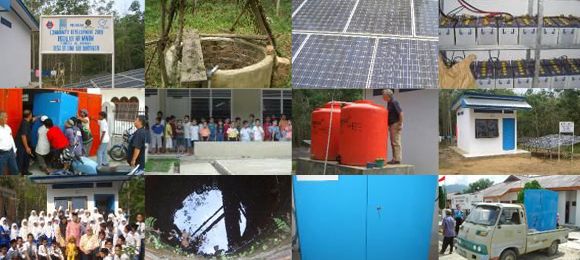
Municipal and government projects generally prioritize regulatory compliance, continuity of supply, operator access, and traceable monitoring. A decentralized village plant may place greater emphasis on simple controls, low energy use, and locally manageable maintenance. Mobile or military systems need compact equipment, fast deployment, and resilience under changing feed-water conditions.
Farms and livestock operations may need to protect animals, irrigation equipment, and groundwater while treating variable flows. In this setting, water treatment for golf course irrigation illustrates why reuse and resource efficiency must be considered alongside contaminant removal. Irrigation water may require control of suspended solids, salts, pathogens, or nutrients without creating a harmful discharge.
Buildings, swimming pools, and industrial sites have their own priorities. A building may need compact point-of-entry treatment, while a pool needs dependable circulation and microbiological control. Industrial processes can require highly specific water chemistry, where a final polishing stage protects products, boilers, cooling systems, or sensitive equipment.
Selecting and managing the right system
The best configuration begins with a clear treatment objective, verified analysis, and realistic operating conditions. A modular design can make it easier to adapt when water quality changes or demand increases. The following practices support dependable chemical-free purification:
- Test raw water during representative seasons and after major source changes.
- Separate particle removal, dissolved-contaminant treatment, and microbiological protection into defined stages.
- Size filters for peak flow, contact time, pressure loss, and required treated-water volume.
- Include monitoring points before and after critical barriers, with a schedule for laboratory verification.
- Plan for backwash, media replacement, reject-water management, and emergency bypass prevention.
Pilot testing is valuable when arsenic, uranium, pesticides, or unusual combinations of contaminants are involved. A small-scale trial can reveal adsorption capacity, fouling behavior, pressure requirements, and the frequency of regeneration or replacement. It also helps operators compare treated-water quality with actual demand rather than relying solely on supplier data.
System design should remain transparent to the people responsible for operating it. Clear flow diagrams, accessible components, alarms, spare parts, and written maintenance procedures can matter as much as the filter media itself. Sustainable treatment depends on dependable daily operation, not simply on the technology selected at installation.
A properly engineered multi-stage system gives each contaminant an appropriate removal mechanism while reducing the burden placed on any single component. Swiss Cleanwater Group develops water treatment solutions for municipalities, agriculture, industry, buildings, and mobile applications, with an emphasis on low-waste and low-chemical operation. Review the source-water requirements and contact the company to define a treatment train suited to the intended use.
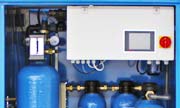
SCM 24
|
|
Cleans 24.000 liters per day
|
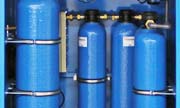
SCM 60
|
|
Cleans 60.000 liters per day
|
Video: How it works
The SCG Advantage
Our market-leading, water cleaning solutions have many advantages. To read more click the items below:
No Chemicals
Our machines and technology does not use any chemicals, at all.
Read more...
No Waste Water
Our machines do not waste any water. Yield = 100%.
Read more...
Low energy use
Uses 50 times less energy than a Reverse Osmosis Machine.
Read more...
Low ownership cost
Lower maintenance and operation costs due to our technology.
Read more...
Easy to install
Simple "plug and play" installation makes for easy deployment.
Read more...
Extremely compact
A compact system, contained in an easy to transport cabinet.
Read more...
Outperforms R.O.
SCG technologies outperform Reverse Osmosis systems.
Read more...
Faster ROI
Get a faster Return on Investment with our systems.
Read more...
Latest News
Latest Blog Posts
| Chemicals in water treatment? |
| Water storage - Whats best for keeping water clean and drinkable? |
| Case: Disaster Management Water Treatment |
Contact SCG
891 Showroom Place
Suite 101
Chula Vista, CA, 91914
Phone: +1 619-878-2730
Contact us by email