


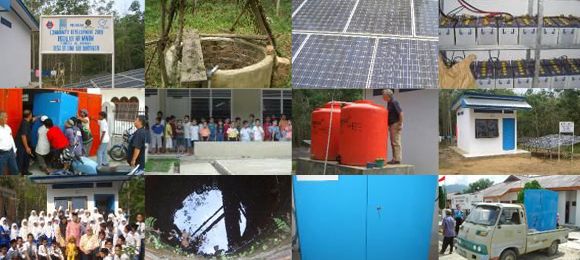







Chemical-Free Arsenic Removal For Bangladesh Groundwater
Groundwater has long been essential to rural life in Bangladesh. Tube wells provide a practical source for drinking, cooking, irrigation, and livestock, yet naturally occurring arsenic can make clear-looking water unsafe. Because arsenic has no reliable taste, smell, or visible colour, contamination may remain unnoticed until testing reveals the problem.
A sustainable response must do more than reduce arsenic at the point of use. It should be affordable to operate, simple to maintain, suitable for local conditions, and capable of serving households or communities without creating a new waste stream. Chemical dosing can complicate rural installations through storage, handling, and disposal requirements.
The Bangladesh case study shows how a chemical-free treatment approach can address groundwater contamination while keeping energy demand and operational complexity low. It also illustrates why treatment design must be connected to testing, local use patterns, maintenance, and long-term access to safe drinking water.
Why Arsenic Is A Serious Groundwater Risk
Arsenic in groundwater is commonly associated with geological conditions beneath alluvial plains. In Bangladesh, many wells draw from aquifers where arsenic-bearing minerals can release contamination into the water. The concentration may vary sharply between nearby wells, so the safety of one tube well cannot be assumed from another.
Long-term exposure to arsenic can affect the skin, circulatory system, nervous system, and internal organs. Health risks are linked to repeated consumption over time, making routine testing and dependable treatment essential. Boiling water does not remove arsenic, and ordinary cloth filters or sediment filters are not designed to capture it.
A visible improvement in clarity is therefore not proof of safety. Effective arsenic mitigation requires a treatment process selected for the contaminant, verified through water analysis, and monitored during operation. The same assessment should check for iron, manganese, bacteria, salinity, turbidity, and other substances that may influence filter performance.
The Rural Community Challenge
A rural water project must work within conditions that differ from those of a large municipal plant. Electricity may be unreliable, trained operators may be few, and replacement parts can take time to reach remote areas. A system that depends on frequent chemical deliveries or complex controls may perform well in a laboratory but struggle in daily community use.
Water demand also changes throughout the day. Families may collect drinking water at specific times, while schools, clinics, farms, or shared facilities require a more consistent supply. Treatment capacity must match the source, the number of users, and the intended application without making the installation unnecessarily expensive.
The case from Bangladesh focuses on this practical gap: providing arsenic-safe water through a process that avoids chemical consumption and reduces the burden of waste management. The rural Bangladesh case study demonstrates how a community-scale solution can be considered from source water through treated-water delivery.
How Chemical-Free Treatment Works
Chemical-free does not mean untreated. It means that the system relies on physical and engineered treatment mechanisms rather than continuously adding coagulants, disinfectants, or other reagents to remove the target contaminant. Depending on the raw-water profile, this may involve specialised filtration media, controlled oxidation, adsorption, or a combination of stages.
Arsenic treatment is particularly dependent on water chemistry. Arsenic can occur in different forms, and its behaviour is influenced by pH, iron, phosphate, organic matter, and competing contaminants. A suitable design therefore begins with laboratory analysis rather than a universal cartridge or a standardised assumption about every well.
A properly configured filter captures or binds arsenic within the treatment medium while allowing treated water to pass through. Pre-filtration may be needed to protect the active stage from suspended solids or excess iron. When the treatment unit reaches its service limit, the medium must be replaced or managed according to the supplier’s instructions and local safety requirements.
This approach can reduce the need for chemical storage, dosing pumps, and liquid sludge handling. It may also lower energy consumption when water can move through the system with limited pumping. The precise result depends on the source-water composition, flow rate, operating schedule, and maintenance discipline.
System Design And Performance
The strongest installations begin with a clear definition of the water source and the required output. Engineers need to know the arsenic concentration, daily volume, peak flow, pressure, temperature, and the presence of other contaminants. These factors determine the number of treatment stages, the size of the unit, and the expected operating life of the filtration media.
Performance should be measured through regular sampling at both the inlet and the treated-water outlet. Initial testing establishes the baseline, while follow-up analysis confirms that the system continues to meet the intended water-quality target. A simple log of operating hours, flow, maintenance, and test results can help identify declining performance before users are exposed to unsafe water.
| Treatment consideration | Chemical-intensive approach | Chemical-free filtration approach |
|---|---|---|
| Arsenic reduction | May require dosing and additional separation stages | Uses specialised media or engineered filtration |
| Daily operation | Needs chemical storage, dosing control, and handling | Reduces consumable chemical management |
| Waste profile | Can produce chemical residuals or sludge | Limits process waste, with spent media still requiring safe handling |
| Energy demand | Depends on pumps, mixers, and treatment configuration | Can be relatively low when filtration works at suitable pressure |
| Maintenance priority | Calibrate dosing and manage chemical supplies | Monitor water quality, flow, pressure, and media condition |
| Suitability for remote sites | Logistically demanding where supply chains are weak | Often easier to operate when the design is correctly matched |
The table does not mean that a chemical-free process eliminates every maintenance obligation. Arsenic-bearing media must be handled responsibly, and a treatment unit cannot compensate for poor source-water testing. Its advantage is that the operating model can be simpler and safer for locations where chemical logistics are difficult.
Benefits Beyond Arsenic Removal
A well-designed groundwater treatment system can address more than one water-quality concern. Depending on the configuration, additional stages may reduce iron, manganese, turbidity, bacteria, pesticides, or uranium. Treating these contaminants together can improve taste, protect downstream equipment, and increase user confidence in the water supply.
The approach also supports a broader sustainability objective. Swiss Cleanwater Group describes its work around access to safe water with reduced chemical use, waste, and excessive energy consumption in its Swiss Cleanwater mission. These principles are relevant in Bangladesh, where treatment must remain practical for communities with limited infrastructure and operating budgets.
For agriculture and livestock, safe water can support animal health and reduce contamination risks in processing areas. For schools, clinics, and public buildings, a central unit can provide consistent drinking water without requiring every household to maintain a separate device. Mobile systems may also be useful during floods, displacement, or emergency response, when existing wells become unreliable.
The most important benefit remains dependable access. A treatment plant only creates public value when people can use it regularly, understand its purpose, and trust that the water is being checked.
Recommendations For A Durable Project
A community arsenic-removal programme should combine technology with local oversight and clear operating procedures. The following actions help turn an installation into a reliable long-term service:
- Test every source well for arsenic and related contaminants before selecting the treatment configuration.
- Size the unit for actual daily demand, peak collection periods, and expected future use.
- Provide straightforward instructions for cleaning, sampling, pressure checks, and filter-media replacement.
- Keep a written record of inlet and outlet results so declining performance can be identified early.
- Train a local operator and establish a safe process for handling spent arsenic-bearing media.
Community engagement is equally important. Residents should know that arsenic may be invisible and that untreated water can appear perfectly clear. Clear signs, collection procedures, and periodic public test results can help prevent a return to unsafe wells.
Funding plans should include the complete service cycle rather than focusing only on initial equipment. Replacement media, laboratory analysis, spare components, transport, and operator time all affect the real cost of safe water. A lower-complexity treatment system can help, but reliable budgeting remains essential.
Applying The Lesson In Other Settings
The Bangladesh example has relevance for many regions where groundwater contamination affects rural settlements, farms, industrial sites, and public facilities. Arsenic is not the only difficult contaminant; manganese, uranium, pesticides, and microbial pollution may require different or additional treatment stages. The common lesson is to match the process to verified water chemistry.
A modular design can make this easier. Pre-treatment, contaminant-specific filtration, disinfection, storage, and distribution can be combined according to the application. A small household unit may differ substantially from a community plant, livestock installation, or mobile emergency system, yet each should follow the same principles of testing, appropriate sizing, and routine verification.
Chemical-free treatment is therefore best viewed as an engineering strategy rather than a single product category. Its value comes from reducing unnecessary inputs while maintaining effective contaminant removal. When the design is supported by monitoring and local maintenance, it can offer a practical path to safer groundwater.
Projects seeking to address arsenic or other water-quality problems can review the available treatment technologies, compare operating requirements, and request a source-water assessment from a qualified provider. Turning contaminated groundwater into dependable drinking water begins with accurate testing and a system designed for the people who will use it.
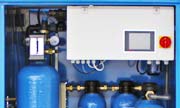
SCM 24
|
|
Cleans 24.000 liters per day
|
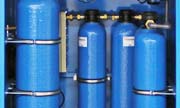
SCM 60
|
|
Cleans 60.000 liters per day
|
Video: How it works

The SCG Advantage
Our market-leading, water cleaning solutions have many advantages. To read more click the items below:
No Chemicals
Our machines and technology does not use any chemicals, at all.
Read more...
No Waste Water
Our machines do not waste any water. Yield = 100%.
Read more...
Low energy use
Uses 50 times less energy than a Reverse Osmosis Machine.
Read more...
Low ownership cost
Lower maintenance and operation costs due to our technology.
Read more...
Easy to install
Simple "plug and play" installation makes for easy deployment.
Read more...
Extremely compact
A compact system, contained in an easy to transport cabinet.
Read more...
Outperforms R.O.
SCG technologies outperform Reverse Osmosis systems.
Read more...
Faster ROI
Get a faster Return on Investment with our systems.
Read more...
Latest News
Latest Blog Posts
| Chemicals in water treatment? |
| Water storage - Whats best for keeping water clean and drinkable? |
| Case: Disaster Management Water Treatment |
Contact SCG
891 Showroom Place
Suite 101
Chula Vista, CA, 91914
Phone: +1 619-878-2730
Contact us by email