







How Local Materials Helped Bring Clean Water To Peru
In a rural Peruvian community, access to safe drinking water depended on more than finding a source. The available water needed treatment for naturally occurring minerals, suspended particles, and microbiological contamination before it could be considered suitable for households, livestock, and community services. The project shows how a carefully designed purification system can work with local construction resources rather than relying on a fully imported infrastructure package.
The solution combined water-treatment technology with materials that were accessible in the region. Sand, gravel, concrete, storage components, protective structures, and standard pipework supported the installation, while the purification process addressed contaminants that ordinary settling or basic filtration could not reliably remove.
This approach is especially relevant for remote communities. A system must be simple to operate, economical to maintain, and resilient when specialist technicians, replacement parts, and regular chemical deliveries are difficult to access. The Peruvian project demonstrates how technical planning and local participation can turn a challenging water source into a dependable supply.
A Difficult Water Source In A Remote Community
The community’s water challenge was linked to the quality and variability of its available source. Rural water supplies may appear clear while still containing bacteria, dissolved metals, pesticides, or other substances that cannot be identified by sight or taste. Seasonal rainfall can also increase turbidity and carry additional contamination into wells, springs, or surface-water collection points.
For residents, unreliable treatment has consequences beyond drinking water. Poor-quality water affects cooking, hygiene, schools, healthcare facilities, agricultural work, and animal husbandry. Purchasing bottled water is expensive and creates a continuing dependence on transport, plastic packaging, and outside suppliers.
The project therefore focused on producing potable water at the point of use. Instead of treating the source with a high volume of chemicals, the design used a low-waste purification process adapted to the expected flow rate and contaminant profile. Water testing remained essential because the correct treatment method depends on the chemistry and microbiology of each source.
Building With Materials Available Nearby
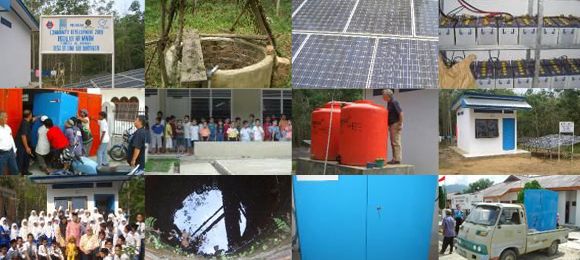
Local materials helped reduce transport requirements and made the installation easier to repair. Gravel and sand could be used in supporting filtration stages, while concrete bases and protective enclosures provided stability for tanks and treatment equipment. Locally available pipes, valves, fittings, and storage vessels also simplified connections between the source, purification unit, and distribution points.
Using regional resources does not mean compromising on treatment quality. The critical purification components must still be selected according to laboratory analysis, flow requirements, and health standards. Local construction materials support the system, while the treatment technology performs the specific work of reducing contaminants.
This division between locally sourced infrastructure and specialized purification equipment is practical for rural development projects. Community workers can maintain structures, inspect pipework, clean collection areas, and monitor storage tanks. More advanced service needs can be planned around a compact treatment unit rather than an entire water network built from imported components.
Matching The Treatment Process To The Need
The purification train was designed to address several water-quality risks in sequence. Preliminary screening and sediment removal protect the later stages from larger particles. Filtration then reduces suspended matter, while specialized media or membrane-based treatment can target dissolved contaminants such as manganese, arsenic, or uranium when testing confirms their presence.
Disinfection is equally important when bacteria and other microorganisms are a concern. A robust system must protect treated water during storage and distribution, not just at the moment it leaves the filter. Covered tanks, clean collection points, controlled access, and routine sampling help preserve the quality achieved by the treatment equipment.
The comparison below illustrates how the project’s approach differs from common alternatives for remote communities:
| Approach | Main Advantage | Common Limitation | Role In The Peru Project |
|---|---|---|---|
| Untreated source water | Minimal initial cost | May contain pathogens and dissolved contaminants | Replaced by a controlled treatment process |
| Chemical dosing | Can provide rapid disinfection | Requires regular deliveries, handling, and dosing control | Reduced where non-chemical treatment was suitable |
| Fully imported plant | Standardized equipment package | Higher transport cost and complex repairs | Limited to essential purification components |
| Local-material installation | Lower construction burden and easier maintenance | Requires careful design and supervision | Used for foundations, filtration support, storage, and connections |
| Point-of-use purification | Delivers safe water near users | Needs monitoring and responsible operation | Applied to serve the community efficiently |
A system of this kind must be validated through water analysis before and after treatment. Performance should be measured against the contaminants that matter locally, rather than against a generic specification. This prevents unnecessary equipment and ensures that the available budget is directed toward genuine health protection.
Installation And Community Participation
Community involvement was a practical part of the installation, not simply a social benefit. Local residents could help prepare the site, organize access, support construction, and learn the basic tasks needed to keep the system operating. Familiarity with the equipment also encourages faster reporting of leaks, unusual water appearance, pressure changes, or other early warning signs.
Training covered routine inspection, cleaning, safe handling of treated water, and the importance of keeping storage areas protected. Operators also needed to understand when a filter required service and when a water sample should be sent for testing. Clear procedures reduce the risk that a functioning system will be undermined by poor storage or irregular maintenance.
The project’s local-material strategy also made future expansion more realistic. If the population grows or a school, clinic, farm, or livestock facility is connected later, the distribution network can be extended in stages. Modular water treatment is often more appropriate than installing an oversized plant that is difficult to finance and maintain.
Swiss Cleanwater Group’s experience with resource-efficient treatment is relevant to this kind of planning, particularly where the goal is to remove contaminants without excessive chemical use, wastewater production, or energy demand. A separate water reuse case study also shows how treatment design can reduce operating costs when water resources are limited.
What Made The Approach Sustainable
Sustainability in the Peruvian community was measured through daily practicality. Avoiding unnecessary chemical consumption reduced dependence on supply chains and minimized the handling risks associated with dosing products. Lower waste production meant that the system placed less pressure on the surrounding environment, which is important where disposal infrastructure is limited.
Energy efficiency was another consideration. A treatment process that relies on modest pumping requirements or gravity-assisted stages can be easier to operate in locations with unstable electricity. Where power is available intermittently, storage capacity and a carefully selected treatment cycle can help maintain service without excessive energy consumption.
The use of local materials also retained more project value within the community. Construction, repairs, transport coordination, and routine upkeep could involve local workers and suppliers. This creates practical knowledge that remains after installation and reduces the likelihood that the system will be abandoned when an outside contractor leaves.
Guidance For Similar Water Projects
Communities considering a comparable clean-water installation should focus on the following priorities:
- Test the source water for bacteria, turbidity, minerals, metals, pesticides, and other locally relevant contaminants before selecting equipment.
- Use local sand, gravel, concrete, tanks, and pipework where they are appropriate, while reserving specialized treatment components for tasks that require certified performance.
- Design storage and distribution with the same care as the treatment stage so that purified water does not become contaminated again.
- Train local operators in inspection, cleaning, record keeping, sampling, and basic fault detection.
- Plan for replacement media, spare parts, technical support, and future capacity from the beginning of the project.
The most successful systems are designed around actual community conditions. A small settlement may need a different configuration from a school, a mining camp, a farming operation, or a municipal network. Flow demand, source chemistry, available power, climate, operator skills, and expansion plans all influence the final design.
For organizations evaluating a project in Peru or another remote region, early technical consultation can prevent expensive changes later. Water analysis and a site assessment establish whether the preferred process should emphasize filtration, adsorption, membrane treatment, disinfection, or a combination of technologies.
Turning A Local Solution Into Long-Term Access
The Peruvian case demonstrates that clean drinking water does not always require a complex, centralized plant or a supply chain built entirely around imported materials. With the right water-quality assessment, local construction resources can support a dependable purification system that is easier to install, operate, and maintain.
Municipal authorities, development agencies, farms, schools, and community leaders can begin by documenting the source, expected demand, seasonal changes, and available infrastructure. A technical team can then match those conditions with a treatment process designed to reduce contaminants efficiently and protect the finished water through storage and distribution.
For project discussions, site information and treatment requirements can be shared through the Skype contact. A well-planned assessment is the first step toward a sustainable local-material water system that delivers safer water for households and essential community activities.
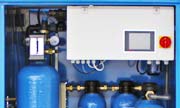
SCM 24
|
|
Cleans 24.000 liters per day
|
SCM 60
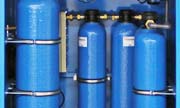
|
|
Cleans 60.000 liters per day
|
Video: How it works
The SCG Advantage
Our market-leading, water cleaning solutions have many advantages. To read more click the items below:
No Chemicals
Our machines and technology does not use any chemicals, at all.
Read more...
No Waste Water
Our machines do not waste any water. Yield = 100%.
Read more...
Low energy use
Uses 50 times less energy than a Reverse Osmosis Machine.
Read more...
Low ownership cost
Lower maintenance and operation costs due to our technology.
Read more...
Easy to install
Simple "plug and play" installation makes for easy deployment.
Read more...
Extremely compact
A compact system, contained in an easy to transport cabinet.
Read more...
Outperforms R.O.
SCG technologies outperform Reverse Osmosis systems.
Read more...
Faster ROI
Get a faster Return on Investment with our systems.
Read more...
Latest News
Latest Blog Posts
| Chemicals in water treatment? |
| Water storage - Whats best for keeping water clean and drinkable? |
| Case: Disaster Management Water Treatment |
Contact SCG
891 Showroom Place
Suite 101
Chula Vista, CA, 91914
Phone: +1 619-878-2730
Contact us by email