









How an industrial laundry reduced water costs through reuse
A large industrial laundry can consume hundreds of thousands of litres of water each day. Every load requires several stages, including pre-rinsing, detergent washing, intermediate rinsing, and final rinsing. When all used water flows directly to the drain, the facility pays twice: first for incoming potable water and then for wastewater treatment and discharge.
This case study follows an anonymized commercial laundry serving hotels, hospitals, and food-service businesses. The facility wanted to lower operating costs without compromising hygiene, textile quality, or production capacity. Its solution combined targeted water recovery, advanced filtration, and a reuse strategy matched to each stage of the washing process.
The project reflects a broader shift toward resource-efficient treatment. Systems such as those developed by Swiss Cleanwater Group are designed to reduce contaminants without relying on excessive chemicals, high energy consumption, or creating concentrated waste streams that simply move the problem elsewhere.
The facility's water challenge
The laundry operated six days a week, processing approximately 42 tonnes of linen and workwear every day. Its tunnel washers and batch machines consumed close to 520 cubic metres of water daily. Water use was particularly high during pre-rinse and intermediate rinse cycles, where the quality requirements were lower than those for the final rinse.
The business faced rising water tariffs and wastewater charges at the same time. A review of twelve months of invoices showed that water and sewer costs had increased by 18% over three years. Production managers also expected future restrictions on industrial abstraction and discharge, making a reduction in freshwater demand strategically important.
A conventional approach would have been to install larger storage tanks and reuse untreated effluent. That option was rejected because lint, surfactants, oils, suspended solids, colour, and microorganisms could damage equipment or transfer odours and stains to textiles. The project therefore focused on treating selected streams before returning them to suitable washing stages.
A reuse loop built around treatment
Engineers first mapped the facility's water flows rather than treating all wastewater as a single stream. Final rinse water was kept separate because it had the lowest contaminant load and the greatest reuse value. More heavily contaminated wash water was directed to a different collection line for treatment and non-critical applications.
The recovery system used screening and settling to remove lint and larger solids, followed by fine filtration and membrane-based polishing. The treatment train was selected to reduce suspended matter, colour, organic residues, and microbial risk while keeping energy demand manageable. Automatic monitoring tracked conductivity, turbidity, flow, and tank levels so that water could be diverted whenever quality fell outside the operating range.
Recovered water was then assigned according to quality. High-quality final rinse water was used for the first rinse of the next compatible load. Treated intermediate rinse water was used for pre-rinsing, floor cleaning, and selected equipment washdown tasks. Fresh water remained in the final rinse and in processes where textile hygiene specifications required the highest consistency.
This staged design was important. Reuse does not mean sending every litre back into every process. It means matching treated water quality to the job it needs to perform. That approach helped the laundry achieve savings while avoiding unnecessary treatment of water that could be safely used for lower-grade purposes.
Costs before and after the retrofit
The installation included a 180-cubic-metre buffer tank, automatic diversion valves, filtration units, treatment controls, and pipework connecting the recovery plant to the washing lines. Construction was scheduled in phases so that the laundry could continue operating. The first production line was connected during a planned maintenance shutdown, followed by the remaining lines over two weekends.
After commissioning, freshwater consumption fell from approximately 520 to 305 cubic metres per day. The facility reused about 215 cubic metres daily, representing a 41% reduction in mains water demand. Wastewater discharge declined by a similar amount, although actual savings varied with production volume and the proportion of heavily soiled loads.
| Performance measure | Before reuse project | After reuse project |
|---|---|---|
| Average daily throughput | 42 tonnes | 42 tonnes |
| Freshwater consumption | 520 m³/day | 305 m³/day |
| Recovered water used | 0 m³/day | 215 m³/day |
| Wastewater discharge | 495 m³/day | 292 m³/day |
| Water cost and sewer savings | Baseline | About 39% |
| Textile quality complaints | Baseline | No material increase |
| Estimated payback period | — | Approximately 3.4 years |
The annual financial benefit came from several sources. Lower mains consumption produced the largest saving, while reduced wastewater discharge provided a second benefit. The laundry also reduced its exposure to future tariff increases. Based on the site's water prices and operating schedule, the estimated payback period was just over three years.
The project team avoided claiming that reuse eliminated all water costs. Freshwater was still needed for final rinsing, boiler make-up, hygiene controls, and occasional system flushing. This realistic approach made the business case easier to verify and helped operators understand that efficiency depends on continuous monitoring rather than a one-time installation.
Quality controls protected production
Hygiene was the facility's primary concern. Managers needed proof that recovered water would not create cross-contamination or affect standards for hospital and hospitality textiles. For that reason, the reuse loop was physically separated from the final-rinse supply. Backflow prevention, air gaps, sampling ports, and automatic shutdowns were included in the design.
During the first twelve weeks, operators tested recovered water daily for turbidity, conductivity, pH, and microbiological indicators. Textile samples were also inspected for odour, colour transfer, detergent residue, and rewash rates. After the system stabilised, the testing schedule was reduced for routine operation while retaining intensified checks after maintenance or unusual production events.
The controls produced a practical operating rule: water could only be reused when it met the quality range assigned to its destination. If a sensor detected elevated solids or conductivity, the water was automatically sent to drain or held for additional treatment. This prevented a single poor-quality batch from affecting multiple washing cycles.
Staff training was equally important. Operators learned how to identify abnormal tank levels, respond to alarms, clean filters, and record bypass events. The project succeeded because water treatment became part of production management rather than a separate utility function that nobody monitored closely.
What the results reveal about industrial reuse
The strongest saving did not come from treating the most polluted wastewater. It came from capturing relatively clean streams before they became mixed with concentrated effluent. This reduced the treatment burden and allowed the facility to install a more compact system than would have been necessary for full-flow recovery.
The laundry also found that water reuse changed employee behaviour. Once consumption was measured by line and shift, supervisors could identify leaking valves, excessive rinse times, and incorrect machine settings. The treatment project therefore delivered secondary efficiency gains through better process visibility.
The case offers lessons for other high-consumption operations, including food processors, dairies, vehicle-wash facilities, textile manufacturers, and livestock sites. Each has different water-quality requirements, but the same principles apply: measure each stream, protect critical uses, treat only what is necessary, and build quality controls into the distribution network.
Municipalities and industrial operators are also examining treatment models that avoid waste brines and heavy chemical use. The discussion around zero-waste treatment guidance reflects the same practical objective seen at the laundry: reduce pollution at the source while recovering as much useful water as possible.
Steps for planning a reliable retrofit
A water-reuse project should begin with a detailed audit rather than a standard equipment package. Flow meters, production records, laboratory samples, and staff interviews reveal where water is used and which streams are suitable for recovery. The most economical design is often a targeted one that serves several lower-risk applications instead of attempting complete potable-quality recycling.
Before selecting treatment equipment, the facility should define measurable targets for water quality, availability, and savings. It should also account for storage capacity, seasonal production changes, cleaning requirements, maintenance access, and regulatory approval. A system that works only during average production may fail when the laundry handles unusually soiled loads or operates extended shifts.
Key planning priorities include:
- Separate final-rinse, intermediate-rinse, and heavily contaminated streams.
- Match treated water quality to each reuse application.
- Install sensors, diversion controls, and sampling points at critical locations.
- Calculate savings from both freshwater reduction and lower wastewater discharge.
- Train operators to maintain filters, respond to alarms, and document bypasses.
The anonymized laundry selected a phased retrofit because it reduced operational risk and allowed performance data to guide later expansion. After proving the first reuse loop, management began evaluating additional recovery for cooling and boiler-related applications, subject to water-quality and compliance requirements.
For facilities considering a similar project, the most useful first step is a site-specific water balance. Swiss Cleanwater Group can help businesses assess treatment options for industrial, commercial, municipal, and mobile applications. Contact the company through its website to discuss the water sources, contaminants, reuse goals, and operating conditions that should shape a durable treatment system.
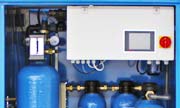
SCM 24
|
|
Cleans 24.000 liters per day
|
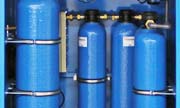
SCM 60
|
|
Cleans 60.000 liters per day
|
Video: How it works
The SCG Advantage
Our market-leading, water cleaning solutions have many advantages. To read more click the items below:
No Chemicals
Our machines and technology does not use any chemicals, at all.
Read more...
No Waste Water
Our machines do not waste any water. Yield = 100%.
Read more...
Low energy use
Uses 50 times less energy than a Reverse Osmosis Machine.
Read more...
Low ownership cost
Lower maintenance and operation costs due to our technology.
Read more...
Easy to install
Simple "plug and play" installation makes for easy deployment.
Read more...
Extremely compact
A compact system, contained in an easy to transport cabinet.
Read more...
Outperforms R.O.
SCG technologies outperform Reverse Osmosis systems.
Read more...
Faster ROI
Get a faster Return on Investment with our systems.
Read more...
Latest News
Latest Blog Posts
| Chemicals in water treatment? |
| Water storage - Whats best for keeping water clean and drinkable? |
| Case: Disaster Management Water Treatment |
Contact SCG
891 Showroom Place
Suite 101
Chula Vista, CA, 91914
Phone: +1 619-878-2730
Contact us by email