









How a Factory Recycles 90% of Its Process Water Without Chemicals
A metal-finishing factory in Central Europe was using fresh water for rinsing, equipment cleaning, cooling support, and several production stages. Its discharge permit was being met, but the site consumed thousands of cubic meters of drinking-quality water each year and paid rising costs for wastewater handling. Learn more about Addressing Nitrate Pollution In Farming Communities With Ion Exchange.
The factory wanted to reuse its process water without adding coagulants, disinfectants, or other treatment chemicals. The solution also had to fit into an operating plant, protect production from interruptions, and produce a stable water quality suitable for repeated industrial use.
Swiss Cleanwater Group assessed the site’s water streams, identified the main contaminants, and designed a closed-loop treatment system. After commissioning and a monitored operating period, the factory recovered approximately 90% of its process water for reuse, significantly reducing intake and discharge volumes.
The Factory’s Water Management Problem
The plant used water in several areas with different contamination profiles. Rinse water collected fine particles, dissolved metals, and residues from surface treatment. Cleaning streams contained suspended solids and variable organic loads, while cooling-related water accumulated minerals as it circulated.
Previously, these streams were combined before being sent to wastewater treatment. This simplified the plumbing, but it also made reuse difficult. A single contaminated stream could affect the entire volume, and the factory had no practical way to separate water that could be recovered from water requiring disposal.
Freshwater demand was approximately 1,200 cubic meters per month. Wastewater charges, pumping costs, and production risks made the existing approach increasingly unattractive. The factory’s management therefore defined three goals: reduce freshwater intake, maintain reliable water quality, and avoid treatment chemicals that would create additional residues or require careful storage and dosing.
Diagnosing Contaminants Before Designing The System
The project began with sampling at individual process points rather than testing only the combined discharge. This distinction was important because turbidity, conductivity, pH, suspended solids, and dissolved contaminants changed throughout the production cycle.
The assessment showed that the largest recovery opportunity was in rinse and utility streams. These flows contained enough suspended matter and dissolved impurities to require treatment, but they did not need to be discarded after one use. Separating them at source allowed the treatment system to address each load more efficiently.
The design team also considered seasonal changes, batch production, cleaning schedules, and short periods of unusually high contamination. Similar principles apply when a facility must address variable raw water quality; for example, high turbidity control requires treatment capacity that can handle peaks without relying on coagulants.
Building A Chemical-Free Water Recovery Loop
The installed system used staged physical and selective treatment to remove suspended particles, reduce dissolved pollutants, and polish the recovered water before it returned to production. The exact treatment sequence was matched to the factory’s water analysis rather than selected from a standard package.
Pre-treatment protected the finer purification stages from particle loading. Subsequent steps reduced the substances that would otherwise accumulate during recirculation, while final polishing improved the water’s suitability for rinsing and utility applications. Because the process did not depend on chemical dosing, the factory avoided chemical storage, handling procedures, and secondary sludge associated with conventional treatment methods.
The recovered water was stored in a dedicated buffer tank and monitored before distribution. Automatic controls diverted water to a separate reject route when quality moved outside the programmed range. This safeguard meant that an abnormal batch could not contaminate the reuse loop or interrupt production.
| Performance Measure | Before Installation | After Stabilization |
|---|---|---|
| Freshwater use | About 1,200 m³/month | About 120 m³/month for equivalent operations |
| Process water recovered | 0% | Approximately 90% |
| Chemical treatment agents | Used in selected wastewater steps | None in the recovery loop |
| Wastewater discharge | Nearly the full process volume | Reduced by approximately 85–90% |
| Routine operator work | Manual checks and tank management | Automated monitoring with scheduled inspection |
| Production impact | Frequent concern during maintenance | No planned production interruption |
Reuse Quality And Operational Results
The factory did not attempt to use recovered water everywhere immediately. It first returned the treated water to lower-risk applications, including preliminary rinsing, equipment washing, and selected cooling services. Once operating data confirmed stable quality, reuse expanded to additional process stages.
This staged approach helped operators build confidence without placing the most sensitive production steps at risk. Water quality was tracked through conductivity, turbidity, pH, flow, and other site-specific indicators. The monitoring record showed that the treatment system could maintain consistent performance across changing production loads.
After stabilization, freshwater intake fell by roughly 90% for the targeted operations. Wastewater volume declined by a similar order, although a concentrated residual stream still required controlled management. The factory reduced its exposure to water price increases and gained greater resilience during supply restrictions or local shortages.
The project also supported better environmental reporting. Instead of measuring sustainability only through total water purchased, the factory could document internal recirculation, reduced discharge, and lower chemical use. These figures gave managers a clearer basis for future efficiency investments.
Why Chemical-Free Treatment Changed The Business Case
Avoiding chemicals affected more than the treatment process itself. The factory no longer needed to receive, store, and dose treatment agents for the recovery loop. Operators had fewer safety procedures to follow, and the site reduced the risk of incorrect dosing affecting production water.
The absence of added chemicals also simplified residual management. Conventional treatment can transfer dissolved contaminants into sludge or create reaction products that need additional handling. A physical and selective purification approach still produces a reject stream, but its volume and composition are easier to monitor within the factory’s waste plan.
The same consideration matters in buildings and public facilities, where chemical-free operation can reduce maintenance complexity. Facilities investigating Legionella control also need to balance microbiological safety, water turnover, temperature management, and equipment reliability rather than treating chemical dosing as the only available answer.
Energy use was another part of the evaluation. The system was selected for an operating profile that could deliver high water recovery without excessive pressure or continuous energy-intensive processing. Efficient pumps, automatic standby functions, and demand-based operation helped keep the treatment system aligned with the factory’s production schedule.
Recommendations For Replicating The Result
A high recovery rate depends on engineering and operating discipline, not simply installing a filter. Other factories considering industrial water recycling can use the following principles:
- Map each water stream separately before combining samples or selecting equipment.
- Define the intended reuse applications so treatment quality matches actual production needs.
- Pilot or validate the treatment train against normal loads, cleaning cycles, and contamination peaks.
- Install online monitoring and automatic diversion to protect the reuse tank when water quality changes.
- Plan residual and reject handling as part of the original design rather than as a later addition.
Water reuse should also be evaluated alongside contamination prevention. Repairing leaks, improving rinse controls, reducing drag-out, and optimizing cleaning cycles can lower the treatment burden before water reaches the recovery system. In the case of this factory, operational changes reduced unnecessary flow and made the 90% recovery target more dependable.
A strong business case combines measurable water savings with practical operating requirements. Capital cost, maintenance access, replacement intervals, control integration, discharge fees, and production risk all influence the return on investment. A system that performs well in laboratory conditions but is difficult to operate will not deliver lasting results.
From Demonstration Project To Long-Term Water Security
This case study shows that a factory can move beyond one-pass water use without relying on chemical treatment or accepting unstable production conditions. By separating water streams, matching purification stages to measured contaminants, and controlling reuse through continuous monitoring, the plant recovered about nine-tenths of its targeted process water.
The result was a smaller freshwater footprint, less wastewater discharge, lower chemical dependency, and improved control over a resource that directly affects production continuity. It also demonstrated that industrial water recycling can be designed around the site’s actual processes rather than imposed as a generic wastewater solution.
Swiss Cleanwater Group can assess process water quality, identify suitable reuse points, and develop a treatment concept for industrial, municipal, agricultural, or mobile applications. Contact the company to discuss a site assessment and determine how much of your facility’s water could be safely recovered and reused.
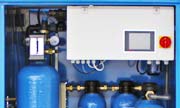
SCM 24
|
|
Cleans 24.000 liters per day
|
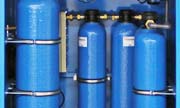
SCM 60
|
|
Cleans 60.000 liters per day
|
Video: How it works
The SCG Advantage
Our market-leading, water cleaning solutions have many advantages. To read more click the items below:
No Chemicals
Our machines and technology does not use any chemicals, at all.
Read more...
No Waste Water
Our machines do not waste any water. Yield = 100%.
Read more...
Low energy use
Uses 50 times less energy than a Reverse Osmosis Machine.
Read more...
Low ownership cost
Lower maintenance and operation costs due to our technology.
Read more...
Easy to install
Simple "plug and play" installation makes for easy deployment.
Read more...
Extremely compact
A compact system, contained in an easy to transport cabinet.
Read more...
Outperforms R.O.
SCG technologies outperform Reverse Osmosis systems.
Read more...
Faster ROI
Get a faster Return on Investment with our systems.
Read more...
Latest News
Latest Blog Posts
| Chemicals in water treatment? |
| Water storage - Whats best for keeping water clean and drinkable? |
| Case: Disaster Management Water Treatment |
Contact SCG
891 Showroom Place
Suite 101
Chula Vista, CA, 91914
Phone: +1 619-878-2730
Contact us by email