









How a Municipality Removed Manganese Without Adding Chemicals
A municipality relying on groundwater began receiving complaints about black deposits in sinks, metallic-tasting water, and dark marks on laundry. Laboratory testing identified manganese as the central concern. Although the concentration was not an immediate acute health emergency, it affected water quality, public confidence, and the reliability of the distribution network.
The local authority wanted a treatment process that could operate continuously without routine chemical dosing. Chemical oxidation and precipitation were considered, but they would have required storage tanks, metering equipment, trained handling, and ongoing deliveries. The municipality also wanted to avoid creating a contaminated sludge stream that would add disposal costs.
The resulting project focused on a compact purification system designed to separate dissolved manganese from the raw water while limiting waste and energy consumption. This case study shows how the municipality approached the problem, what changed after installation, and which operational lessons can apply to other public water supplies.
Recognising The Manganese Problem
The source was a groundwater well with generally stable flow and acceptable microbiological quality. Its weakness was elevated dissolved manganese, which remained invisible when the water first emerged from the well. Once exposed to air and distributed through the network, the manganese oxidised and formed dark particles that settled in storage tanks and household plumbing.
These deposits created several practical problems. Consumers noticed staining around taps and toilets, while maintenance teams found sediment in valves, filters, and pipe sections with slower circulation. Periodic flushing removed some of the material, but flushing alone did not address the dissolved manganese entering the treatment plant every day.
The municipality therefore defined several performance requirements. The new system had to reduce manganese consistently, fit within the existing plant footprint, maintain adequate flow during peak demand, and avoid dependence on hazardous chemical reagents. It also needed simple controls so local operators could manage routine operation without adding a complex chemical process to the site.
Selecting A Chemical-Free Treatment Route
The design began with water analysis rather than a standard equipment package. Samples were reviewed for manganese concentration, iron, pH, turbidity, hardness, organic matter, and microbiological indicators. These factors matter because manganese removal depends on how the element occurs in the water and how readily it can be converted into a filterable form.
The selected treatment train used controlled conditioning and filtration to transform dissolved contaminants into particles that could be retained by the treatment media. The process was configured for the municipality’s actual flow and water chemistry, rather than relying on excessive aeration, high chemical consumption, or oversized equipment. This approach reflects the wider SCG advantage, where treatment efficiency is considered alongside operating simplicity and resource use.
A chemical-free system does not mean that engineering controls are unnecessary. Flow rate, contact conditions, filter loading, cleaning cycles, and water quality still require attention. The difference is that the municipality does not need to receive, store, dose, and monitor a continuous supply of oxidising chemicals to achieve manganese reduction.
Integrating The System Into The Plant
Installation was planned around the existing well pumps and storage arrangements. Instead of replacing the complete facility, the municipality added the manganese treatment stage at the point where raw water entered the drinking-water process. This reduced civil works and allowed the authority to keep the existing distribution infrastructure in service.
The system included monitoring points before and after treatment. Operators could compare raw-water manganese with treated-water performance and identify whether a change originated in the source, the filtration stage, or the distribution network. That visibility was important because complaints had previously been attributed to general “water quality” without a clear link to a specific contaminant.
Commissioning was carried out gradually. Initial operation allowed the treatment media and controls to stabilise while technicians checked pressure loss, flow, treated-water clarity, and manganese reduction. The municipality also reviewed flushing requirements and established a maintenance schedule based on actual loading instead of an arbitrary calendar interval.
Results For Water Quality And Operations
Following commissioning, treated water met the municipality’s manganese target under normal operating conditions. The most visible improvement was the reduction of dark particles and staining. Storage tanks remained cleaner, household complaints declined, and operators reported fewer deposits around control fittings and downstream filtration points.
The operational improvement was equally important. The plant no longer depended on regular deliveries of manganese-removal chemicals. This reduced chemical storage requirements, eliminated dosing calibration for that stage, and removed the need to manage containers, residual reagent, or chemical-related spill risks.
| Performance area | Before the project | After chemical-free treatment |
|---|---|---|
| Raw-water condition | Dissolved manganese entering the plant | Same source, treated before distribution |
| Consumer complaints | Dark staining and metallic taste reported | Complaints reduced after stable operation |
| Chemical requirement | Chemical treatment considered necessary | No routine manganese-removal chemical dosing |
| Maintenance burden | Deposits in tanks, valves, and pipework | Cleaner downstream equipment |
| Residual waste | Concern about chemical sludge and disposal | Limited process waste, managed through planned cleaning |
| Operator workload | Reactive flushing and troubleshooting | Routine monitoring and scheduled maintenance |
The results did not remove the need for water-quality surveillance. Manganese levels in a groundwater source can vary with pumping conditions, seasonal recharge, well depth, and changes in the aquifer. Continued sampling confirmed that the treatment process was performing consistently and helped the municipality identify any future change before it became a public complaint.
Managing Energy, Waste, And Reliability
The project’s sustainability benefits came from several design decisions rather than a single feature. Avoiding chemical dosing reduced the material footprint of the plant. A compact treatment layout limited construction requirements, while efficient operation avoided the need for excessive pumping or unnecessarily long contact stages.
Waste management was also considered during design. Manganese captured by a filter must eventually be removed through a controlled cleaning or backwashing procedure. The municipality therefore planned how wash water would be collected, assessed, and discharged in accordance with local requirements. “Chemical-free” describes the treatment method; it does not mean that every by-product can be released without oversight.
The plant’s reliability improved because fewer external supplies were needed. A delivery delay, chemical price increase, or storage issue was less likely to interrupt treatment. This resilience is particularly valuable for smaller municipalities, remote communities, and public facilities where a limited number of employees may be responsible for several operational duties.
Extending Protection Beyond Manganese
Manganese was the immediate reason for the project, but municipal water planning cannot always treat contaminants as isolated problems. The same catchment may face iron, pesticides, bacteria, uranium, or changing organic loads. A treatment solution should therefore leave room for monitoring and future adaptation.
Agricultural areas require particular attention because rainfall can carry fertilisers, pesticides, and sediment toward wells, rivers, and reservoirs. Guidance on agricultural runoff treatment can help authorities consider how source protection and treatment should work together rather than relying on end-of-pipe purification alone.
The municipality used the manganese project to strengthen its wider water-safety approach. It mapped the well’s protection zone, reviewed sampling frequency, recorded consumer complaints by location, and created a baseline for future treatment decisions. This meant the investment supported both immediate compliance and longer-term source management.
Recommendations For Municipal Projects
A successful manganese-removal project depends on matching the process to the source water and the people who will operate it. Municipalities considering a similar upgrade should:
- Test manganese alongside iron, pH, turbidity, hardness, organic matter, and microbiological indicators.
- Define treated-water targets, peak-flow requirements, and acceptable pressure loss before selecting equipment.
- Compare chemical, biological, and physical treatment options using total operating cost rather than purchase price alone.
- Plan for filter cleaning, backwash water, residual solids, sampling points, and safe discharge from the beginning.
- Use online or scheduled monitoring to detect changes in raw-water chemistry before they affect consumers.
The project also demonstrates the value of phased commissioning. A short period of close observation can reveal how the source behaves under different flow conditions and whether the plant needs adjustments to filtration cycles or control settings. Training should cover both routine operation and abnormal conditions, including sudden turbidity, pump changes, or a temporary rise in manganese concentration.
Swiss Cleanwater Group’s development has been shaped by practical water-treatment applications across different environments. Its water treatment history illustrates why adaptable systems are important: a municipality, farm, industrial site, and mobile unit may face different water sources, capacity constraints, and maintenance resources even when the contaminant is similar.
A municipality does not need to accept chemical dependence as the only route to manganese control. By analysing the raw water, selecting a process suited to local conditions, and building monitoring into the installation, it can improve drinking-water quality while reducing chemical handling and operational complexity. Contact Swiss Cleanwater Group to assess manganese levels, review treatment options, and develop a system sized for the source, flow, and long-term needs of the community.
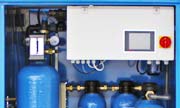
SCM 24
|
|
Cleans 24.000 liters per day
|
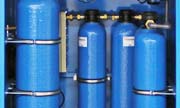
SCM 60
|
|
Cleans 60.000 liters per day
|
Video: How it works

The SCG Advantage
Our market-leading, water cleaning solutions have many advantages. To read more click the items below:
No Chemicals
Our machines and technology does not use any chemicals, at all.
Read more...
No Waste Water
Our machines do not waste any water. Yield = 100%.
Read more...
Low energy use
Uses 50 times less energy than a Reverse Osmosis Machine.
Read more...
Low ownership cost
Lower maintenance and operation costs due to our technology.
Read more...
Easy to install
Simple "plug and play" installation makes for easy deployment.
Read more...
Extremely compact
A compact system, contained in an easy to transport cabinet.
Read more...
Outperforms R.O.
SCG technologies outperform Reverse Osmosis systems.
Read more...
Faster ROI
Get a faster Return on Investment with our systems.
Read more...
Latest News
Latest Blog Posts
| Chemicals in water treatment? |
| Water storage - Whats best for keeping water clean and drinkable? |
| Case: Disaster Management Water Treatment |
Contact SCG
891 Showroom Place
Suite 101
Chula Vista, CA, 91914
Phone: +1 619-878-2730
Contact us by email