








How A Caribbean Resort Reached Zero-Waste Water Treatment
A Caribbean resort depends on reliable water every day. Guests expect safe drinking water, clean pools, fresh food, hygienic rooms, and well-maintained gardens, while the local community and environment must absorb as little pressure as possible. For one coastal resort, seasonal demand, variable source quality, and expensive imported water made the existing supply model increasingly difficult to sustain.
The resort’s management wanted a treatment system that could produce potable water on site without chemical dosing, disposable filter cartridges, or a concentrated wastewater stream. The goal was ambitious: achieve zero-waste water treatment while protecting guests, staff, and nearby marine habitats.
The project profile below shows how a site-specific purification strategy transformed the resort’s water operation. It also illustrates why sustainable water treatment is often a combination of source assessment, contaminant removal, operational discipline, and careful monitoring rather than a single piece of equipment.
The Resort’s Water Supply Challenge
The property relied on a combination of shallow groundwater, collected rainwater, and deliveries during peak occupancy. Each source had different characteristics. Groundwater contained elevated manganese and traces of arsenic, while rainwater required protection from roof debris, bacteria, and storage-tank contamination. Water deliveries were dependable but added transport costs, plastic packaging, and fuel-related emissions.
Demand changed sharply throughout the year. During quieter months, the resort could manage with its existing storage capacity. During holidays, however, occupancy increased, kitchens operated longer hours, and laundry and pool systems consumed substantially more water. Any treatment plant had to handle fluctuating flow without creating a large volume of reject water.
The resort also faced strict environmental expectations. Brine discharge from conventional desalination could affect sensitive coastal waters, and chemical treatment would have required additional storage, trained handling, and regular replenishment. These factors made a low-waste purification process a better fit than a conventional build-out based solely on reverse osmosis.
Designing A Closed-Loop Treatment Process
The engineering team began with a water analysis covering metals, microbial indicators, turbidity, organic compounds, and general mineral content. This assessment separated the sources by intended use. High-quality treated water was reserved for drinking, food preparation, and ice production, while appropriately treated utility water supported toilet flushing, laundry pre-rinsing, irrigation, and cleaning.
The selected system used physical filtration and targeted contaminant removal without routine chemical dosing. Suspended particles were removed first, followed by treatment stages designed to reduce manganese, arsenic, bacteria, pesticides, and other unwanted substances identified in the source-water analysis. Automated controls adjusted operating cycles according to flow and water quality, helping prevent unnecessary rinsing and premature media replacement.
A key design decision was to recover treatment backwash rather than send it to a drain. Captured water was settled and routed to non-potable uses after suitable conditioning. Solids were isolated in a controlled process for periodic collection. Because the system did not rely on a continuous brine stream, the resort avoided the discharge problem associated with many desalination-focused installations.
From Source Water To Guest-Ready Water
The finished system was installed in a compact service area close to the main storage tanks. Locating treatment near the point of use reduced the distance that untreated water travelled through the property and simplified access for operators. A separate, clearly marked distribution network supplied potable and non-potable outlets.
Monitoring points were added before and after the principal treatment stages. Operators could track pressure, flow, turbidity, conductivity, and selected contaminant indicators. Laboratory testing remained part of the verification program, particularly for arsenic and microbiological safety. This combination of automated alerts and scheduled sampling provided a stronger safeguard than relying on taste, appearance, or occasional manual checks.
The treatment approach was also designed for resilience. Spare components were kept on site, maintenance tasks were documented, and staff were trained to respond to abnormal readings. The operating model resembled the requirements of remote and mobile installations, where dependable water production must continue even when supply chains are slow. Lessons from military water treatment can be relevant to resorts in isolated locations because both environments value compact equipment, straightforward controls, and operational independence.
Measured Results After Commissioning
Within the first operating period, the resort reduced its reliance on delivered water and stopped using single-use containers for most guest drinking stations. The system delivered consistent treated water during both low and high occupancy, with storage tanks providing a buffer during short maintenance intervals.
The project team recorded performance against the original environmental and operational targets. The figures below represent the project’s reported operating profile after commissioning and show how the resort evaluated the improvement.
| Performance indicator | Previous arrangement | New treatment model |
|---|---|---|
| Reliance on delivered water | High during peak season | Limited to contingency supply |
| Chemical dosing | Regular treatment chemicals | No routine chemical dosing |
| Liquid treatment discharge | Frequent reject and wash water | Recovered and reused where suitable |
| Plastic drinking-water containers | Used across guest areas | Largely eliminated |
| Water-quality monitoring | Periodic manual checks | Continuous system alerts plus laboratory tests |
| Main supply resilience | Dependent on deliveries | On-site production with storage backup |
The most important change was not a single percentage reduction. It was the removal of several connected waste streams: tanker transport, plastic packaging, chemical containers, and avoidable treatment discharge. The resort could also identify where water was being consumed, allowing managers to address leaks and inefficient cleaning practices alongside the purification upgrade.
Arsenic control received particular attention because the contaminant can be invisible and may remain undetected without proper testing. The maintenance team used arsenic removal guidance when reviewing sampling frequency, media performance, and the importance of confirming treatment results at the final drinking-water outlet.
Why Zero-Waste Means More Than Zero Discharge
In this project, zero-waste water treatment did not mean that every molecule passed directly from source to tap. Treatment still produced captured solids, spent components, and maintenance materials that required responsible handling. The term referred to the elimination of routine liquid waste from the treatment process and the recovery of water that would otherwise have been discarded.
That distinction matters for facilities evaluating sustainability claims. A plant can use less energy but still waste large volumes of water. Another system may reduce chemical use while creating a difficult concentrate stream. A credible zero-waste design considers the complete operating cycle, including backwash, cleaning, replacement parts, packaging, sludge handling, and final use of recovered water.
The resort therefore integrated treatment with broader water management. Low-flow fixtures reduced demand, kitchen staff monitored rinse cycles, housekeeping adjusted linen practices, and irrigation was scheduled around weather conditions. These measures made the treatment plant smaller and helped preserve its performance during busy periods.
Operating Lessons For Hospitality Sites
The resort’s experience showed that source-water analysis should come before equipment selection. A coastal location does not automatically require desalination, and a clear water source is not necessarily free from arsenic, bacteria, pesticides, or manganese. Testing determines whether the best answer is filtration, adsorption, membrane treatment, disinfection, or a combination of methods.
The project also demonstrated the value of designing for staff realities. Controls had to be understandable, maintenance intervals had to fit the resort’s work schedule, and alarms had to identify actionable problems. A technically advanced system can underperform when operators lack clear procedures or when replacement parts are difficult to obtain.
For resorts considering a similar upgrade, the following practices provide a practical starting point:
- Test every proposed source during wet and dry seasons before finalizing the treatment train.
- Separate potable, utility, irrigation, and fire-suppression water uses wherever regulations allow.
- Specify recovery and reuse of backwash water instead of sending it directly to a drain.
- Track flow, pressure, turbidity, and verified contaminant results through a written monitoring program.
- Train local staff and maintain critical spare parts for uninterrupted operation.
Building A More Resilient Island Water Future
The project changed the resort’s relationship with water. Instead of treating supply as a service purchased from outside the property, management began treating it as an asset that could be monitored, purified, reused, and protected. This reduced exposure to delivery delays and made environmental performance visible in daily operations.
The same principle can apply to hotels, villas, cruise facilities, farms, clinics, and public buildings across island regions. Each site needs a solution matched to its source, contaminants, flow requirements, climate, and local regulations. Sustainable equipment is most effective when paired with accurate testing and a plan for long-term operation.
Swiss Cleanwater Group can help assess water-quality challenges and develop a treatment approach for hospitality or remote applications. Contact the company to discuss source testing, contaminant removal, water recovery, and a practical path toward low-waste drinking-water production for your property.
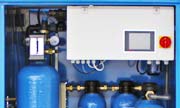
SCM 24
|
|
Cleans 24.000 liters per day
|
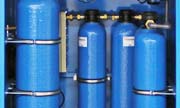
SCM 60
|
|
Cleans 60.000 liters per day
|
Video: How it works
The SCG Advantage
Our market-leading, water cleaning solutions have many advantages. To read more click the items below:
No Chemicals
Our machines and technology does not use any chemicals, at all.
Read more...
No Waste Water
Our machines do not waste any water. Yield = 100%.
Read more...
Low energy use
Uses 50 times less energy than a Reverse Osmosis Machine.
Read more...
Low ownership cost
Lower maintenance and operation costs due to our technology.
Read more...
Easy to install
Simple "plug and play" installation makes for easy deployment.
Read more...
Extremely compact
A compact system, contained in an easy to transport cabinet.
Read more...
Outperforms R.O.
SCG technologies outperform Reverse Osmosis systems.
Read more...
Faster ROI
Get a faster Return on Investment with our systems.
Read more...
Latest News
Latest Blog Posts
| Chemicals in water treatment? |
| Water storage - Whats best for keeping water clean and drinkable? |
| Case: Disaster Management Water Treatment |
Contact SCG
891 Showroom Place
Suite 101
Chula Vista, CA, 91914
Phone: +1 619-878-2730
Contact us by email